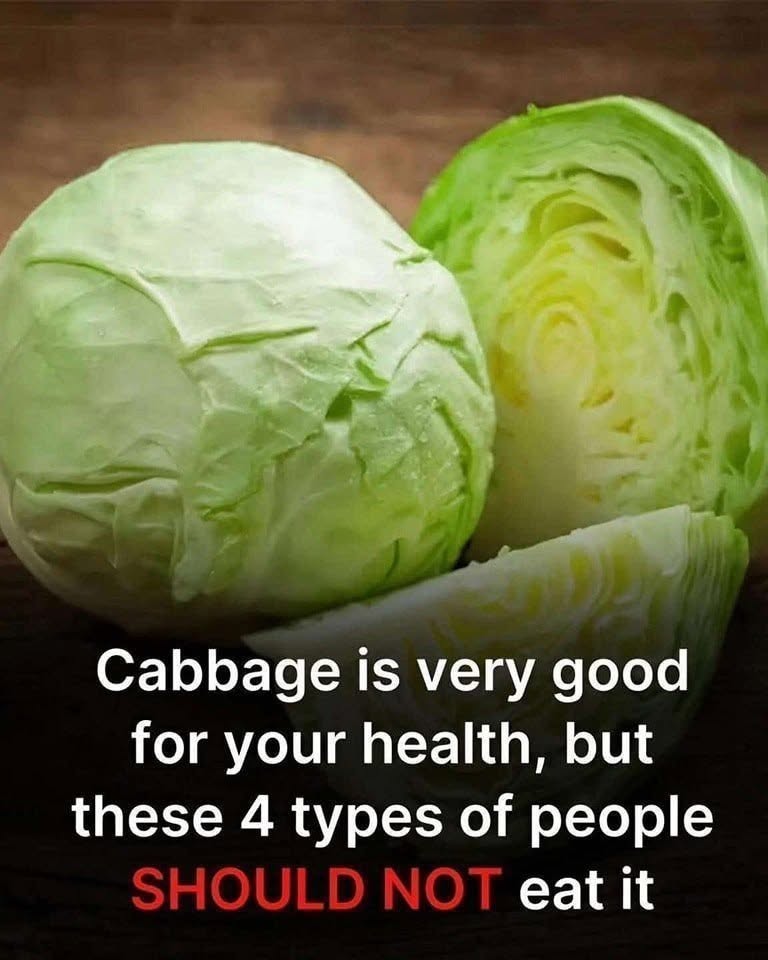
Cabbage is a nutritious vegetable rich in fiber, vitamin C, vitamin K, and plant compounds, and most people can eat it safely. However, certain people may need to limit it or be cautious depending on their health situation.
4 groups who may need to avoid or limit cabbage
1. People taking blood thinners (especially warfarin)
- Cabbage contains vitamin K, which plays a role in blood clotting.
- People taking warfarin usually do not need to avoid cabbage completely, but they should keep their vitamin K intake consistent and discuss major diet changes with their healthcare provider.
2. People with certain thyroid concerns
- Cabbage contains compounds called goitrogens, which can interfere with thyroid hormone production in some circumstances.
- Normal portions of cooked cabbage are generally considered safe for most people, but those with thyroid disease should follow their clinician’s advice.
3. People prone to gas, bloating, or digestive discomfort
- Cabbage is high in fiber and contains carbohydrates that can ferment in the gut.
- It may worsen symptoms in some people with conditions such as irritable bowel syndrome (IBS).
4. People with certain kidney-related dietary restrictions
- Some people with advanced kidney disease may need individualized advice about potassium, phosphorus, and overall diet.
- A healthcare professional or dietitian can recommend the right portions.
Tips to make cabbage easier to digest:
- Cook it instead of eating large amounts raw.
- Start with smaller portions if you are not used to high-fiber foods.
- Eat a variety of vegetables rather than relying heavily on one food.
For most healthy people, cabbage is a safe and beneficial part of a balanced diet. The key is adjusting intake to your individual health needs and medications.
