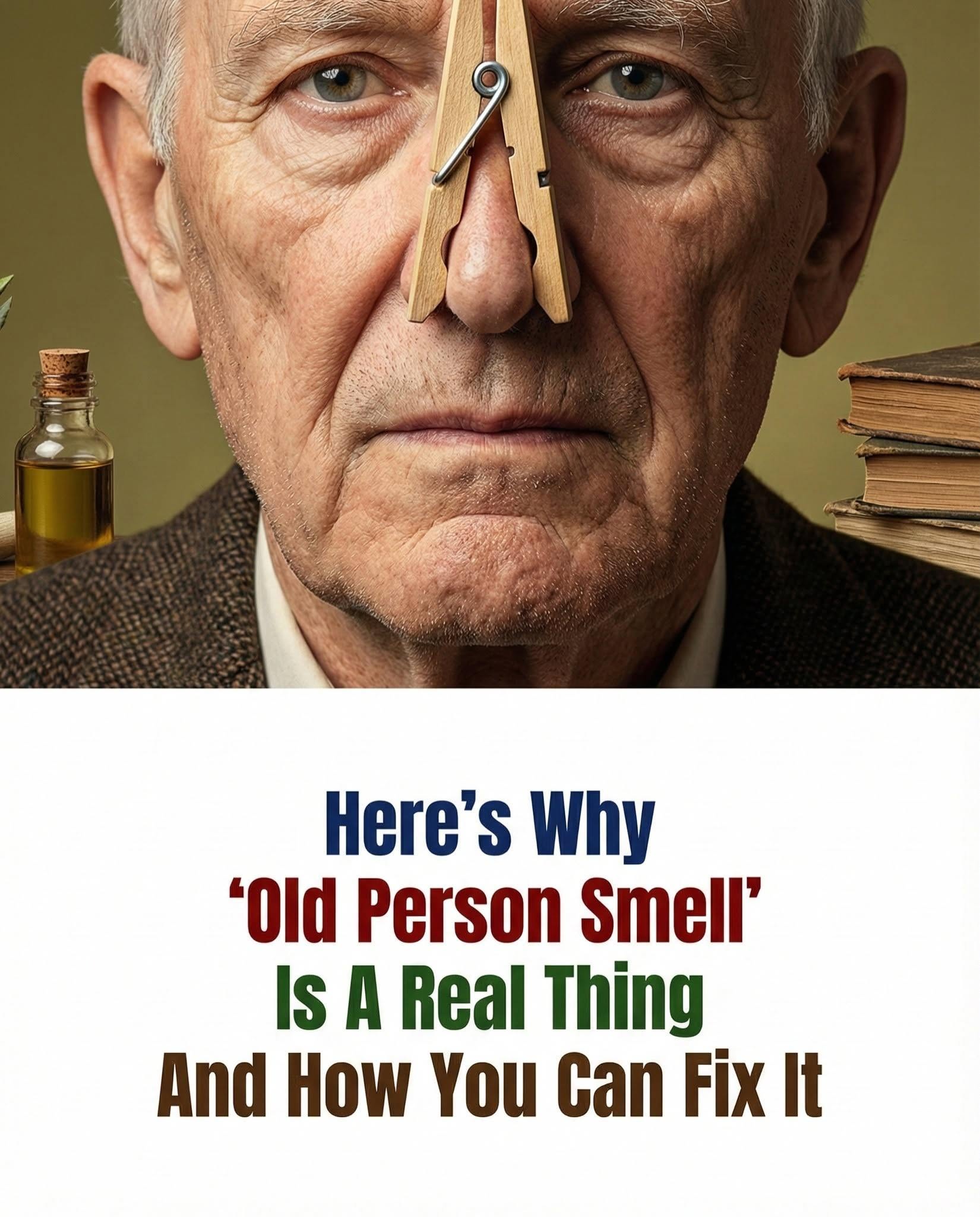
The Science Behind “Old Person Smell”: What Causes It as We Age—and Simple Ways to Reduce It
Many people have heard of the distinctive scent sometimes associated with older adults, often referred to as “old person smell.” While the term may sound unflattering, it’s based on a real biological phenomenon rather than poor hygiene. Scientists have found that natural changes in the body as we age can alter our body odor.
What Causes It?
One of the main contributors is a compound called 2-nonenal. As people age, changes in skin oils and increased oxidation can lead to the production of this odor-causing molecule. Research suggests that 2-nonenal becomes more common after about age 40 and can create a faint musty, grassy, or slightly greasy scent.
Several age-related factors may also contribute, including:
- Reduced skin cell turnover.
- Changes in hormone levels.
- Decreased production of antioxidant compounds in the skin.
- Certain medications that can affect body odor.
- Chronic health conditions that may alter natural scent.
Importantly, this odor is not simply the result of inadequate bathing. Even older adults with excellent hygiene may notice changes in their natural body odor.
How to Reduce Age-Related Body Odor
While aging is inevitable, there are several ways to help minimize age-related body odor:
- Practice regular hygiene. Bathe consistently using a gentle cleanser, paying attention to areas where sweat accumulates.
- Wear clean, breathable clothing. Natural fabrics such as cotton and moisture-wicking materials can help reduce odor.
- Wash bedding and towels frequently. Fabrics can absorb and retain body odors over time.
- Stay hydrated. Drinking enough water supports overall health and may help maintain healthy skin.
- Eat a balanced diet. Plenty of fruits, vegetables, and foods rich in antioxidants support skin health. Strong-smelling foods such as garlic, onions, and excessive alcohol can influence body odor in some people.
- Manage underlying health conditions. If body odor changes suddenly or becomes unusually strong, consult a healthcare professional, as it may occasionally signal a medical condition.
- Use moisturizers if needed. Keeping the skin healthy may help support its natural protective barrier.
A Normal Part of Aging
Changes in body odor are a natural part of aging and vary from person to person. They do not reflect cleanliness or personal habits. Maintaining good hygiene, healthy lifestyle habits, and regular medical care can help keep you feeling fresh and confident at any age.
If you notice a sudden or dramatic change in body odor, especially if it’s accompanied by other symptoms, it’s a good idea to seek medical advice to rule out an underlying health issue.
