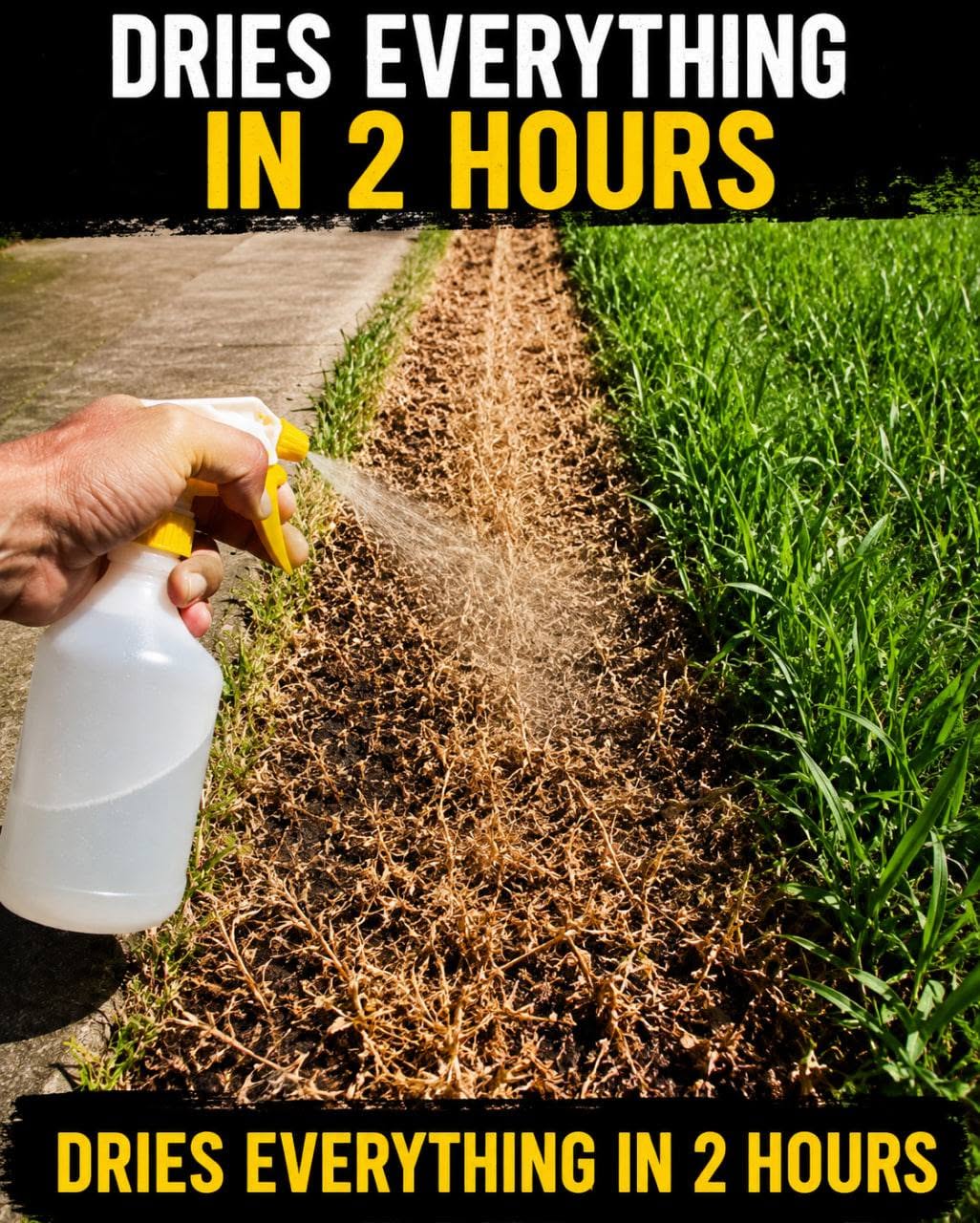
A lot of “natural weed killer” recipes online claim to kill weeds in a couple of hours, but results vary. A common homemade option uses vinegar, which can dry out the leaves of many weeds quickly. It is not a selective weed killer—it can damage any plant it touches, including grass, flowers, and vegetables.
Homemade weed spray (for cracks, paths, and unwanted weeds)
Ingredients
- 1 gallon (about 3.8 L) white vinegar (5% acetic acid)
- 1–2 tablespoons dish soap (helps the spray stick to leaves)
Instructions
- Mix the vinegar and dish soap in a spray bottle or garden sprayer.
- Spray directly onto the leaves of weeds on a dry, sunny day.
- Avoid spraying nearby plants you want to keep.
- Repeat if weeds regrow.
Important cautions
- Household vinegar usually kills the top growth but may not kill deep roots, so perennial weeds can return.
- Stronger horticultural vinegar (higher acetic acid) is much more powerful but can irritate skin and eyes—use caution.
- Adding salt is often recommended online, but it can damage soil for a long time and prevent other plants from growing, so it is best avoided in garden beds.
For a healthier garden approach, you can also use:
- Mulch to block weeds
- Hand-pulling after rain when roots loosen
- Boiling water on weeds growing in pavement cracks
If you tell me where the weeds are growing (lawn, driveway cracks, gravel, flower beds, vegetable garden), I can suggest the best method without harming nearby plants.
