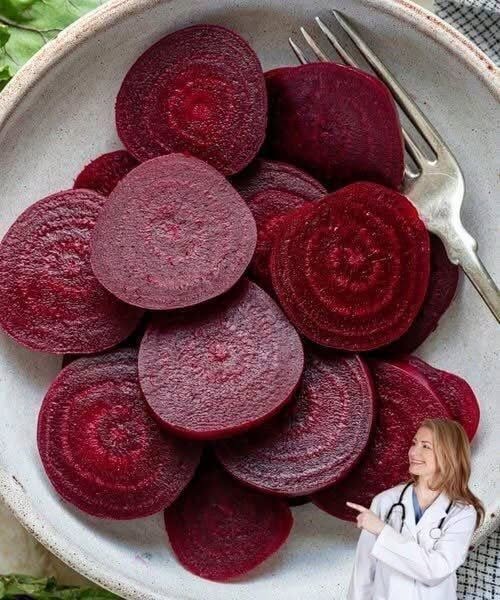
Headlines like “Doctors reveal that eating beets causes…” are often written to grab attention. The effects of beets depend on the context—there isn’t one dramatic outcome that applies to everyone.
Here are some well-supported effects of eating beets:
Potential benefits
- May help lower blood pressure. Beets are rich in dietary nitrates, which the body converts to nitric oxide. This can help relax blood vessels and may modestly lower blood pressure in some people.
- May improve exercise performance. The same nitrates may improve blood flow and make exercise feel easier for some individuals.
- Provide nutrients. Beets are a source of folate, potassium, manganese, fiber, and antioxidants.
Harmless but surprising effect
- Red or pink urine or stools (beeturia). This can happen after eating beets and is usually harmless.
Possible downsides
- Kidney stones: Beets are high in oxalates, so people who are prone to calcium oxalate kidney stones may be advised to limit them.
- Blood pressure: If you already have low blood pressure or take blood pressure medications, beets may contribute to a further drop in blood pressure in some cases.
- Digestive upset: Eating large amounts may cause bloating or stomach discomfort in some people.
For most healthy adults, beets can be part of a balanced diet and are not known to cause serious health problems when eaten in normal food amounts.
If you saw a headline claiming a specific effect (for example, “beets cause liver damage” or “beets cure high blood pressure”), tell me the exact claim and I can explain what the evidence actually shows.
