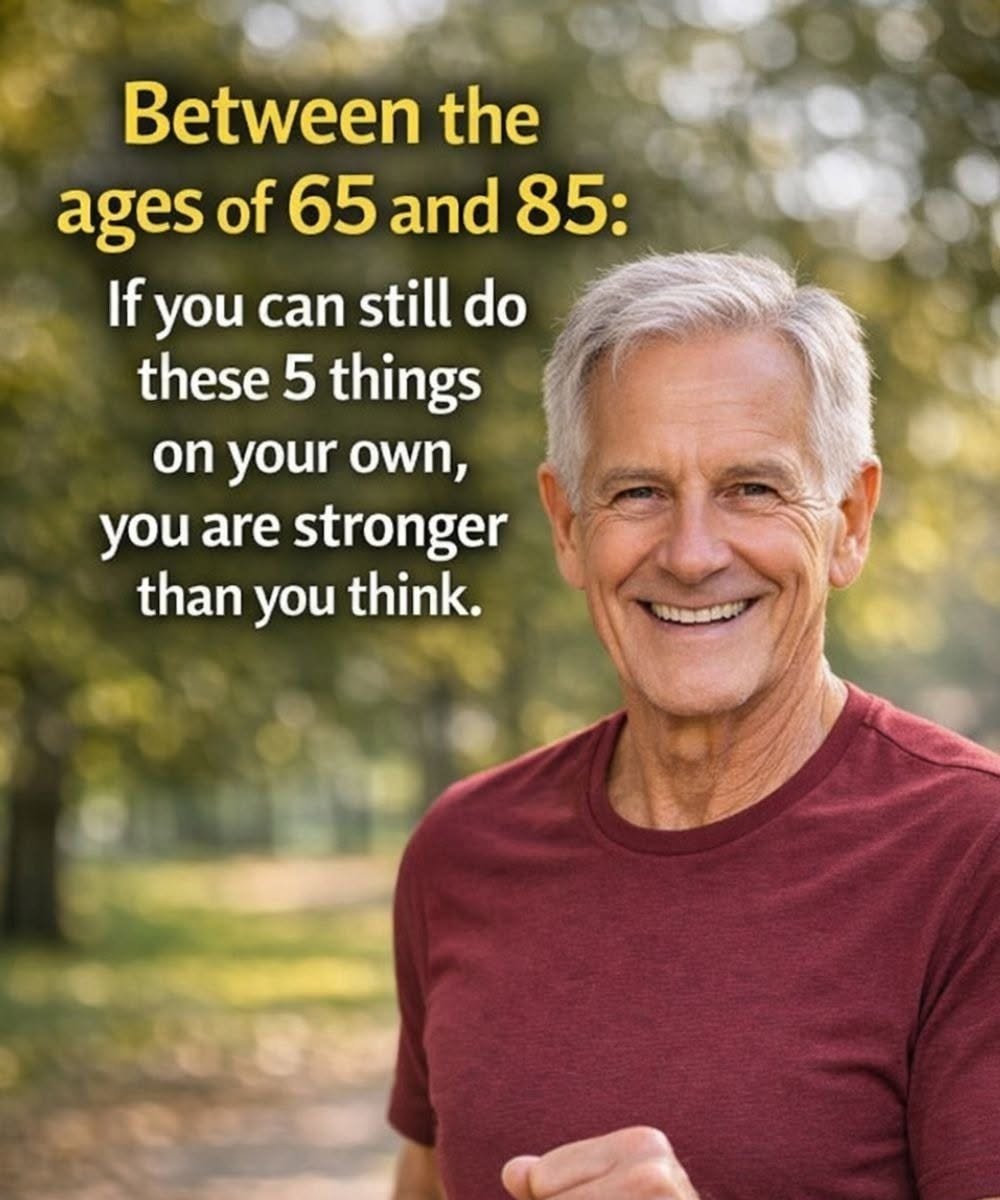
The idea behind this headline is that maintaining certain everyday abilities between ages 65 and 85 often reflects good strength, mobility, and independence. While there isn’t a universal list of “5 things,” these are commonly used indicators of healthy physical function.
Five abilities that suggest good functional health
- Getting up from a chair without using your hands
- This reflects leg strength, balance, and coordination.
- Walking comfortably for 10–15 minutes
- Good walking endurance supports independence and cardiovascular health.
- Climbing a flight of stairs
- Requires strength, balance, and heart-lung fitness.
- Carrying groceries or other everyday items
- Indicates adequate upper-body and grip strength for daily activities.
- Maintaining your balance
- Standing on one foot for a short time or walking steadily can be signs of good balance and may reduce the risk of falls.
Why these abilities matter
Being able to perform everyday tasks independently is associated with:
- Better mobility
- Lower risk of falls
- Greater independence
- Improved quality of life
However, not being able to do one or more of these does not mean someone is unhealthy or “weak.” Arthritis, past injuries, chronic medical conditions, vision problems, or other factors can affect these abilities, and many people can improve function with appropriate exercise, rehabilitation, or medical care.
If you’re interested in maintaining strength and independence as you age, activities such as strength training, balance exercises, regular walking, and flexibility exercises are supported by evidence and can be beneficial for many older adults, provided they’re appropriate for the individual’s health status.
