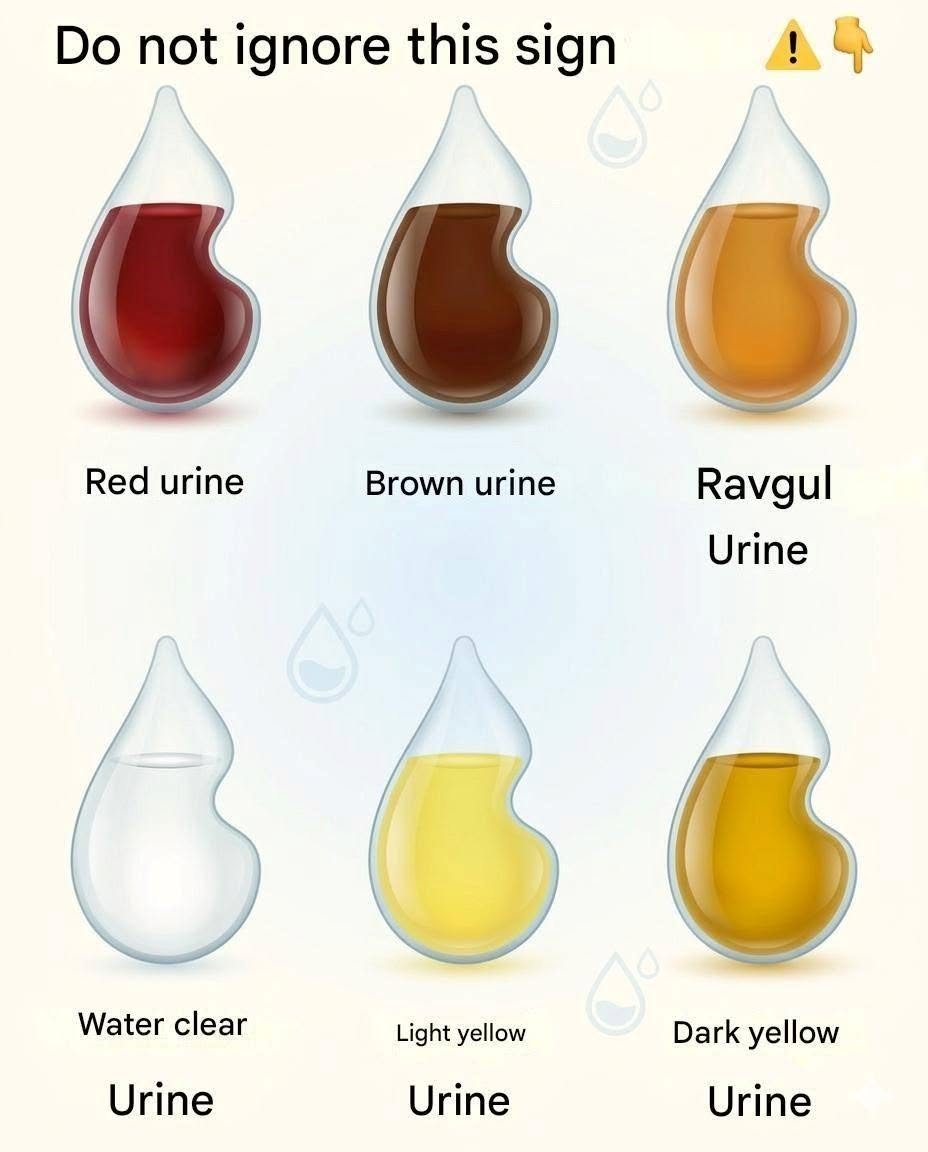
Urine color can provide clues about your hydration and, in some cases, your health. However, foods, vitamins, and medications can also change urine color, so color alone does not diagnose a medical condition.
What different urine colors may mean
🟡 Pale yellow to light yellow
- Usually a sign of normal hydration.
- This is the typical healthy urine color.
🟨 Dark yellow or amber
- Often means you’re dehydrated and may need more fluids.
- Can also occur first thing in the morning.
🟠 Orange
- May be caused by dehydration, certain medications, or vitamin supplements.
- Less commonly, it can be related to liver or bile duct problems.
🔴 Pink or red
- Can result from foods like beets, blackberries, or rhubarb.
- May also indicate blood in the urine, which should be evaluated by a healthcare professional.
🟤 Brown or tea-colored
- May occur with severe dehydration, certain medications, liver disease, or muscle injury.
- Persistent brown urine should be medically evaluated.
🟢 Green or blue
- Rare and often caused by certain medications, food dyes, or, less commonly, some infections.
⚪ Cloudy or milky
- May be due to crystals, dehydration, or a urinary tract infection, especially if accompanied by pain, fever, or foul-smelling urine.
When to seek medical advice
Contact a healthcare professional if you notice:
- Red or brown urine that isn’t explained by food or medication
- Cloudy urine with pain, fever, or burning
- Persistent changes in urine color
- Very dark urine along with yellowing of the skin or eyes
- Little or no urine output despite drinking fluids
While urine color is a useful clue, symptoms such as pain, fever, swelling, or changes in urination are often more important than color alone when evaluating your health.
