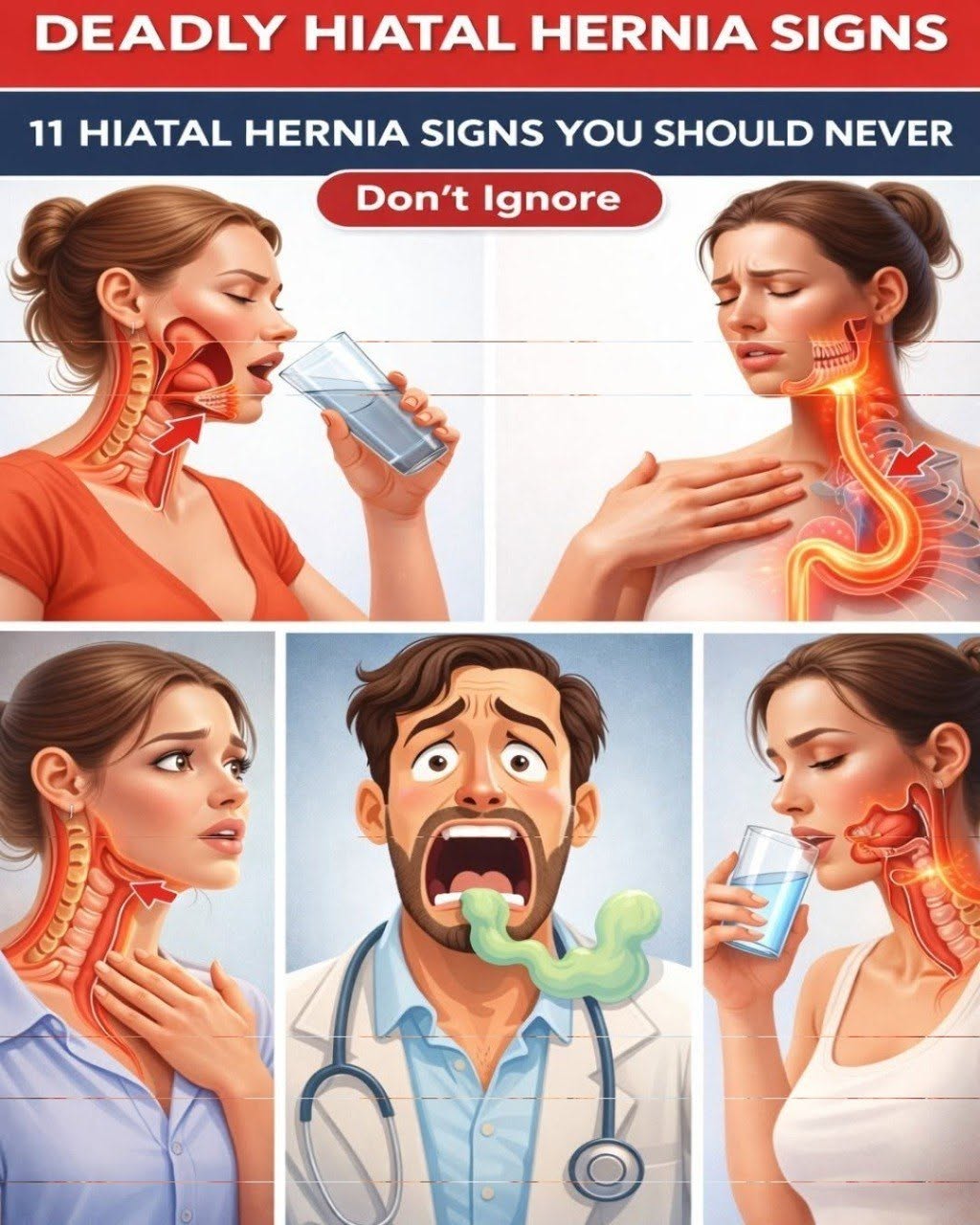
A hiatal hernia happens when part of the stomach pushes up through the diaphragm into the chest area. Many people have it and don’t even know because it can be mild or symptom-free.
Here are 10 signs and symptoms commonly associated with a hiatal hernia:
1. Heartburn
Burning sensation in the chest, especially after eating or lying down. Often linked with acid reflux.
2. Acid reflux (GERD symptoms)
Stomach acid moving up into the throat or mouth.
3. Chest discomfort
A pressure-like or burning pain that can sometimes feel similar to heart-related pain.
4. Regurgitation
Food or sour liquid coming back into the mouth.
5. Difficulty swallowing
Feeling like food is stuck or slow to go down.
6. Frequent burping or bloating
Feeling overly full or gassy after meals.
7. Shortness of breath (in larger hernias)
Pressure from the stomach may affect the diaphragm.
8. Nausea
Sometimes especially after eating large meals.
9. Sore throat or hoarseness
Caused by acid irritating the throat.
10. Worsening symptoms when lying down or bending over
Gravity makes reflux more likely in these positions.
These symptoms overlap strongly with Gastroesophageal reflux disease, which is very common and often co-exists with a hiatal hernia.
When to get checked
You should see a doctor if you have:
- Persistent chest pain (important to rule out heart issues)
- Trouble swallowing that worsens
- Frequent reflux not improving with lifestyle changes or medication
Important note
Many people with a hiatal hernia don’t need surgery. Treatment often includes:
- Smaller meals
- Avoiding lying down right after eating
- Weight management if needed
- Acid-reducing medications when prescribed
If you want, tell me your symptoms and I can help you figure out whether it sounds more like reflux, a hiatal hernia, or something else.
