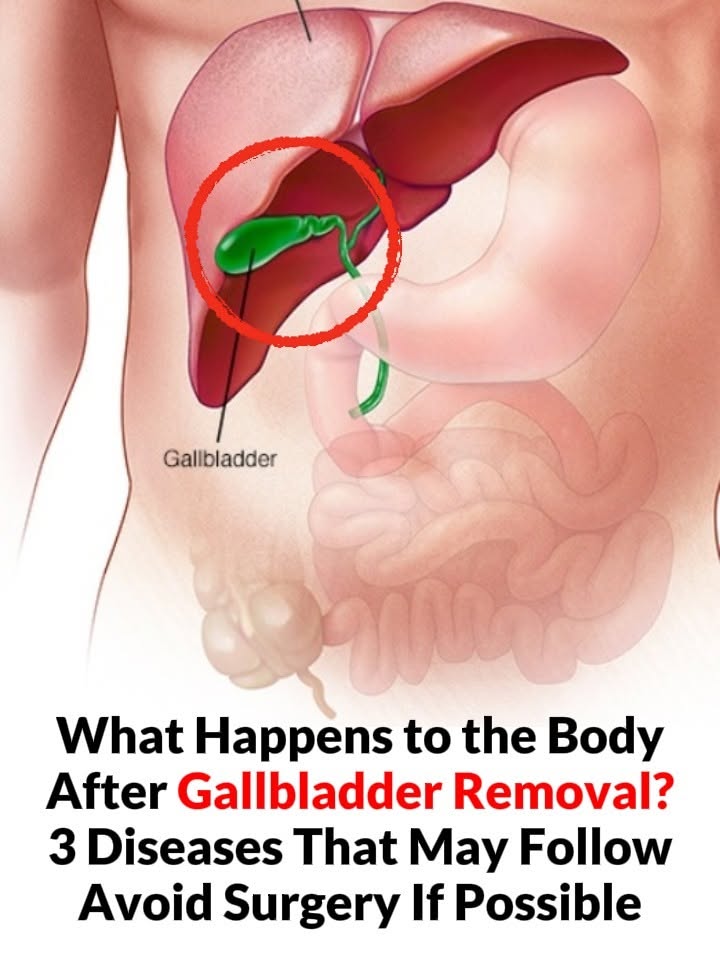
Headlines like “3 diseases after gallbladder removal—avoid surgery if possible” are misleading. Gallbladder removal is a very common and generally safe procedure, and for many people it is medically necessary—not optional.
Here’s what actually happens after removal of the Gallbladder:
What the gallbladder does
The gallbladder stores and concentrates bile, which helps digest fats. When it’s removed (a surgery called cholecystectomy), bile still flows directly from the liver into the intestine.
What changes after removal
1. Digestion becomes less “spiky”
Instead of bile being released in bursts, it drips continuously into the gut.
Most people adjust well over time.
2. Temporary digestive symptoms are common
In the first weeks or months, some people may experience:
- Loose stools
- Bloating
- Mild diarrhea after fatty meals
These usually improve as the body adapts.
Conditions sometimes discussed after surgery (but often misunderstood)
1. Post-cholecystectomy diarrhea
Some people get ongoing loose stools due to continuous bile flow. This is usually manageable with diet or medication.
2. Bile reflux or gastritis (less common)
In a small number of cases, bile can irritate the stomach.
3. Postcholecystectomy syndrome
A broad term used when people have persistent symptoms after surgery. It doesn’t mean a new disease was “caused” by surgery—often it’s due to other underlying digestive issues that were already present.
What gallbladder removal does NOT cause
There is no strong evidence that removal directly causes:
- New chronic “dangerous diseases”
- Liver failure
- General toxin buildup (a common online myth)
The liver continues to produce bile normally.
When surgery is actually needed
Doctors usually recommend gallbladder removal for:
- Painful gallstones
- Inflammation (cholecystitis)
- Blocked bile ducts
- Recurrent severe attacks
Avoiding necessary surgery can lead to serious complications like infection or pancreatitis.
Bottom line
Most people live normal, healthy lives after gallbladder removal with only minor or temporary digestive changes.
If you want, tell me why the video/article concerned you (symptoms, fear of surgery, or someone’s case), and I can explain what’s relevant to your situation specifically.
