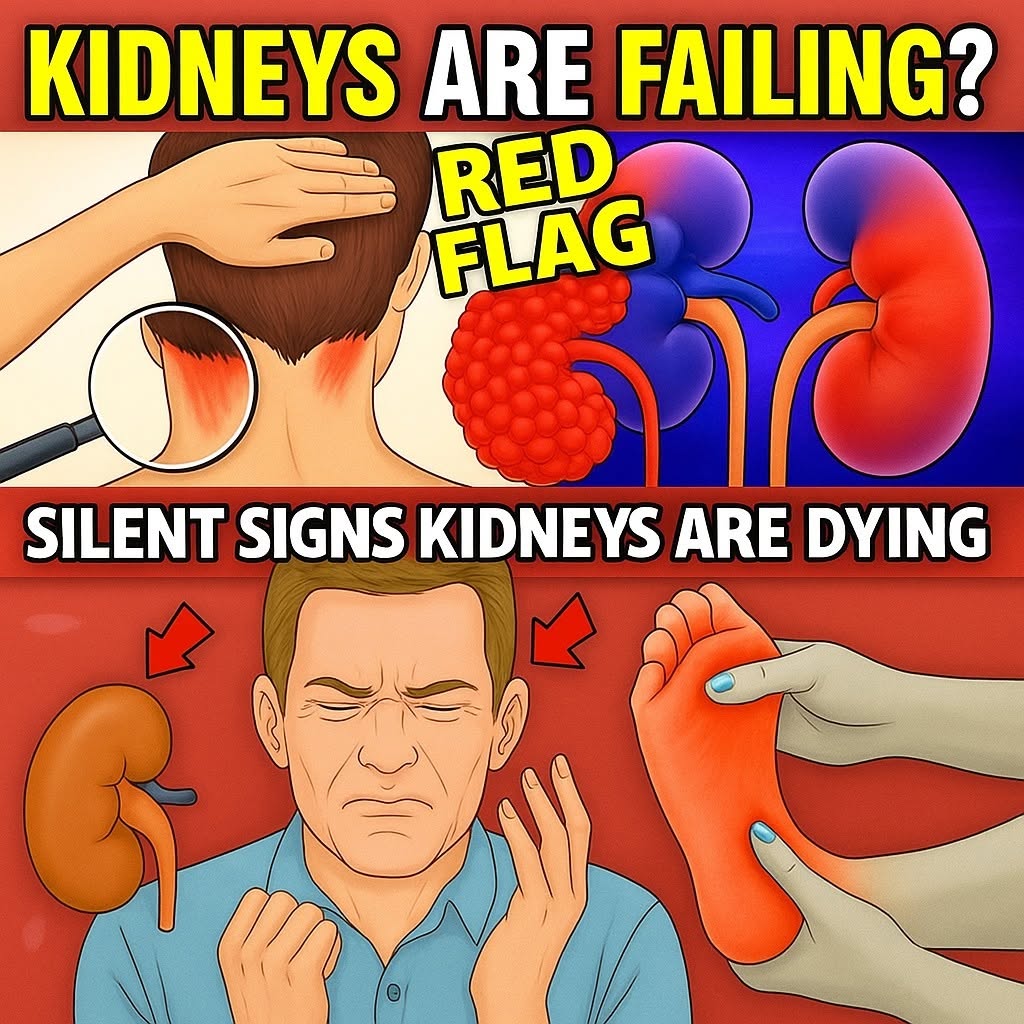
10 Silent Signs Your Kidneys May Not Be Working Properly — Often Overlooked Symptoms
Kidney problems can develop gradually, and early stages may have few noticeable symptoms. The kidneys help remove waste, balance fluids, control blood pressure, and support several important body functions. When kidney function declines, certain changes may appear.
1. Changes in urination
Watch for:
- Urinating much more or less than usual
- Waking up frequently at night to urinate
- Foamy urine
- Blood in the urine
- Difficulty starting urination
2. Swelling in the feet, ankles, or around the eyes
When kidneys struggle to remove extra fluid and salt, fluid can build up and cause swelling.
3. Persistent tiredness or weakness
Reduced kidney function can contribute to a buildup of waste products in the blood and may be linked with anemia, which can cause fatigue.
4. Trouble concentrating or feeling confused
Changes in body chemistry from kidney problems can sometimes affect mental clarity and energy levels.
5. Dry, itchy skin
Kidney disease can affect mineral balance and may contribute to persistent itching or dry skin.
6. Nausea, poor appetite, or a strange taste in the mouth
As waste products accumulate, some people experience:
- Loss of appetite
- Nausea
- A metallic taste
- Bad breath
7. Muscle cramps
Changes in fluids and electrolytes, such as potassium or calcium balance, can contribute to muscle discomfort or cramps.
8. Shortness of breath
Fluid buildup or anemia related to kidney disease may contribute to breathing difficulties.
9. High blood pressure
Kidneys play a major role in regulating blood pressure. High blood pressure can both contribute to kidney damage and result from it.
10. Back or side discomfort (in some conditions)
Certain kidney problems, such as infections or kidney stones, can cause pain in the side or lower back, though chronic kidney disease often does not cause pain.
When to get checked
Talk with a healthcare professional if you notice:
- Persistent changes in urination
- Unexplained swelling
- Ongoing fatigue
- Blood in urine
- Risk factors such as diabetes, high blood pressure, heart disease, or a family history of kidney disease
Simple tests—such as blood tests for kidney function and urine tests for protein or blood—can help detect kidney problems early.
Important: Many of these symptoms can have causes other than kidney disease. Having one symptom does not mean your kidneys are failing, but ongoing or unusual changes are worth discussing with a healthcare professional.
