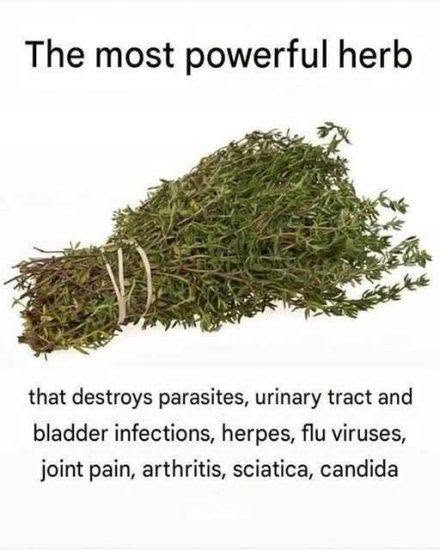
That claim is not medically accurate. There is no single herb that can “destroy parasites, urinary tract infections, bladder infections, herpes, and flu viruses” in a reliable or proven way.eadlines like this are usually designed to oversell traditional remedies.
🧠 Why this claim is misleading
Infections are caused by very different organisms:
- Parasites (e.g., worms)
- Bacteria (e.g., urinary tract infections)
- Viruses (e.g., herpes, flu)
Each requires specific, evidence-based treatment, and no herb works across all of them effectively.
🌿 Herbs often misrepresented in these claims
Some herbs are studied for mild supportive effects, but none are cures:
- Garlic — may have mild antimicrobial activity in lab studies, but not a treatment for infections in humans
- Oregano — essential oil shows antibacterial properties in vitro, but unsafe or unproven as a systemic treatment
- Ginger — may help nausea and inflammation, not infections
- Turmeric — anti-inflammatory properties, not antiviral cure
- Cranberry — may help reduce risk of recurrent urinary tract infections, but does not treat active infection
💊 What actually works
- UTI / bladder infections: antibiotics prescribed by a doctor
- Parasites: anti-parasitic medications
- Flu viruses: rest, fluids, and in some cases antivirals
- Herpes: antiviral medications (manage outbreaks, not cure)
⚠️ Risk of believing “miracle herb” claims
Delaying proper treatment can lead to:
- Worsening infection
- Kidney complications (for UTIs)
- Spread of disease
- More severe symptoms requiring hospitalization
🧠 Bottom line
There is no “most potent herb” that cures all infections. Some herbs may support health, but they are not replacements for medical treatment.
If you want, tell me which infection you’re actually concerned about—I can explain safe, evidence-based options and what helps most.
