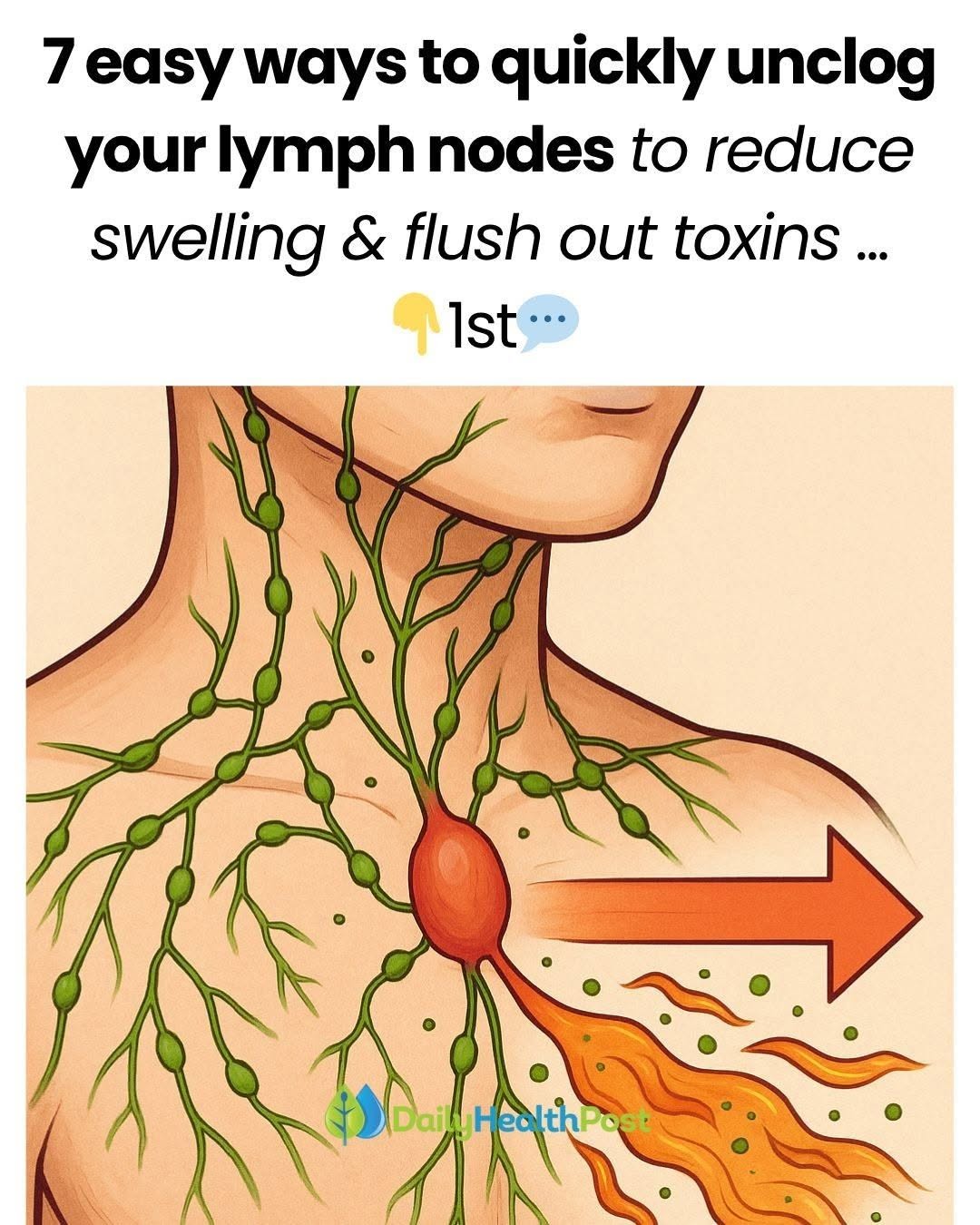
The idea that you can “unclog lymph nodes” or “flush out toxins” with a quick trick is a common wellness claim, but lymph nodes do not become clogged like pipes. The lymphatic system naturally filters fluid, supports immune function, and helps remove waste products. Swollen lymph nodes usually happen because the immune system is responding to something, such as an infection, inflammation, or (less commonly) other medical conditions.
If you are dealing with mild swelling or want to support normal lymph flow, these habits may help:
1. Stay physically active
- Walking, stretching, and gentle exercise help the muscles move lymph fluid through the body.
2. Drink enough fluids
- Good hydration supports normal circulation and lymphatic function.
3. Practice gentle massage (when appropriate)
- Light massage can help some people with certain types of swelling, such as lymphedema, but it should be done correctly.
- Avoid massaging an area with unexplained swelling, redness, warmth, or pain until a cause is known.
4. Elevate swollen areas
- Raising an arm or leg above heart level may help reduce some types of fluid buildup.
5. Reduce excess salt intake
- Too much sodium can contribute to fluid retention in some people.
6. Eat a balanced diet
- Fruits, vegetables, adequate protein, and whole foods support overall health.
7. Address the cause of swelling
- Treating infections, allergies, injuries, or underlying conditions is often what resolves lymph node enlargement.
See a healthcare professional if lymph nodes:
- Are swollen for more than a few weeks
- Keep growing or feel hard/fixed
- Are accompanied by unexplained weight loss, night sweats, fever, or severe fatigue
- Appear with difficulty swallowing, breathing problems, or significant pain
If you mean swollen lymph nodes in a specific area (neck, armpit, groin, or elsewhere), tell me where they are, how long they’ve been swollen, and whether you have pain, fever, or recent illness.
