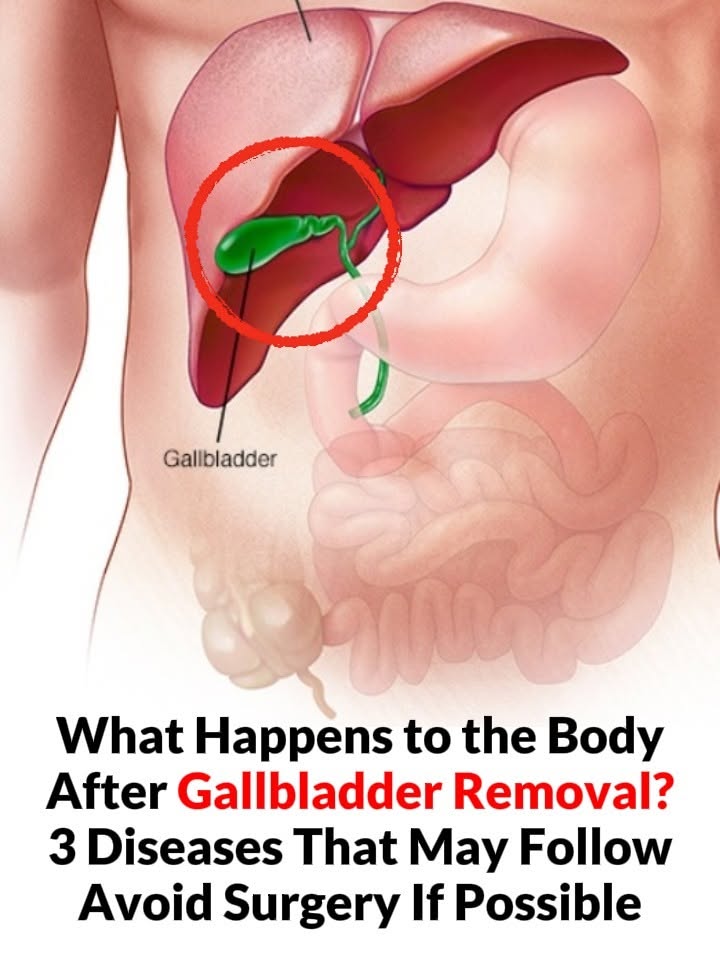
The headline “What Happens to the Body After Gallbladder Removal? 3 Diseases That May Follow – Avoid Surgery If Possible” is misleading. While gallbladder removal (cholecystectomy) can have side effects and potential complications, it is a well-established, effective treatment for many people with symptomatic gallstones or gallbladder disease. When surgery is recommended, the risks of not having it may be greater than the risks of the operation.
What changes after gallbladder removal?
The gallbladder stores and concentrates bile. After it is removed:
- The liver still produces bile.
- Instead of being stored, bile flows directly into the small intestine.
- Most people adapt to this change within weeks or months.
Three conditions that may occur after surgery
- Digestive symptoms (post-cholecystectomy syndrome)
- Some people experience bloating, gas, diarrhea, or indigestion, particularly after fatty meals.
- These symptoms are often temporary but can persist in some individuals.
- Bile acid diarrhea
- Continuous bile flow into the intestine can cause chronic diarrhea in a small percentage of people.
- This can often be managed with diet changes or prescription medications.
- Bile duct problems (uncommon)
- Rare complications include retained gallstones in the bile duct, bile duct injury, or narrowing (stricture), which may require further treatment.
Should surgery be avoided?
Not necessarily. If you have:
- Frequent painful gallstone attacks
- Gallbladder inflammation (cholecystitis)
- Gallstone pancreatitis
- Blockage of the bile ducts
then gallbladder removal is often the recommended treatment because it can prevent serious complications.
If gallstones are found incidentally and are not causing symptoms, surgery is often not recommended.
The decision to have surgery should be based on your symptoms, test results, overall health, and a discussion with your healthcare team—not on a headline alone.
