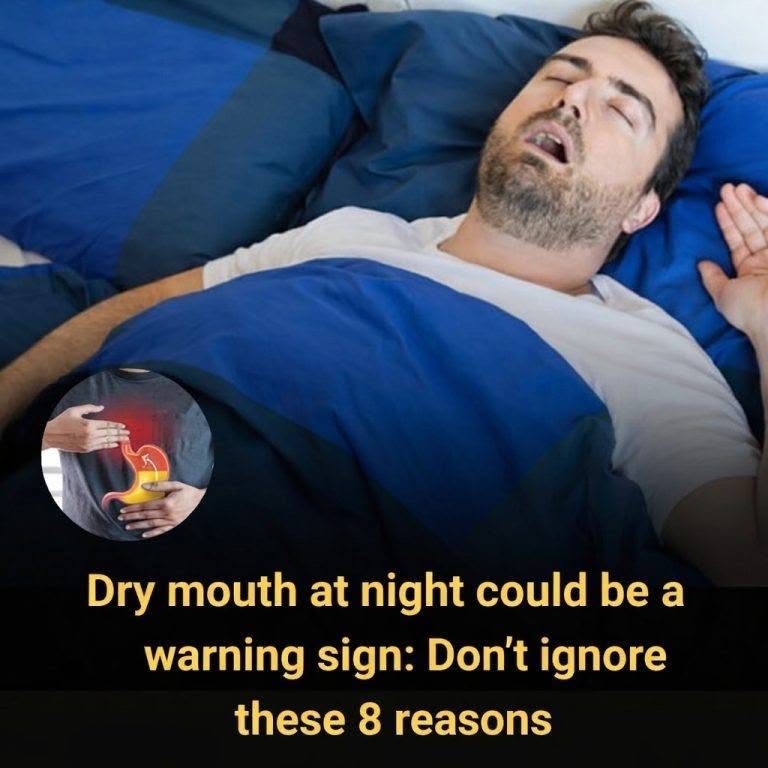
Dry mouth at night is common, especially if you sleep with your mouth open, but persistent nighttime dryness can sometimes point to an underlying issue. Here are 8 signs that deserve attention:
- Waking up extremely thirsty
- Frequent nighttime thirst may be related to dehydration, mouth breathing, certain medications, or blood sugar issues.
- Bad breath that doesn’t improve
- A dry mouth reduces saliva, which normally helps control bacteria that cause odor.
- A dry, sticky, or burning feeling in the mouth
- Ongoing discomfort can signal reduced saliva production.
- Difficulty swallowing or speaking after waking
- Saliva helps lubricate the mouth and throat.
- More cavities or gum problems
- Less saliva means less natural protection against tooth decay.
- Cracked lips or a dry tongue
- Persistent dryness can affect the tissues inside and around the mouth.
- Snoring, blocked nose, or waking up gasping
- Mouth breathing from nasal congestion or sleep-related breathing problems can cause dryness.
- Dry mouth with other symptoms
- Symptoms such as frequent urination, unexplained fatigue, eye dryness, or unexplained weight changes may need medical evaluation.
Common causes of dry mouth at night
- Sleeping with your mouth open
- Nasal congestion or allergies
- Dehydration
- Smoking or alcohol use
- Certain medications (including some for allergies, blood pressure, mood, and pain)
- Sleep apnea
- Some medical conditions affecting saliva production
What may help
- Drink enough water during the day
- Use a humidifier if the air is dry
- Address nasal congestion if present
- Avoid alcohol or caffeine close to bedtime if they worsen dryness
- Maintain good oral hygiene
- Ask a dentist or doctor if the problem is persistent
If dry mouth is new, severe, or lasting for weeks, especially with symptoms like frequent urination, excessive thirst, or eye dryness, it’s worth getting checked.
