That kind of warning is another viral fear headline, not a reliable rule.
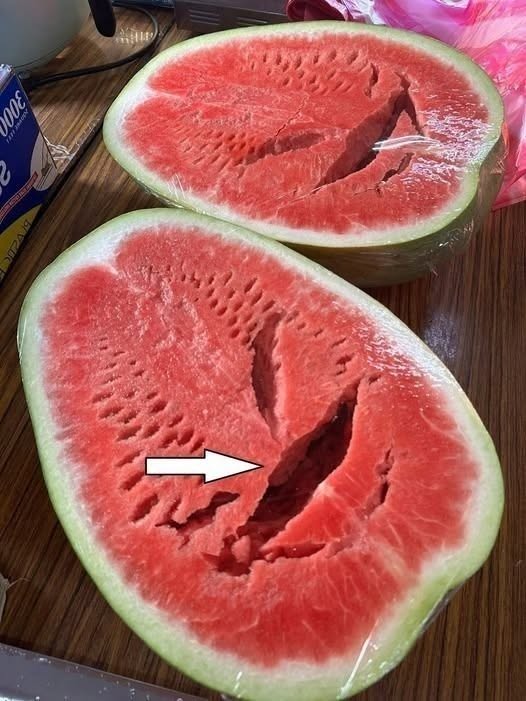
Seeing cracks or splits inside a watermelon is usually not a reason to “stop eating it immediately.” It depends on what kind of cracking you’re seeing.
🍉 What cracks in watermelon actually mean
1. Internal splitting (most common, usually harmless)
Sometimes the flesh shows cracks because:
- The watermelon grew very fast after heavy watering or rain
- Sugar levels changed quickly during ripening
- The fruit expanded faster than its internal structure
👉 Result: the texture may be slightly uneven, but it is usually still safe to eat.
2. Over-ripening
Cracks can also appear when a watermelon is:
- Very ripe or slightly overripe
- Starting to break down internally
👉 Signs:
- Soft or mushy texture
- Strong fermented or “alcohol-like” smell
- Watery or grainy flesh
In this case, it’s better not to eat it—not because of cracks alone, but because spoilage may be starting.
3. Rare case: spoilage or contamination
You should discard it if you also notice:
- Mold (white, green, or black spots)
- Slimy texture
- Sour, rotten smell
- Gas bubbles or leakage
Cracks alone are not the issue—the signs of spoilage are.
⚠️ Important clarification
A healthy watermelon can sometimes have internal cracks and still be perfectly edible. This is often called “hollow heart” or internal stress cracking, and it’s more of a farming/storage issue than a safety hazard.
🧠 Bottom line
- ✔ Cracks alone ≠ automatically dangerous
- ✔ Smell, texture, and mold matter more
- ❌ Don’t rely on viral warnings that exaggerate normal food variation
If you want, I can show you how to pick a perfectly ripe watermelon at the store so you avoid poor-quality ones entirely.
