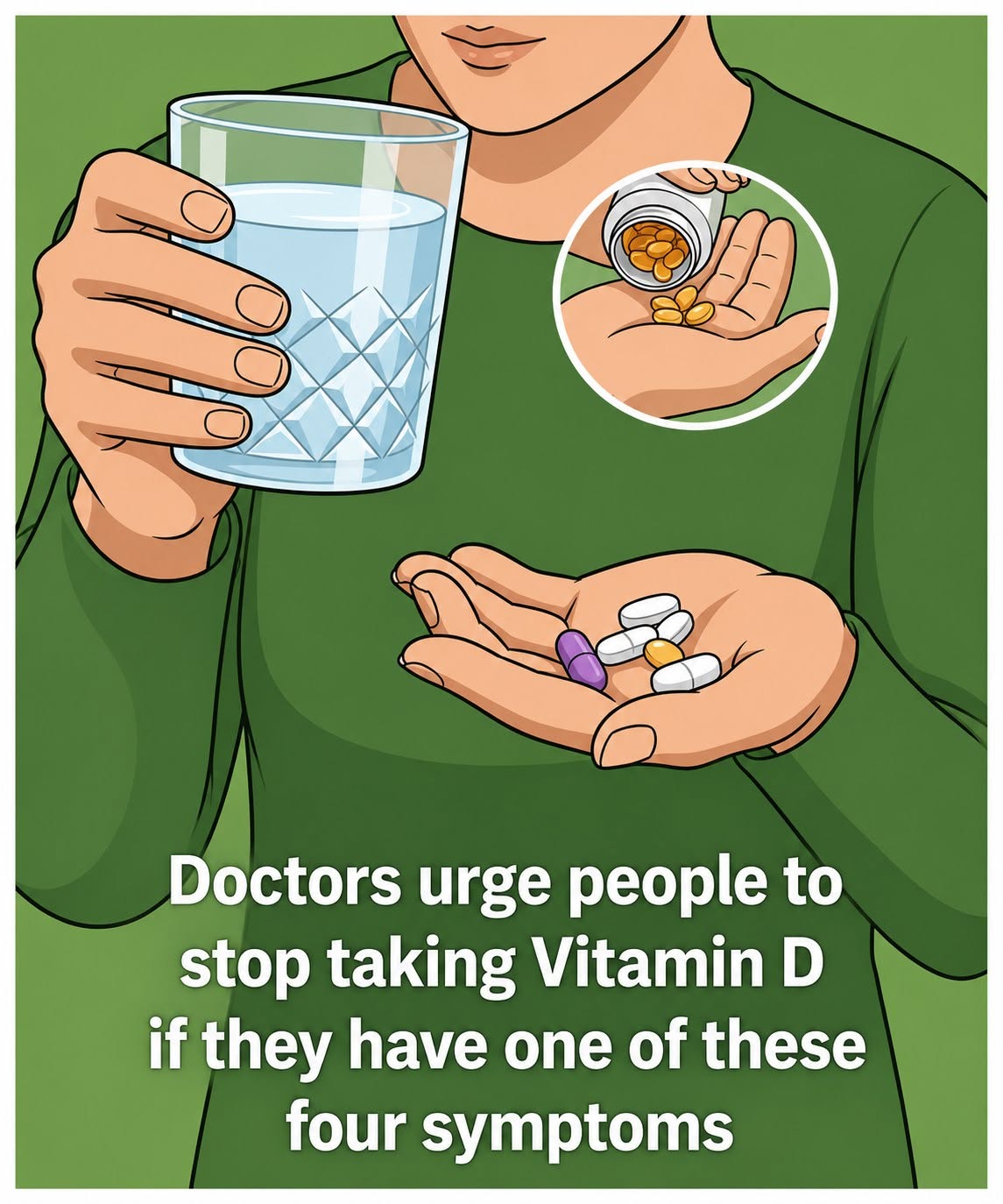
That kind of headline is typically clickbait-style fear wording. Doctors do not generally tell people to “stop vitamin D immediately” based on vague symptoms. What they do say is: if certain symptoms appear while taking high-dose supplements, you should get checked for possible vitamin D excess or high calcium levels.
Here are the real symptoms that can indicate a problem:
⚠️ Symptoms that may suggest too much vitamin D (usually from over-supplementation)
1. Persistent nausea or vomiting
This can happen because excess vitamin D raises calcium levels in the blood.
2. Excessive thirst and frequent urination
High calcium can make the kidneys work harder, causing dehydration-like symptoms.
3. Weakness, fatigue, or confusion
Elevated calcium levels can affect the nervous system and make you feel sluggish or “foggy.”
4. Loss of appetite or abdominal discomfort
Digestive symptoms can appear when calcium levels are abnormally high.
🧠 Important context (what the headlines leave out)
- These symptoms are not specific to vitamin D alone—they can come from many conditions (infection, dehydration, kidney issues, etc.).
- Toxicity usually happens only with very high doses taken for weeks or months, not normal daily intake.
- The real issue is often high calcium in blood (hypercalcemia) caused by excessive supplementation.
💊 Safe reality check
For most adults:
- Typical needs: ~600–800 IU/day
- Upper safe limit (without medical supervision): ~4,000 IU/day
Problems usually occur when people:
- Take multiple supplements unknowingly
- Use high-dose “weekly” or “monthly” pills incorrectly
- Self-medicate without blood testing
🧾 Bottom line
You don’t stop vitamin D just because of generic symptoms. The correct approach is:
- Recognize warning signs
- Check blood calcium and vitamin D levels
- Adjust dosage under medical guidance
If you want, I can explain the difference between vitamin D deficiency symptoms vs overdose symptoms, because they can actually look surprisingly similar at first.
