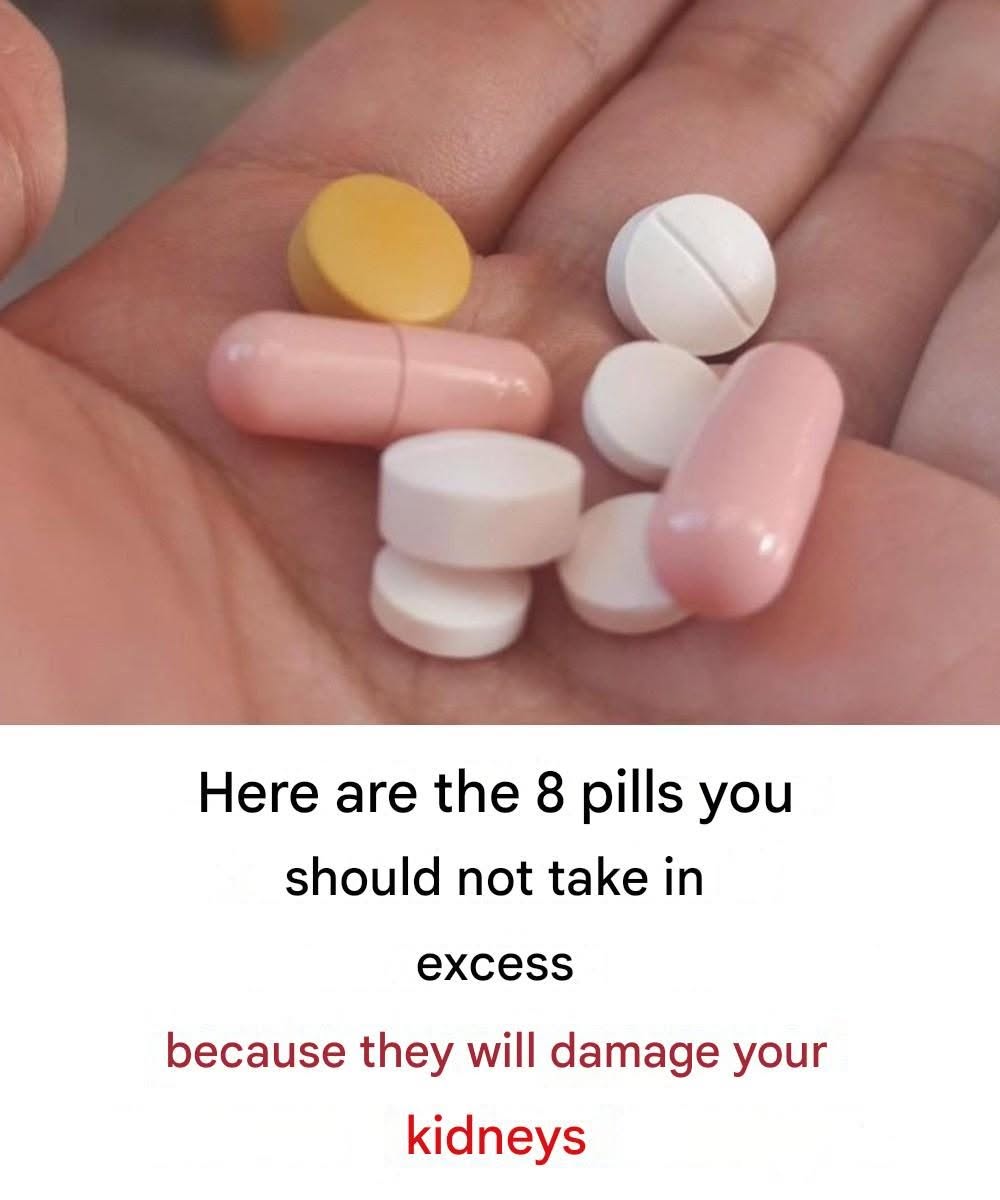
Headlines like “eight pills you shouldn’t take because they damage your kidneys” are usually overgeneralized. No medication is automatically “bad for kidneys”—risk depends on dose, duration, hydration, age, and existing kidney health.
That said, some medicines are well known to potentially stress or injure the kidneys if misused or taken long-term without monitoring:
💊 Common medications that can affect kidneys
1. NSAID painkillers
Examples: ibuprofen, diclofenac, naproxen
These can reduce blood flow to the kidneys, especially if:
- Taken frequently or in high doses
- Combined with dehydration
- Used in older adults or people with kidney disease
2. Certain antibiotics
Examples: gentamicin, vancomycin (especially high-dose or prolonged use)
Can sometimes damage kidney filtering units if not carefully monitored.
3. Diuretics (“water pills”)
Used for blood pressure or swelling
They change fluid balance, which can strain kidneys if not properly dosed.
4. Proton pump inhibitors (PPIs)
Examples: omeprazole, pantoprazole
Long-term, unnecessary use has been linked in studies to kidney inflammation in some people.
5. Lithium
Used for bipolar disorder
Requires close monitoring because kidney function affects how it’s cleared.
6. Contrast dye (for CT scans)
Not a pill, but often included in lists
Can temporarily stress kidneys in high-risk patients.
7. Some antivirals or chemotherapy drugs
Certain strong medications may affect kidney function and require dose adjustment.
8. Unregulated herbal supplements
This is a major hidden risk:
- Some contain toxic compounds
- Others are contaminated or mislabeled
- Certain herbs have been linked to kidney damage
🧠 Key truth most headlines miss
These drugs are often:
- Life-saving when used correctly
- Safe under medical supervision
- Only risky when misused, overdosed, or combined improperly
⚠️ Real warning signs of kidney stress
If someone is taking medication and notices:
- Swelling in feet/face
- Unusual fatigue
- Changes in urination (too much or too little)
- Nausea or confusion
👉 They should get checked—not stop medication blindly.
🧾 Bottom line
It’s not “eight pills to avoid”—it’s eight categories that need responsible use and monitoring.
If you want, I can list the early signs of kidney damage before it becomes serious, which is more useful than fear-based pill lists.
