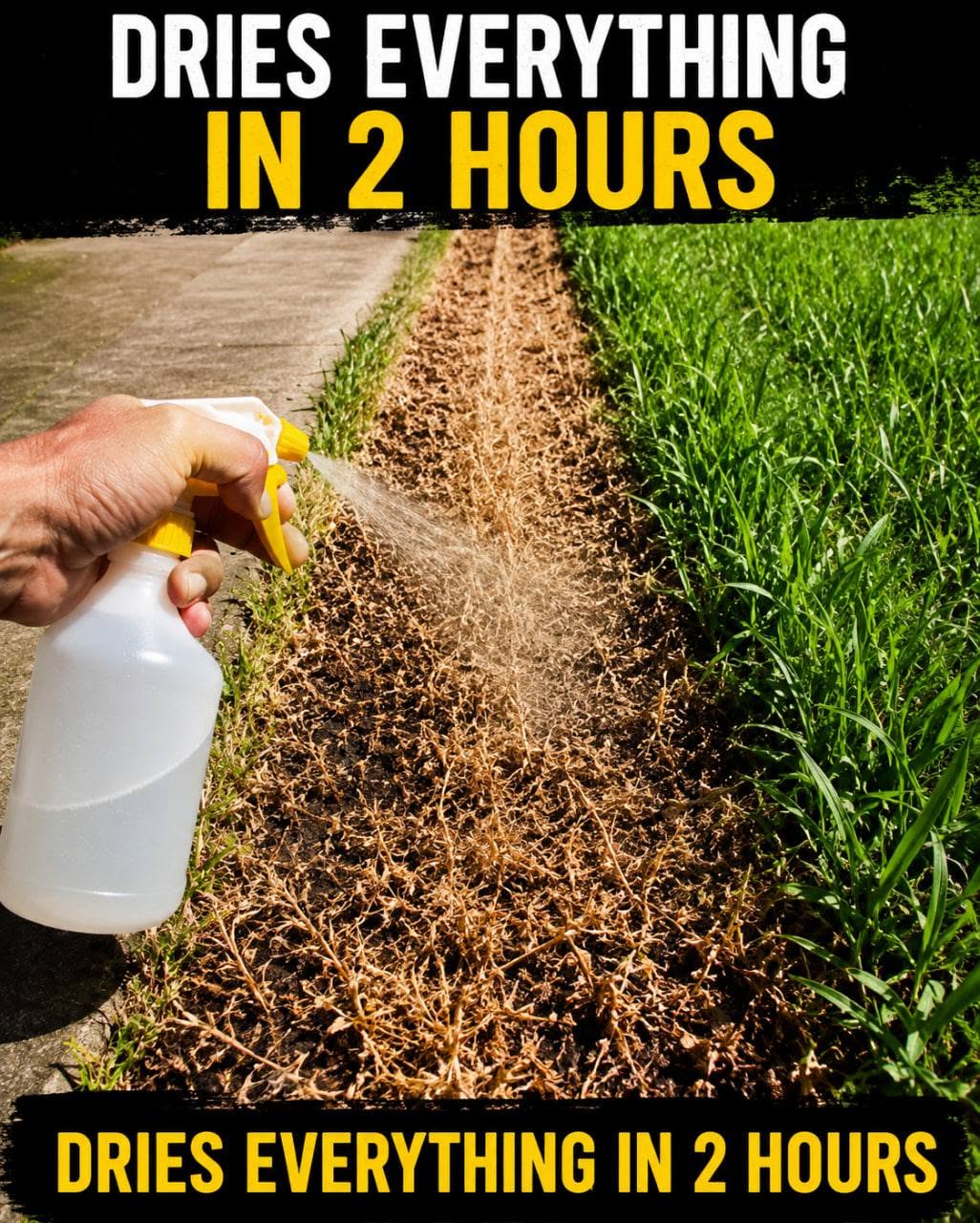
Homemade Weed Killer Without Harsh Chemicals: What Works and What to Know
Many homemade weed-killer recipes promise to “dry weeds in a few hours,” but it’s important to understand that fast browning does not always mean the weed is dead. Some mixtures damage the leaves while the roots survive, allowing the plant to grow back.
A Simple Homemade Spot Treatment
For weeds growing in cracks, paths, or areas where you do not want plants to grow:
Ingredients
- 1 liter (about 4 cups) white vinegar
- 1 teaspoon dish soap
How to Use
- Pour the mixture into a spray bottle.
- Spray directly onto weed leaves on a dry, sunny day.
- Avoid spraying nearby grass, flowers, vegetables, or desirable plants.
- Allow time for the plant to dry and die back.
Why It Works
- Vinegar (acetic acid) can damage plant tissues, especially on young weeds.
- Dish soap helps the liquid spread and stick to leaf surfaces.
Important Limitations
- Household vinegar is often not strong enough to kill deep roots.
- Perennial weeds may return.
- Vinegar can harm soil organisms and nearby plants if overused.
- It is not selective—it can damage almost any green plant it touches.
For Longer-Term Weed Control
Better results often come from:
✅ Pulling weeds when the soil is moist
✅ Removing roots where possible
✅ Adding mulch to block sunlight
✅ Keeping garden beds healthy and densely planted
Bottom line: A vinegar-based spray can make some weeds wilt quickly, but “no poison and never grows again” claims are usually exaggerated. For lasting control, combine spot treatments with root removal and prevention methods.
