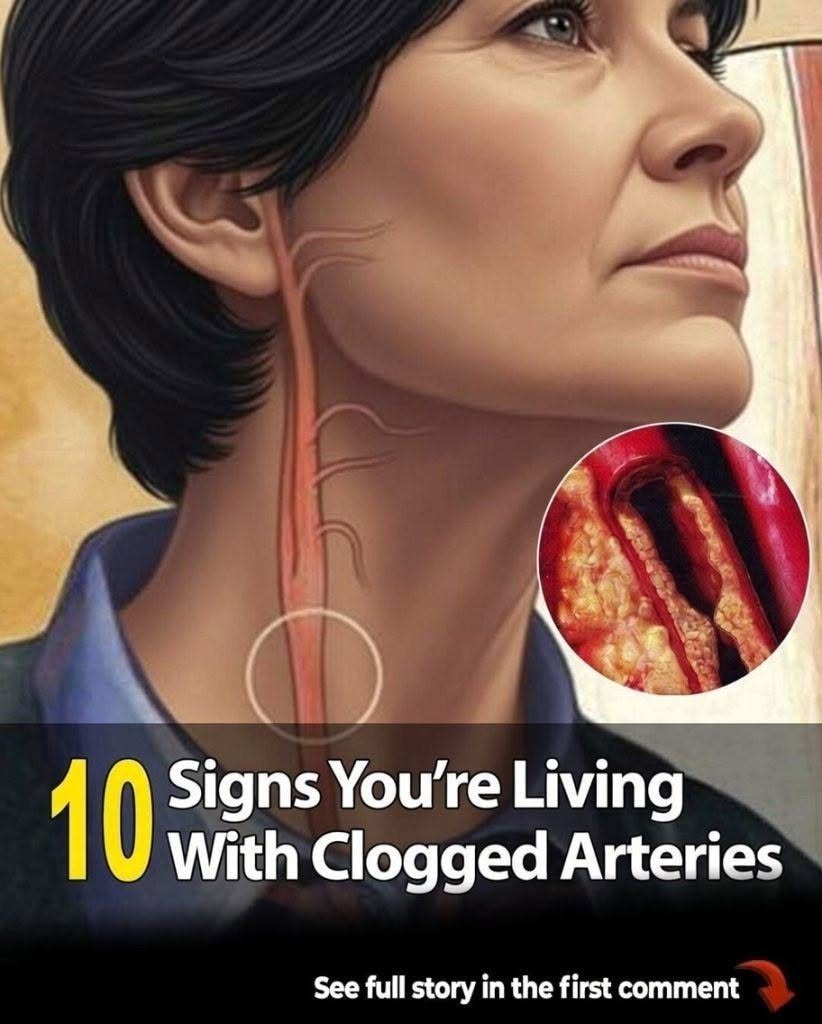
Blocked arteries are often caused by atherosclerosis, a buildup of fatty deposits (plaque) inside blood vessels. The condition can develop quietly, but symptoms may appear when blood flow becomes reduced. The warning signs depend on which arteries are affected.
10 possible indicators of blocked arteries you shouldn’t ignore
- Chest pain, pressure, or tightness
- A squeezing or heavy feeling in the chest, especially during activity or stress, can be a sign of reduced blood flow to the heart.
- Shortness of breath
- Feeling unusually breathless during normal activities may indicate the heart is struggling to receive enough oxygen.
- Unexplained fatigue
- Ongoing tiredness, especially with exertion, can sometimes be linked to heart circulation problems.
- Pain or cramping in the legs when walking
- Calf or thigh pain that improves with rest can be a sign of reduced circulation in the leg arteries.
- Coldness or numbness in hands or feet
- Poor circulation may make extremities feel colder or cause tingling.
- Slow-healing cuts or sores
- Reduced blood flow, especially in the feet and legs, can delay healing.
- Dizziness, sudden confusion, or trouble speaking
- These may be warning signs of reduced blood flow to the brain and require urgent medical attention if they occur suddenly.
- Vision changes
- Sudden or temporary vision loss can sometimes be linked to circulation problems.
- Erectile dysfunction
- In some men, reduced blood flow can be an early sign of vascular disease.
- Heart palpitations or irregular heartbeat sensations
- These can have many causes, but should be evaluated if persistent or accompanied by chest discomfort or fainting.
Seek emergency help immediately if you have:
- Sudden chest pressure or pain
- Difficulty breathing
- Sudden weakness or numbness on one side of the body
- Facial drooping
- Trouble speaking
Reducing risk involves managing blood pressure, cholesterol, blood sugar, smoking, weight, physical activity, and diet. Regular medical checkups can help identify artery disease before serious complications occur.
