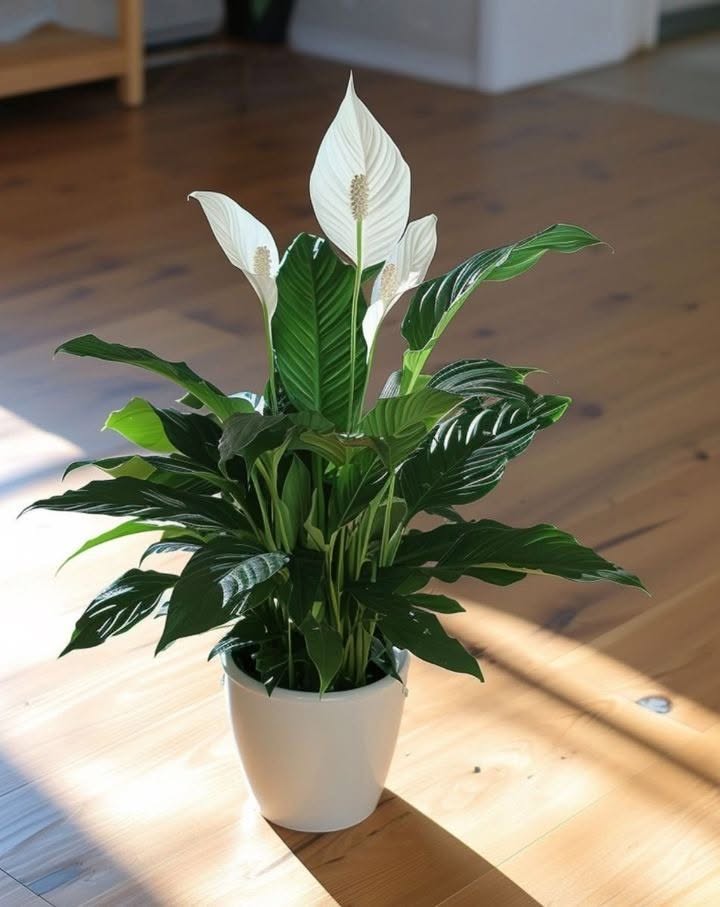
A peace lily (Spathiphyllum) usually blooms when it has the right balance of light, water, nutrients, and care. If yours has lots of leaves but no flowers, these tips may help encourage blooms.
11 ways to help your peace lily bloom
1. Provide bright, indirect light
- Peace lilies need enough light to flower.
- Keep them near a bright window, but avoid harsh direct sun that can scorch leaves.
2. Avoid keeping it too dark
- Low light may keep the plant alive but often prevents flowering.
3. Water consistently
- Keep the soil lightly moist, but don’t let the roots sit in water.
- Drooping leaves can be a sign of thirst, but repeated stress can affect blooming.
4. Use good-quality water
- Peace lilies can be sensitive to chemicals or salts in tap water.
- If possible, use filtered, rain, or rested tap water.
5. Feed during the growing season
- Use a balanced houseplant fertilizer at a diluted strength.
- Too much fertilizer can cause leaf growth at the expense of flowers.
6. Don’t overuse nitrogen fertilizer
- High nitrogen encourages lush green leaves but may reduce blooms.
7. Keep humidity moderate to high
- Peace lilies are tropical plants and often do well with humidity around them.
- A humidifier or grouping plants together can help in dry homes.
8. Maintain comfortable temperatures
- Aim for roughly 18–29°C (65–85°F).
- Protect the plant from cold drafts and sudden temperature changes.
9. Repot only when needed
- Peace lilies like being slightly root-bound, but severely crowded roots can affect health.
- Repot when roots are tightly circling or growing out of drainage holes.
10. Remove old flowers and damaged leaves
- Cutting off spent blooms allows the plant to direct energy toward new growth.
11. Be patient
- A healthy peace lily may take time to adjust after moving locations or changes in care. Consistency matters more than quick fixes.
A common reason peace lilies don’t bloom
Many peace lilies simply do not receive enough light. If the leaves look healthy but there are no flowers, increasing bright indirect light is often the first change to try.
Avoid viral “miracle” remedies like adding sugar, coffee, milk, or random kitchen ingredients to the soil—these can attract pests or disrupt the soil rather than encourage flowers.
