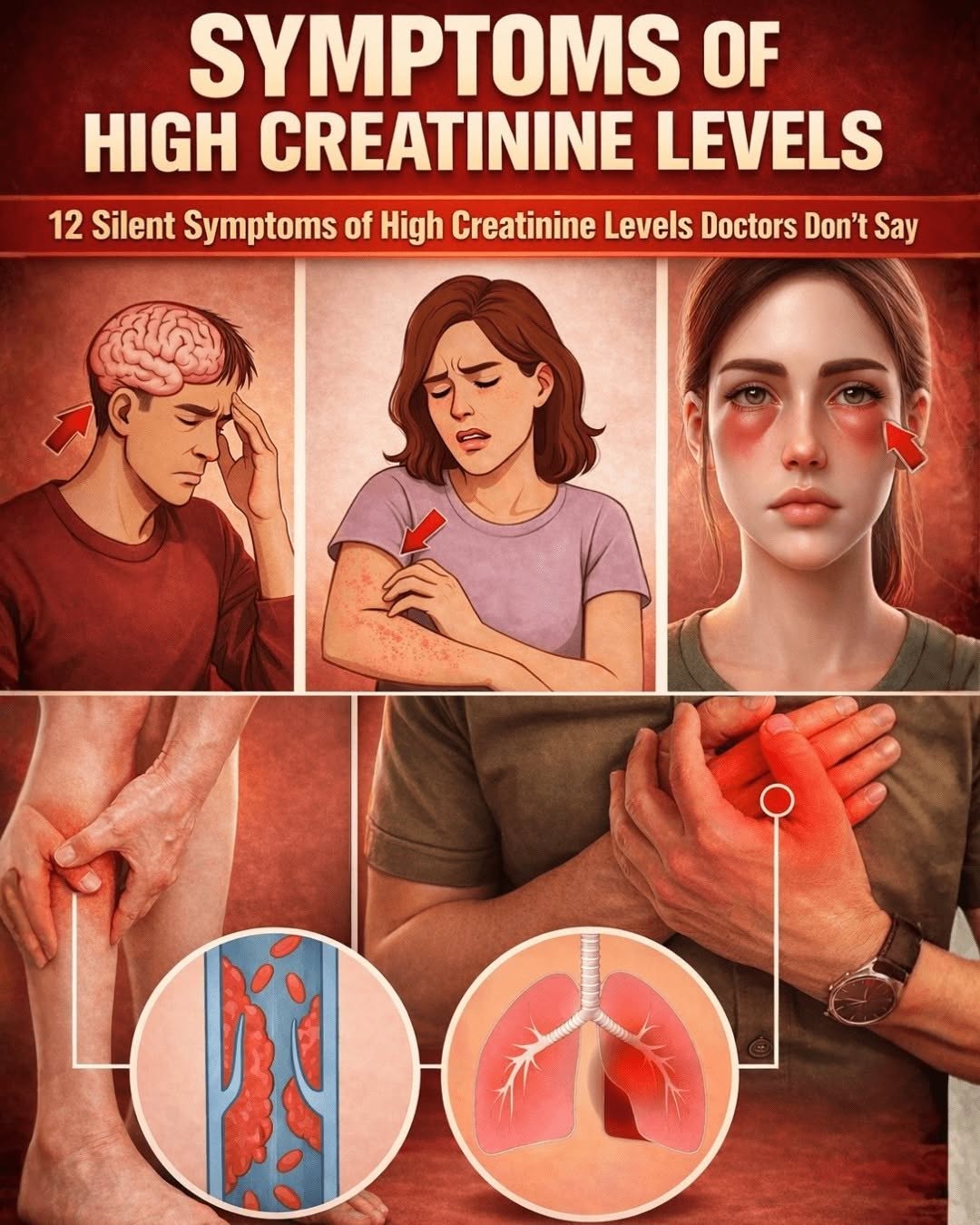
12 Subtle Signs of High Creatinine Levels That Could Point to Early Kidney Concerns
Creatinine is a waste product produced by normal muscle activity. Healthy kidneys filter creatinine out of the blood and remove it through urine. A high blood creatinine level can be a sign that kidney function may be reduced, but it can also be affected by factors such as muscle mass, dehydration, certain medications, and intense exercise.
Importantly, early kidney disease often causes no noticeable symptoms, so blood and urine tests are usually needed to detect it.
Possible signs associated with reduced kidney function or high creatinine levels:
- Fatigue or unusual tiredness
- Waste buildup or anemia related to kidney disease can contribute to low energy.
- Swelling (edema)
- Fluid retention may cause swelling in:
- Feet and ankles
- Legs
- Hands
- Around the eyes
- Changes in urination
Possible changes include:
- Urinating more often, especially at night
- Producing less urine than usual
- Changes in urine appearance
- Foamy or bubbly urine
- May indicate protein leakage into the urine, which can occur with kidney damage.
- Blood in the urine
- Can be a sign of kidney problems or other urinary tract conditions.
- Dry, itchy skin
- Waste buildup and mineral imbalances in advanced kidney disease can contribute to itching.
- Nausea or poor appetite
- More common when kidney function is significantly reduced.
- Muscle cramps
- Changes in electrolytes such as potassium, calcium, or phosphorus can contribute to cramps.
- Shortness of breath
- Fluid buildup or anemia related to kidney disease may affect breathing.
- Difficulty concentrating or feeling mentally foggy
- Accumulation of waste products can affect how some people feel and function.
- High blood pressure
- Kidney problems and high blood pressure are closely linked; each can worsen the other.
- Back or side discomfort
- Some kidney-related conditions can cause pain in the flank area, although high creatinine itself usually does not cause pain.
Factors that can temporarily raise creatinine
A high result does not always mean permanent kidney damage. Levels can increase due to:
- Dehydration
- High meat intake before testing
- Intense exercise
- Certain medications or supplements (including creatine)
- Muscle injury
When to seek medical advice
Talk with a healthcare professional if you have:
- A persistently elevated creatinine result
- Swelling, reduced urination, or blood in urine
- Diabetes, high blood pressure, or a family history of kidney disease
Doctors usually interpret creatinine together with estimated glomerular filtration rate (eGFR) and urine tests rather than looking at creatinine alone.
If you have a creatinine value, eGFR number, age, and whether you are male or female, I can help explain what the results generally mean.
