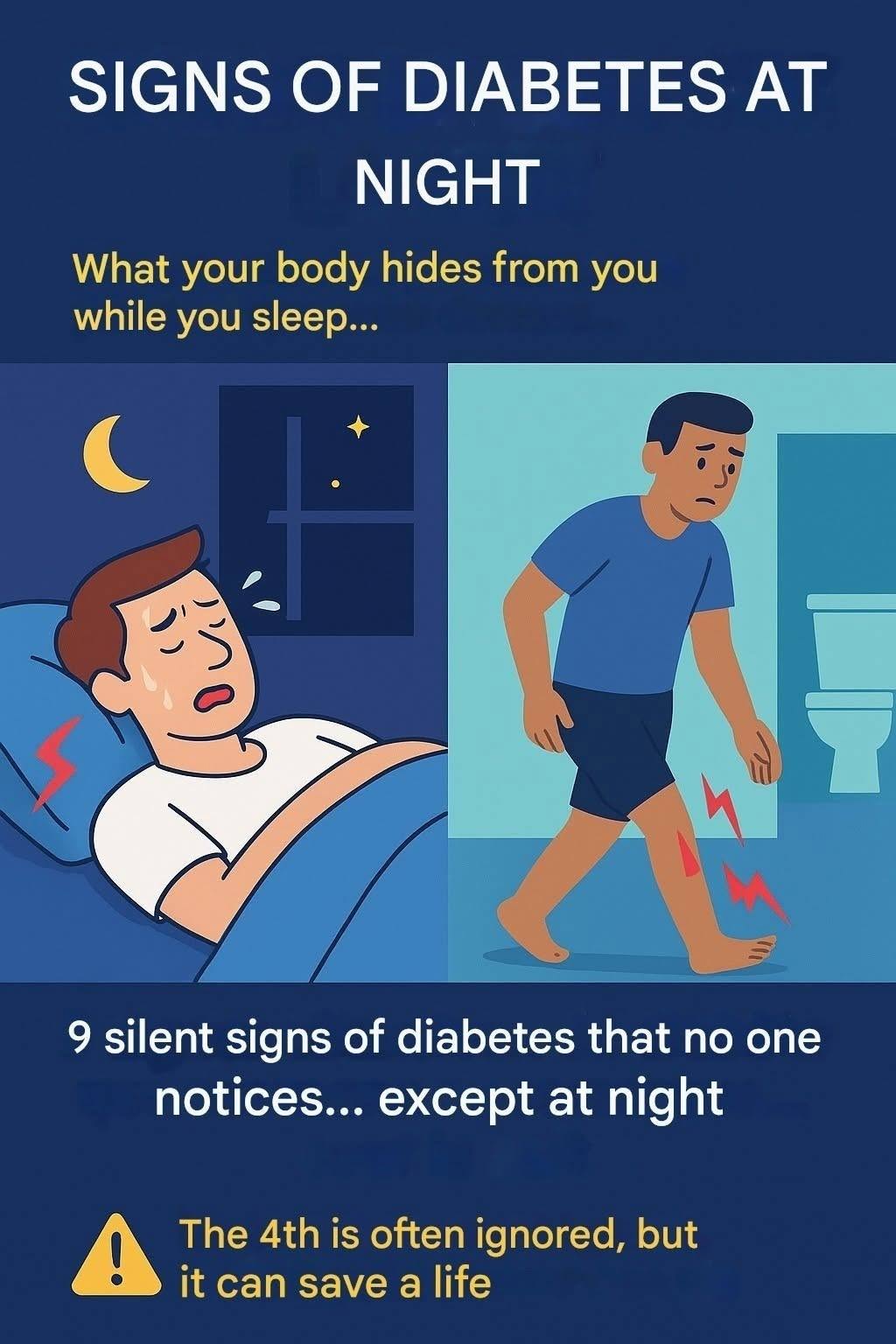
Diabetes can sometimes cause symptoms that become more noticeable at night, but there are no nine specific nighttime signs that reliably diagnose diabetes. Viral lists often mix common symptoms with less specific ones.
Here are nighttime symptoms that can be associated with diabetes:
- Frequent urination (nocturia): High blood sugar causes the kidneys to produce more urine.
- Excessive thirst: You may wake up feeling very thirsty because of fluid loss.
- Night sweats: These can occur if blood sugar drops too low during sleep, especially in people taking insulin or certain diabetes medications.
- Restless sleep: High or low blood sugar may make it harder to sleep well.
- Leg cramps or burning, tingling, or numbness: Nerve damage (diabetic neuropathy) can become more noticeable when you’re lying still.
- Dry mouth: Often related to dehydration from elevated blood sugar.
- Sleep apnea: People with type 2 diabetes are more likely to have obstructive sleep apnea, which causes repeated pauses in breathing during sleep.
- Hunger during the night: This can happen if blood sugar falls too low, particularly in people treated with insulin or some oral diabetes medications.
- Blurry vision upon waking: High blood sugar can temporarily affect the eye’s lens, leading to blurred vision.
These symptoms are not specific to diabetes and can have many other causes. The most common symptoms of diabetes overall include:
- Increased thirst.
- Frequent urination.
- Increased hunger.
- Unexplained weight loss (more common in type 1 diabetes).
- Fatigue.
- Blurred vision.
- Slow-healing cuts or sores.
- Frequent infections.
If you have persistent symptoms or are at risk for diabetes (for example, because of excess weight, a family history, or a history of gestational diabetes), it’s important to see a healthcare professional. A simple blood test, such as a fasting blood glucose test or an HbA1c test, can help determine whether you have diabetes or prediabetes.
If you experience confusion, loss of consciousness, severe difficulty breathing, or signs of very high or very low blood sugar, seek emergency medical care immediately.
