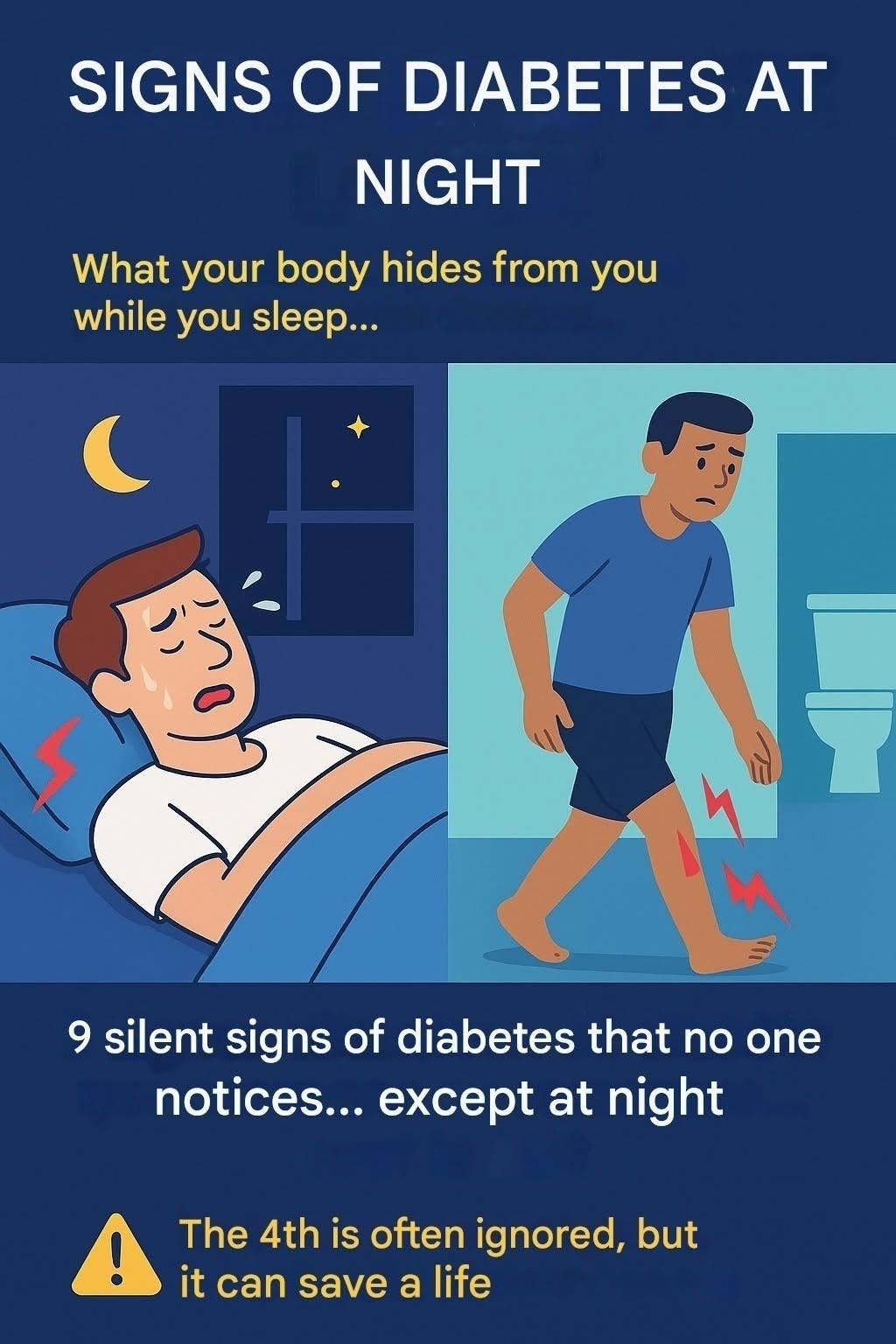
9 Signs of Diabetes That May Appear at Night: What You Need to Know
Diabetes can sometimes cause symptoms that become more noticeable at night. These signs do not always mean someone has diabetes, but if they are frequent or unexplained, it may be worth discussing with a healthcare professional and getting blood sugar checked.
1. Frequent nighttime urination
High blood sugar can cause the kidneys to remove extra glucose through urine, leading to more trips to the bathroom at night.
2. Excessive thirst at night
Fluid loss from frequent urination may leave you feeling unusually thirsty, even during the night.
3. Night sweats
Blood sugar that drops too low during sleep (especially in people taking certain diabetes medications) can sometimes cause sweating, shaking, or waking up feeling unwell.
4. Restless sleep or difficulty staying asleep
Blood sugar fluctuations, thirst, or frequent urination may interrupt normal sleep.
5. Tingling or numbness in hands and feet
Nerve changes related to long-term high blood sugar may cause burning, tingling, or numb sensations that are more noticeable at night.
6. Increased hunger after waking or during the night
Blood sugar problems can affect how the body uses energy, sometimes leading to unusual hunger.
7. Dry mouth
Dehydration from increased urination can contribute to a dry mouth, including overnight.
8. Leg cramps or discomfort
Some people with diabetes experience nerve-related discomfort or circulation changes that can affect the legs.
9. Feeling unusually tired in the morning
Poor sleep from nighttime symptoms or blood sugar changes may leave you feeling exhausted after waking.
When to consider getting checked:
Talk with a healthcare professional if you notice several of these signs, especially along with:
- Unexplained weight loss
- Blurred vision
- Slow-healing wounds
- Frequent infections
- Persistent fatigue
A simple blood glucose test or HbA1c test can help determine whether blood sugar levels are in a healthy range.
Note: These symptoms can have many causes besides diabetes, so they are not a diagnosis on their own.
