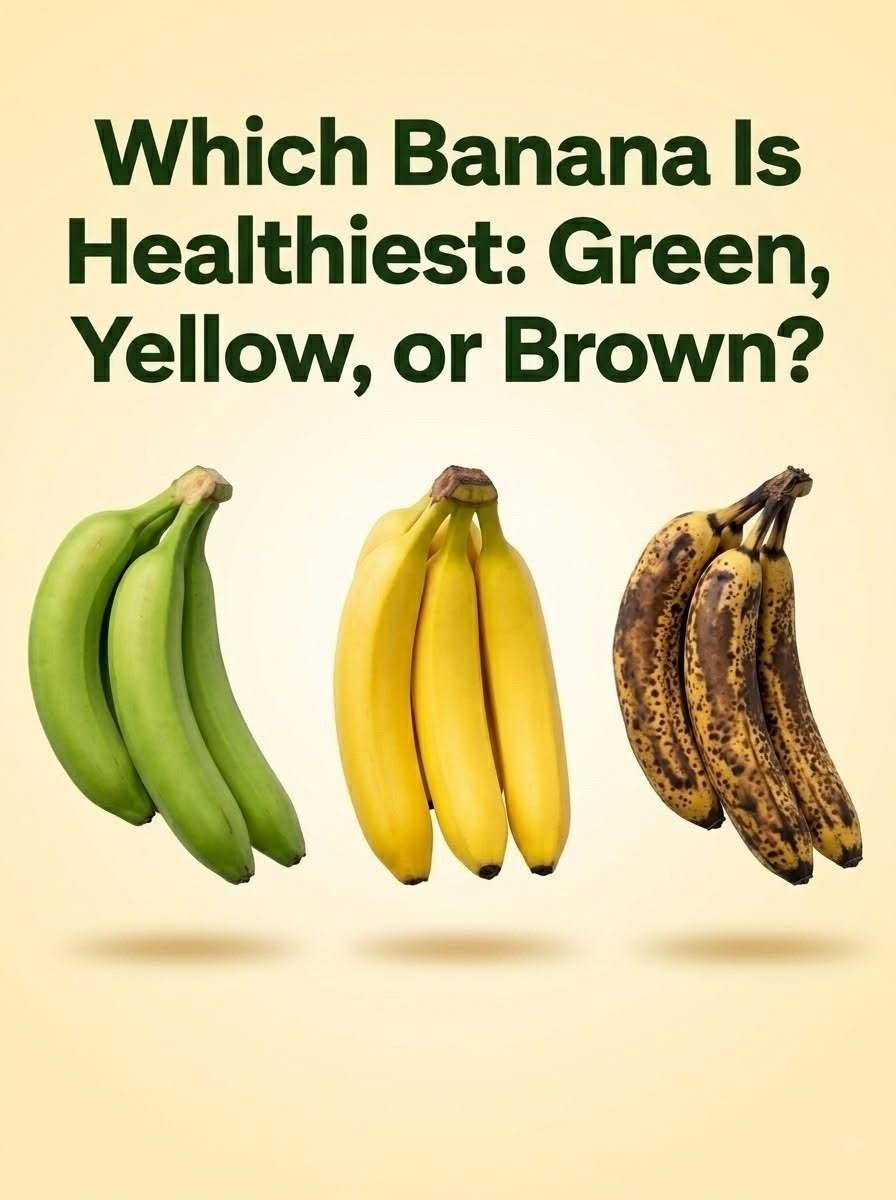
The “healthiest” banana depends on what you want from it. Bananas change as they ripen, so their effects are slightly different.
🍌 Green (unripe) banana
Best for: steadier blood sugar and gut health
- Contains more resistant starch, which acts somewhat like fiber.
- Usually causes a slower rise in blood sugar than a very ripe banana.
- May be less sweet and harder for some people to digest.
🍌 Yellow banana (ripe but not heavily spotted)
Best all-around choice for most people
- A good balance of fiber, natural sweetness, and nutrients.
- Provides potassium, vitamin B6, vitamin C, and carbohydrates for energy.
- Often easiest to digest.
🍌 Yellow banana with brown spots
Best for quick energy and baking
- More starch has converted into natural sugars.
- Sweeter and softer.
- Useful before activity or in smoothies, but may raise blood sugar more quickly.
🍌 Red bananas (where available)
- Similar nutrition to regular bananas.
- Their pigments provide additional antioxidant compounds.
For most healthy adults: a firm yellow banana with a few small brown spots is a great everyday option.
If you have diabetes or are watching blood sugar: a smaller portion, eaten with protein or healthy fat (such as nuts or yogurt), and a less-ripe banana may help reduce glucose spikes.
If you have kidney disease: ask your healthcare professional about potassium intake, since bananas are potassium-rich.
