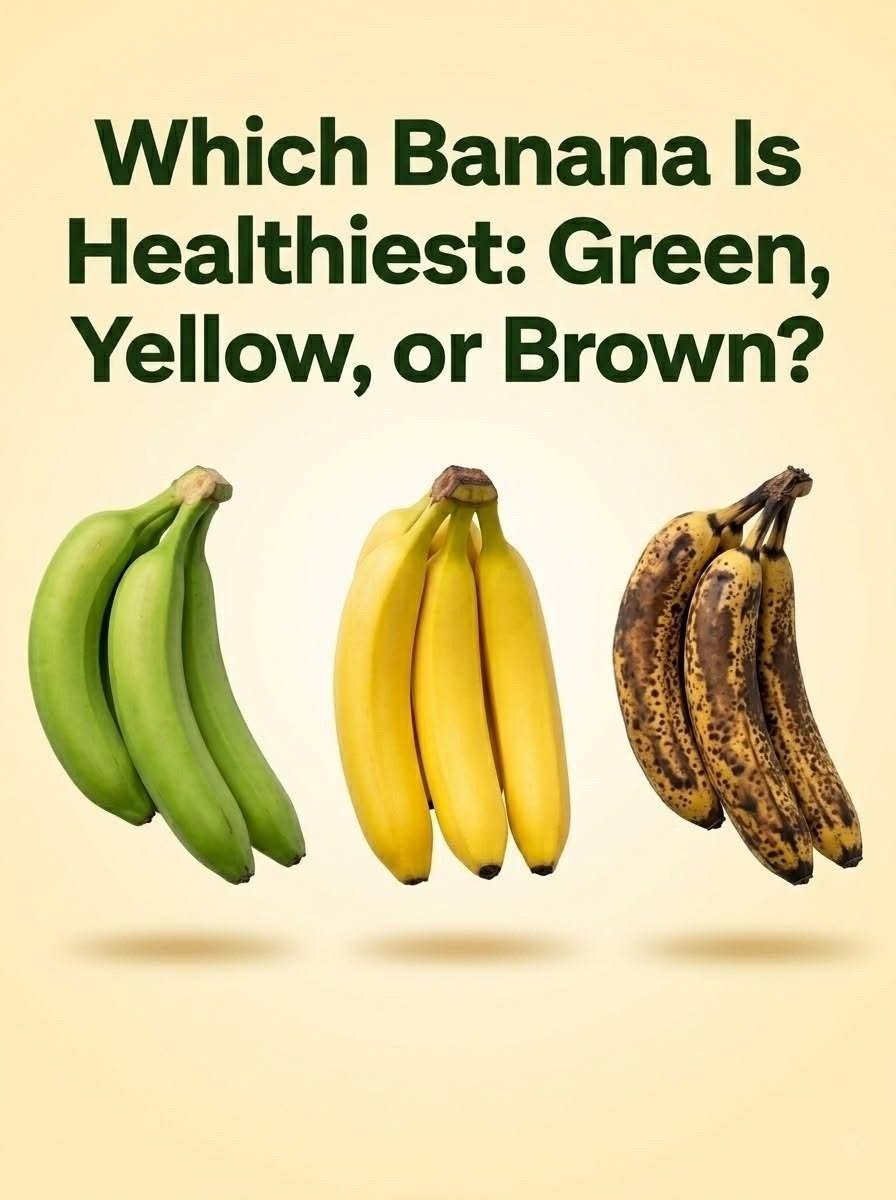
There isn’t a single “healthiest” banana—the best choice depends on your nutritional goals. As bananas ripen, their starches turn into sugars, changing their taste and how your body processes them.
🍏 Green (unripe) bananas
Best for: Blood sugar control and gut health
- Higher in resistant starch, which acts like fiber.
- May cause a slower rise in blood sugar.
- Can feel firmer and may be harder for some people to digest.
🍌 Yellow bananas
Best for: Most people
- A good balance of sweetness, fiber, and nutrients.
- Rich in potassium, vitamin B6, vitamin C, and carbohydrates for energy.
- Easy to digest and versatile.
🍯 Very ripe (brown-spotted) bananas
Best for: Quick energy
- More of the starch has been converted to natural sugars.
- Softer and sweeter, making them ideal for smoothies or baking.
- May raise blood sugar more quickly than less-ripe bananas.
Which one should you choose?
- For everyday health: A yellow banana is an excellent all-around choice.
- For diabetes or prediabetes: A less-ripe banana, eaten in moderation and paired with protein or healthy fat (such as yogurt or nuts), may help reduce blood sugar spikes.
- For exercise: A ripe banana can provide quick, easily digested carbohydrates before or after a workout.
No matter the ripeness, bananas are a nutritious fruit that provide fiber, vitamins, minerals, and natural energy. The differences between green, yellow, and brown bananas are relatively small compared with the overall benefits of including fruit in a balanced diet.
