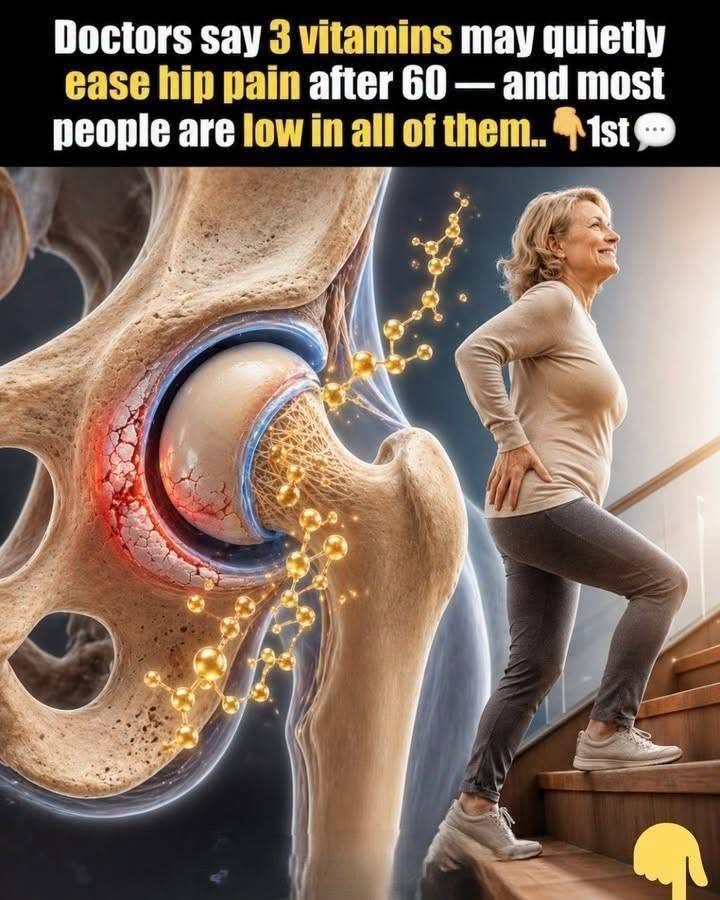
What hip arthritis actually is
The most common type is Osteoarthritis, which involves gradual breakdown of cartilage, changes in the underlying bone, inflammation, and other joint changes. There is no vitamin proven to reverse or cure osteoarthritis.
What medications do
Pain-relieving medications (such as Acetaminophen or Ibuprofen) mainly reduce pain and improve function. They do not reverse joint damage, but that doesn’t mean they’re “only treating a signal”—reducing pain can help people stay active, which is an important part of managing arthritis.
What about the “3 vitamins”?
Articles like this often mention:
- Vitamin D – Important for bone health, especially if you’re deficient. Correcting a deficiency can improve overall musculoskeletal health, but it has not been shown to cure hip osteoarthritis.
- Vitamin C – Needed for collagen production and general tissue health. Eating enough is important, but taking extra hasn’t been proven to stop or reverse arthritis.
- Vitamin K (or sometimes B vitamins) – Plays a role in bone and cartilage biology, but current evidence does not support taking it specifically to treat hip osteoarthritis unless you have a deficiency or another medical indication.
What has the strongest evidence?
For most people with hip osteoarthritis, the best-supported treatments include:
- Regular low-impact exercise and strengthening
- Maintaining a healthy weight, if applicable
- Physical therapy
- Pain-relieving medications when appropriate
- In some cases, joint injections or surgery if symptoms become severe
Bottom line
Vitamins are essential for good health, and treating a documented deficiency can be beneficial. However, there is no good evidence that a combination of three vitamins reaches the “cause” of hip arthritis or replaces standard treatments. If you’re considering supplements for hip pain, it’s a good idea to discuss them with your healthcare provider, especially because some vitamins can interact with medications or be harmful in high doses.
