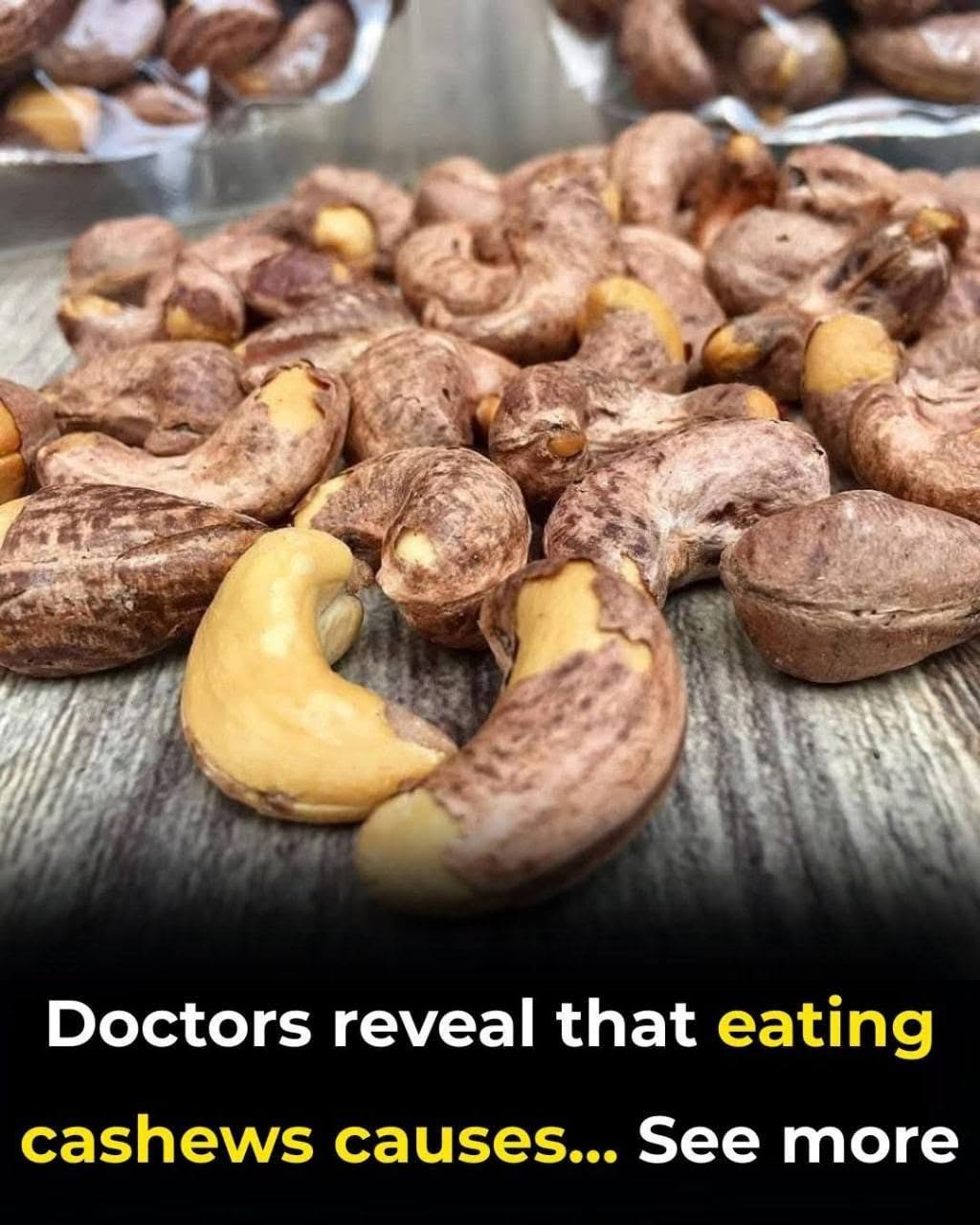
The headline “Doctors reveal that eating cashews causes…” is incomplete, and many versions of this claim online are misleading. Cashews are generally considered a healthy food for most people when eaten in moderation.
Here’s what is supported by evidence:
Potential benefits of cashews
- Heart health: Cashews contain mostly unsaturated fats, which can be part of a heart-healthy diet.
- Minerals: They are a good source of magnesium, copper, zinc, and iron.
- Protein and fiber: These nutrients can help with fullness and overall nutrition.
- Antioxidants: Cashews contain plant compounds that contribute to a balanced diet.
Things to keep in mind
- High in calories: A typical serving is about 1 ounce (28 g), or roughly 18–20 cashews.
- Allergies: Tree nut allergies can cause serious reactions in some people.
- Salted varieties: These can be high in sodium, so unsalted or lightly salted options are often a better choice.
- Kidney stones: Cashews contain oxalates. People who are prone to certain types of kidney stones may benefit from discussing nut intake with their healthcare professional.
For most people, eating a moderate amount of cashews as part of a balanced diet is safe and nutritious. No credible evidence shows that cashews, by themselves, cause disease in healthy individuals.
