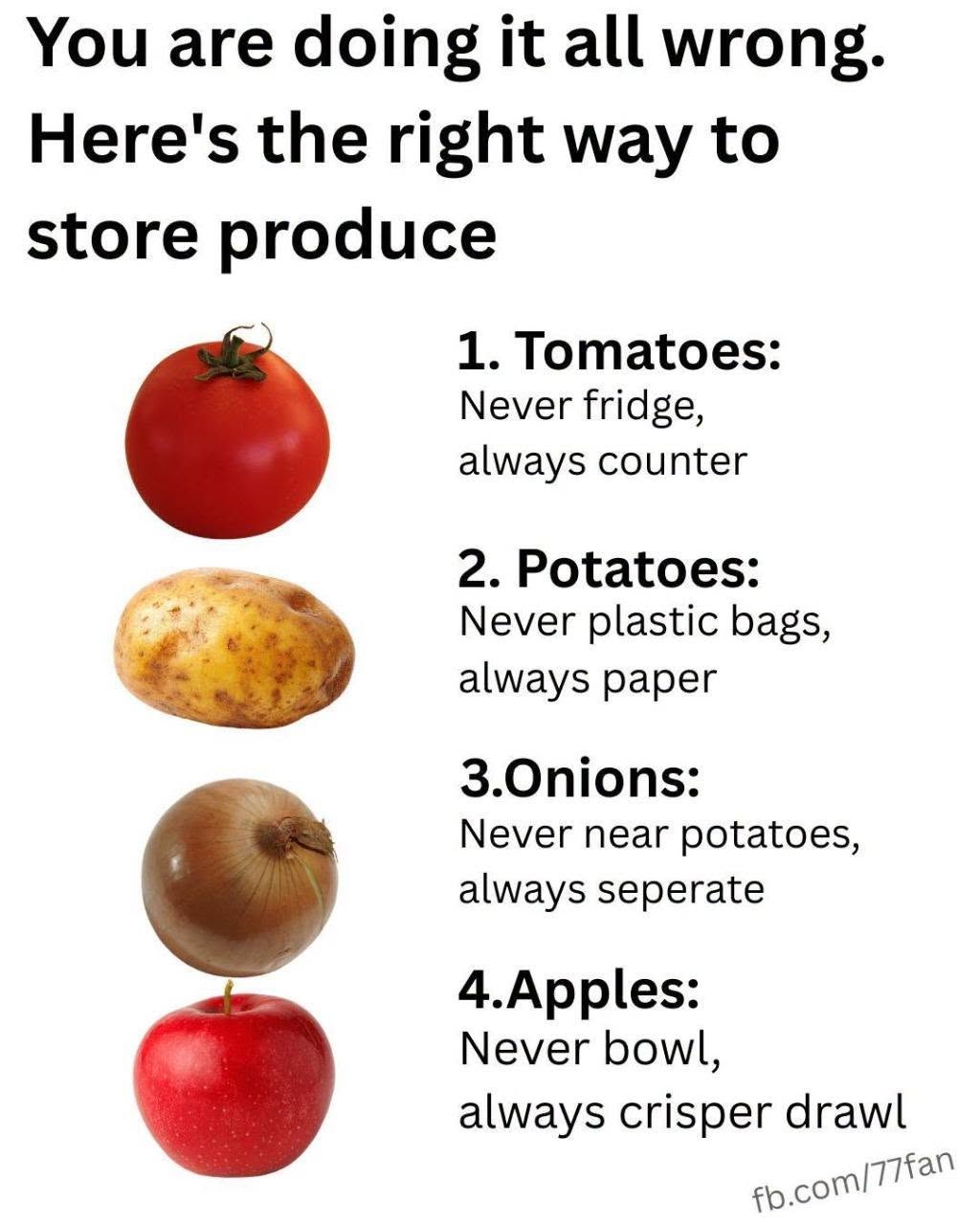
Many people store produce in ways that actually make it spoil faster. The “right” method depends on the type of fruit or vegetable, because some produce needs cold and humidity, while others do better dry and ventilated.
Better ways to store common produce
🍌 Bananas
- Keep them at room temperature.
- Separate them from other fruits if you want them to ripen more slowly.
- Once ripe, refrigerate if you need a few extra days (the peel may darken).
🥔 Potatoes
- Store in a cool, dark, dry place.
- Avoid the refrigerator and keep them away from onions.
🧅 Onions & garlic
- Store in a dry, well-ventilated area.
- Avoid sealed plastic bags that trap moisture.
🍅 Tomatoes
- Keep ripe tomatoes at room temperature for better flavor.
- Refrigerate only if they are very ripe and you need to slow spoilage.
🥬 Leafy greens
- Remove excess moisture.
- Store in the refrigerator with a paper towel in a container or bag to absorb moisture.
🍓 Berries
- Keep refrigerated.
- Wash just before eating; extra moisture can encourage mold.
🥕 Carrots, celery, and similar vegetables
- Store in the refrigerator, ideally in a container or drawer where they won’t dry out.
🍎 Apples
- Refrigerate to extend freshness.
- Keep away from produce that ripens quickly because apples release ethylene gas.
🥑 Avocados
- Leave unripe avocados at room temperature.
- Refrigerate once ripe to slow further softening.
A simple rule: keep moisture-loving vegetables cold and slightly humid, but keep dry-storage foods cool, dark, and well-ventilated. Avoid washing most produce before storing unless you can dry it completely.
