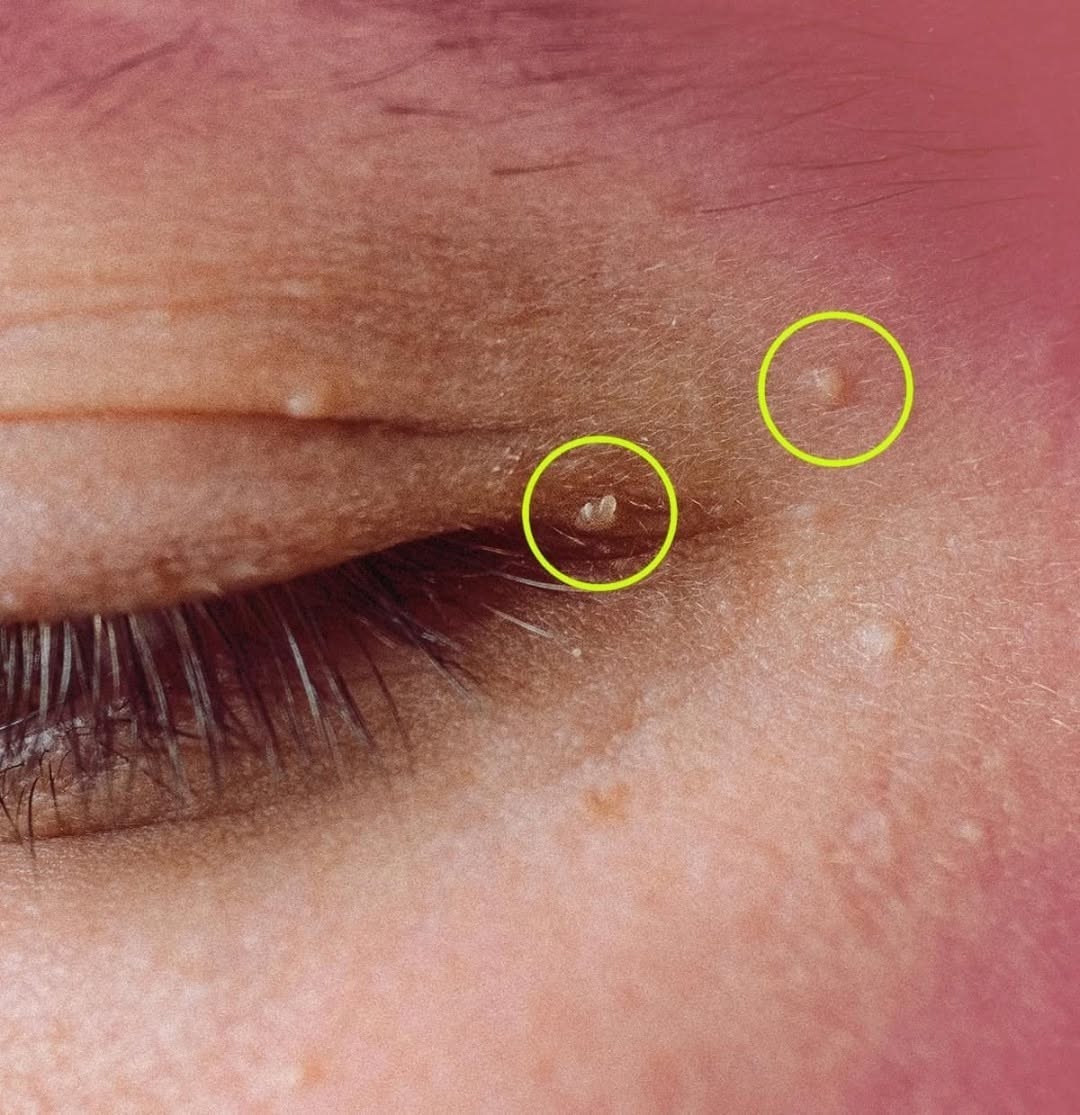
Milia are small, white or yellowish bumps that commonly appear on the face, especially around the eyes, cheeks, nose, and forehead. Despite what some articles call them, they are not “fat cysts.” They are tiny cysts filled with keratin, a protein found in the skin.
How to treat milia
1. Leave them alone if they’re not bothering you
- Milia are harmless and may disappear on their own, especially in infants.
2. Use gentle exfoliation
Products that increase skin cell turnover may help prevent new milia:
- Retinoids (such as adapalene or prescription tretinoin)
- Alpha hydroxy acids (AHAs), like glycolic or lactic acid
Use these products cautiously, especially around the eyes.
3. Avoid picking or squeezing
Unlike pimples, milia don’t have an opening. Trying to pop them can:
- Damage the skin
- Cause scarring
- Lead to infection
4. See a dermatologist for removal
If you want them removed, a dermatologist can safely extract them using a sterile needle or other appropriate techniques. This is usually quick and effective.
Prevention tips
- Wear sunscreen daily.
- Remove makeup thoroughly before bed.
- Choose skincare products that are appropriate for your skin type.
- Avoid overusing heavy creams if you notice they seem to contribute to milia.
When to seek medical advice
See a healthcare professional if:
- The bumps become red, painful, or swollen.
- They spread rapidly or keep returning.
- You’re unsure whether the bumps are actually milia.
Bottom line: Milia are harmless keratin cysts, not fat deposits. The safest approach is to avoid squeezing them and consider professional removal if they persist or bother you cosmetically.
