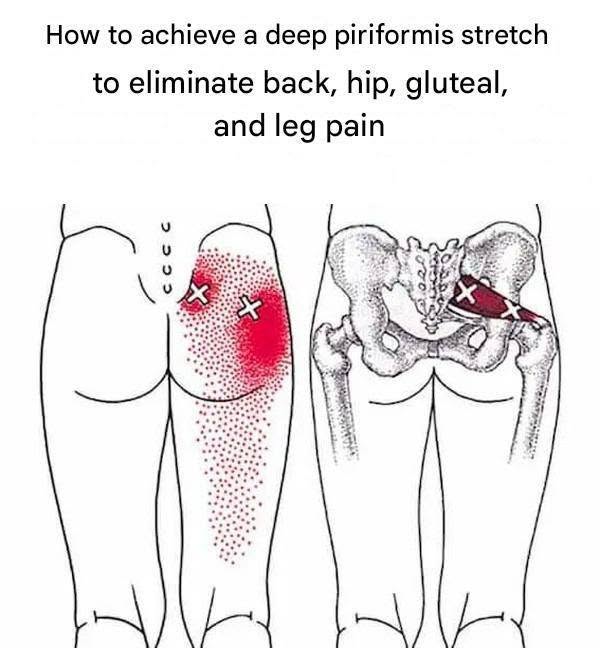
If you have piriformis syndrome, gentle stretching may help reduce muscle tightness and improve mobility. Symptoms often include pain deep in the buttock and sometimes pain, tingling, or numbness that radiates down the back of the leg. However, similar symptoms can also be caused by other conditions, such as a herniated disc, so an accurate diagnosis is important if symptoms persist.
Here are some commonly recommended stretches:
1. Figure-4 Stretch
- Lie on your back with your knees bent.
- Cross one ankle over the opposite knee.
- Reach behind the supporting thigh and gently pull it toward your chest.
- Hold for 20–30 seconds.
- Repeat 2–4 times on each side.
2. Knee-to-Opposite-Shoulder Stretch
- Lie on your back.
- Bring one knee toward your chest.
- Gently pull it toward the opposite shoulder.
- Hold for 20–30 seconds and repeat.
3. Seated Piriformis Stretch
- Sit in a chair with your back straight.
- Cross one ankle over the opposite knee.
- Lean forward from your hips until you feel a gentle stretch in the buttock.
- Hold for 20–30 seconds, then switch sides.
4. Pigeon Pose (Modified if Needed)
- Start on your hands and knees.
- Bring one knee forward and extend the other leg behind you.
- Lower yourself only as far as is comfortable.
- Hold for 20–45 seconds.
Tips
- Warm up with 5–10 minutes of light walking before stretching.
- Stretch gently—avoid bouncing or forcing the movement.
- Stop if the stretch causes sharp pain or significantly worsens numbness or tingling.
- If sitting aggravates your symptoms, stand up and move around every 30–60 minutes.
Strengthening can also help
For many people, stretching works best when combined with exercises that strengthen the:
- Gluteal muscles
- Hip stabilizers
- Core muscles
When to seek medical care
See a healthcare professional if you have:
- Severe or worsening pain
- Significant leg weakness
- Loss of bladder or bowel control
- Numbness in the groin or saddle area
- Symptoms that don’t improve after several weeks of conservative care
A physical therapist can also help determine whether the piriformis is actually the source of your symptoms and design a personalized exercise program.
