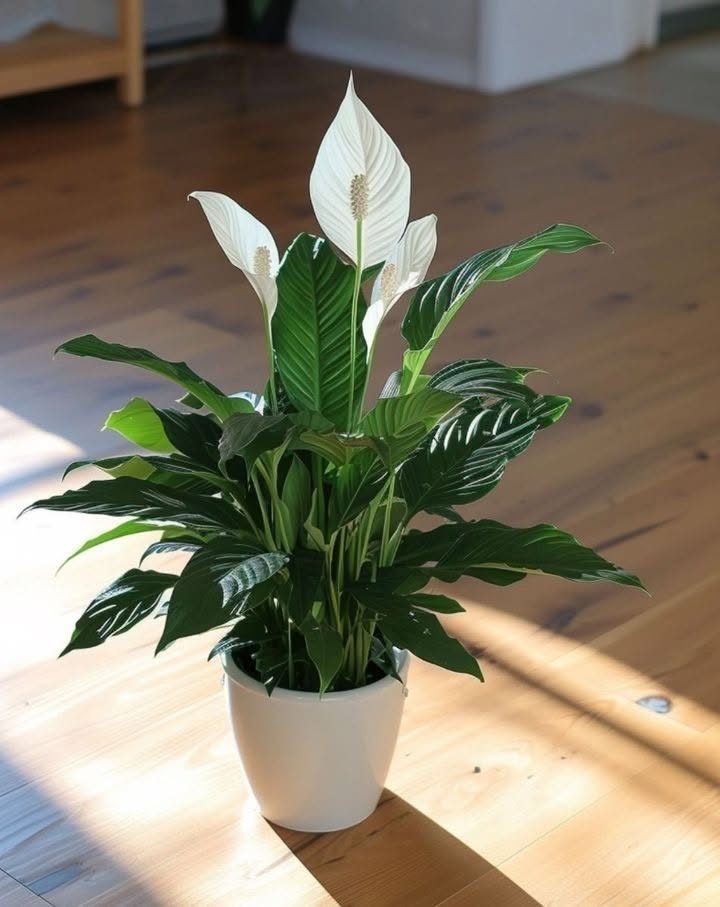
A peace lily (Spathiphyllum) can sometimes grow lots of leaves but refuse to flower. The good news is that blooming is usually encouraged by improving its growing conditions rather than using “miracle” additives.
11 ways to help your peace lily bloom
1. Give it brighter indirect light
- Peace lilies need enough light to produce flowers.
- Place it near a bright window with filtered light, away from harsh direct sun.
2. Avoid very low-light areas
- A peace lily may survive in dim light but often won’t bloom well.
3. Water consistently
- Keep the soil slightly moist, but don’t leave the roots sitting in water.
- Let the top layer of soil dry slightly before watering again.
4. Improve drainage
- Use a pot with drainage holes and a well-aerated potting mix to prevent root problems.
5. Fertilize lightly during active growth
- Use a balanced houseplant fertilizer at the recommended dilution.
- Overfertilizing can damage roots and reduce flowering.
6. Avoid too much nitrogen
- Excess nitrogen encourages large green leaves but may reduce blooms.
7. Keep humidity comfortable
- Peace lilies are tropical plants and appreciate moderate to higher humidity.
- Dry air can cause brown leaf tips and stress.
8. Maintain stable temperatures
- Keep the plant away from cold drafts, heaters, and sudden temperature changes.
- A comfortable range is roughly 18–29°C (65–85°F).
9. Repot only when necessary
- Peace lilies often bloom well when slightly root-bound.
- Repot when roots are crowded, circling heavily, or growing from drainage holes.
10. Remove old flowers and damaged leaves
- Trim spent blooms and unhealthy leaves so the plant can focus energy on new growth.
11. Be patient and consistent
- A peace lily may take weeks or months to respond after changes in light, watering, or feeding.
A common reason for no flowers
If your peace lily looks healthy but never blooms, insufficient light is one of the most common causes. Moving it to a brighter spot with indirect light is often the first thing to try.
Avoid adding household ingredients like sugar, milk, or random kitchen scraps to the soil—these can attract pests and disrupt the plant’s growing environment rather than encourage flowers.
