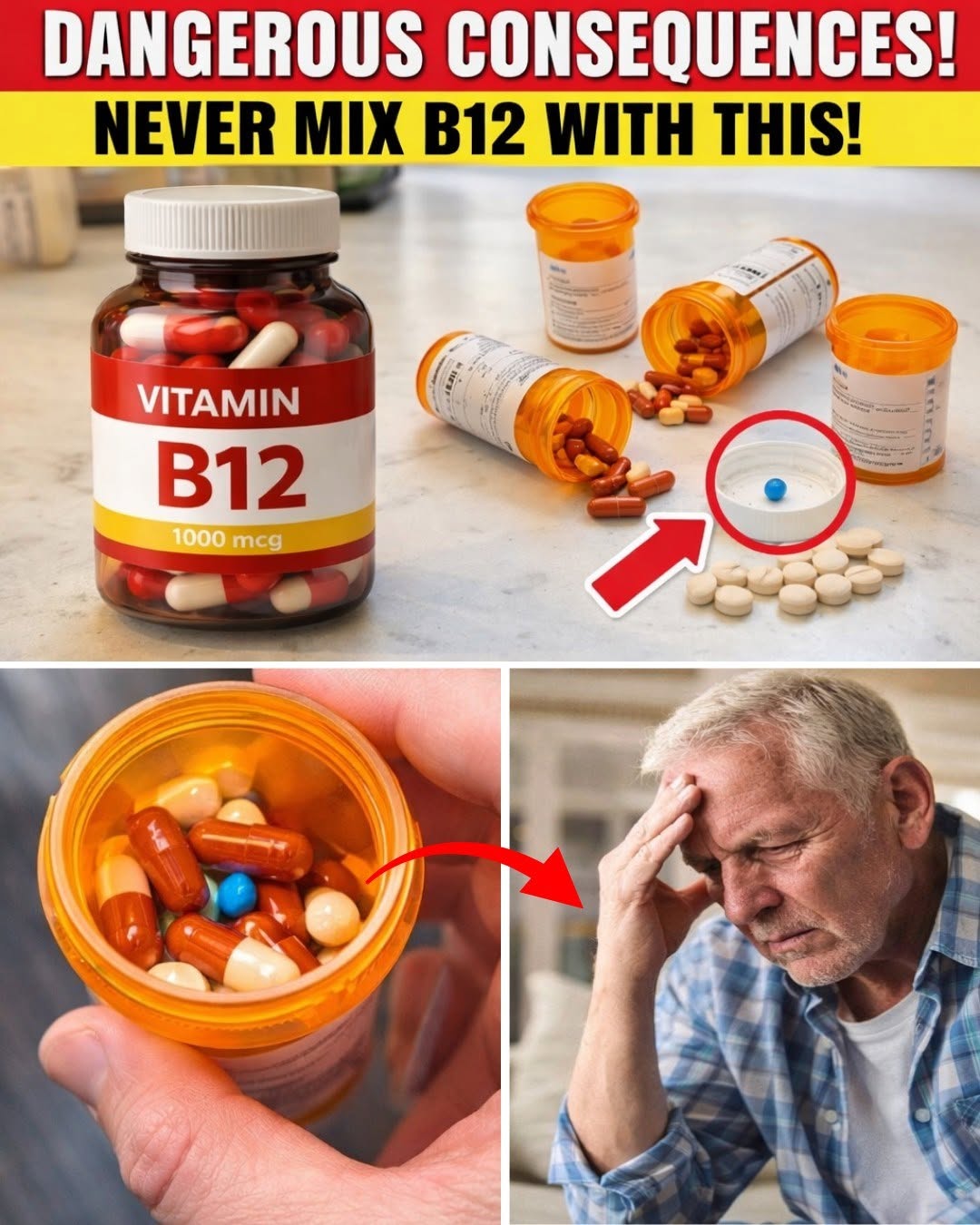
The headline “Cardiologist warns: NEVER take B12 with these 2 common medications after 60!” is a sensational claim. There is no widely accepted cardiology guideline that says adults over 60 should never take vitamin B12 with two common medications.
In fact, vitamin B12 is an essential nutrient, and some older adults are more likely to become deficient because of age or certain medications.
Medications commonly mentioned
1. Metformin (for type 2 diabetes)
- Long-term metformin use can reduce vitamin B12 absorption.
- This is why some people taking metformin are advised to have their B12 levels checked periodically.
- B12 supplements are not generally contraindicated with metformin.
2. Proton pump inhibitors (PPIs)
Examples include omeprazole, pantoprazole, and esomeprazole.
- These medicines reduce stomach acid, which can make it harder to absorb B12 from food over time.
- If B12 deficiency develops, a healthcare professional may recommend supplementation.
What about heart medications?
Vitamin B12 has few clinically important interactions with common heart medications. However, everyone’s medical situation is different, so it’s important to discuss supplements with your healthcare professional, especially if you take multiple prescription drugs.
Don’t stop or avoid B12 without a reason
If you have a diagnosed B12 deficiency, taking B12 as recommended is important because low levels can cause:
- Fatigue
- Numbness or tingling in the hands and feet
- Balance problems
- Memory or thinking difficulties
- Certain types of anemia
Bottom line
The claim that people over 60 should “never” take B12 with two common medications is not supported by current medical evidence. In fact, some commonly prescribed medications can increase the risk of B12 deficiency, making monitoring or supplementation appropriate rather than avoiding B12.
If you can tell me which two medications the article or video names, I can explain whether there is any genuine interaction or if the claim is misleading.
