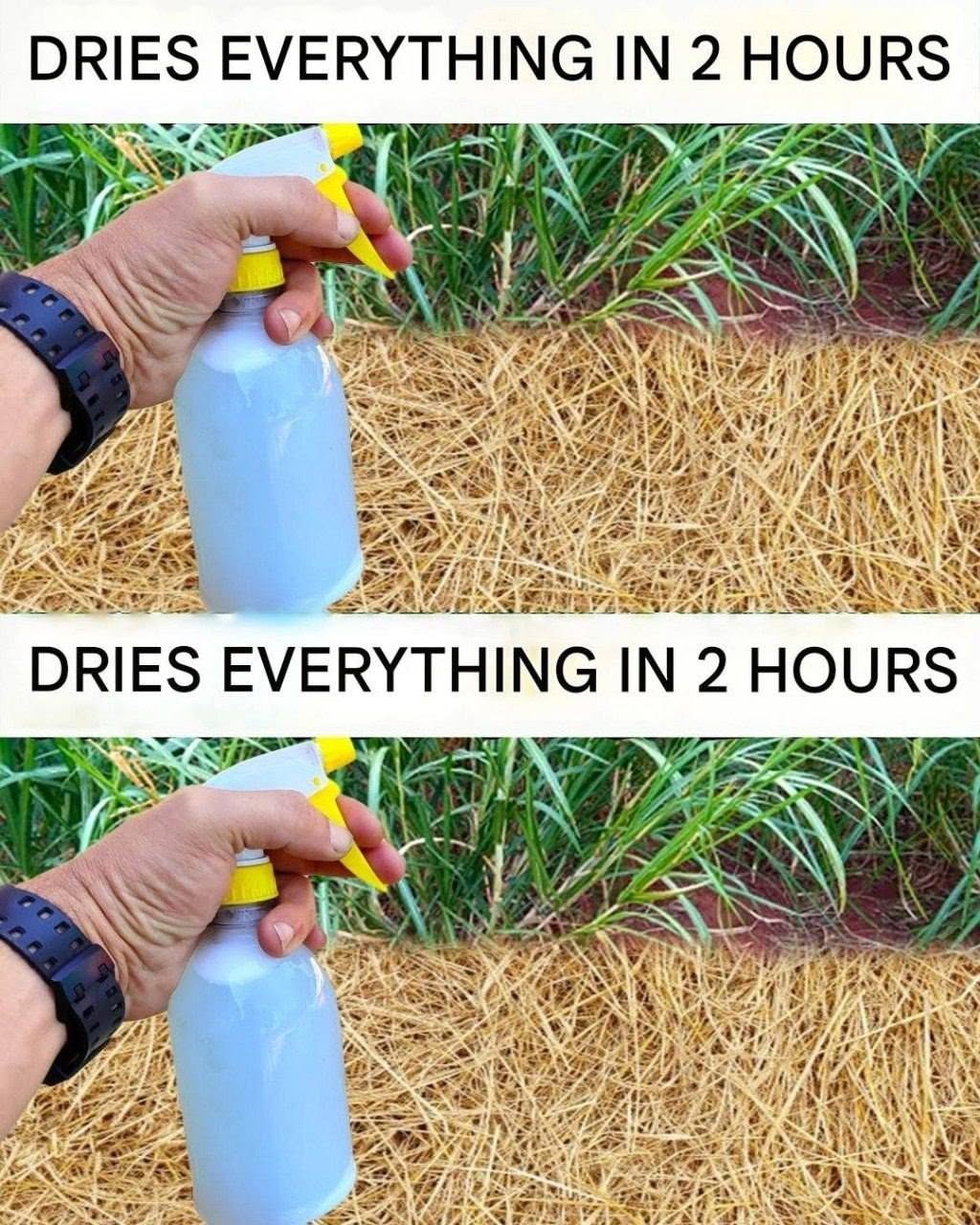
Many homemade “weed killers” are shared online as non-toxic alternatives, but claims like “kills every weed in 2 hours” are often exaggerated. Some natural mixtures can dry out or damage the leaves they touch, but they usually do not kill the roots of many established weeds, so regrowth is common.
A common homemade option is:
Vinegar-based weed spray (use carefully)
Ingredients
- White vinegar (higher-strength horticultural vinegar works better than household vinegar)
- A small amount of dish soap (optional, to help the spray stick)
How to use
- Pour the mixture into a spray bottle.
- Spray directly onto weed leaves on a dry, sunny day.
- Avoid spraying desirable plants.
Important cautions
- Vinegar is not selective—it can harm grass, flowers, vegetables, and other plants.
- Repeated use can affect soil conditions, especially with stronger vinegar products.
- It works best on young, small weeds rather than deep-rooted perennial weeds.
- Avoid spraying near waterways or areas where runoff could occur.
Safer long-term weed control
- Pull weeds after rain when soil is softer.
- Add mulch to block sunlight.
- Use ground covers to reduce open spaces where weeds grow.
If you tell me what weeds you’re trying to remove (grass weeds, dandelions, crabgrass, vines, etc.) and where they are growing (lawn, driveway, garden beds), I can suggest the best approach.
