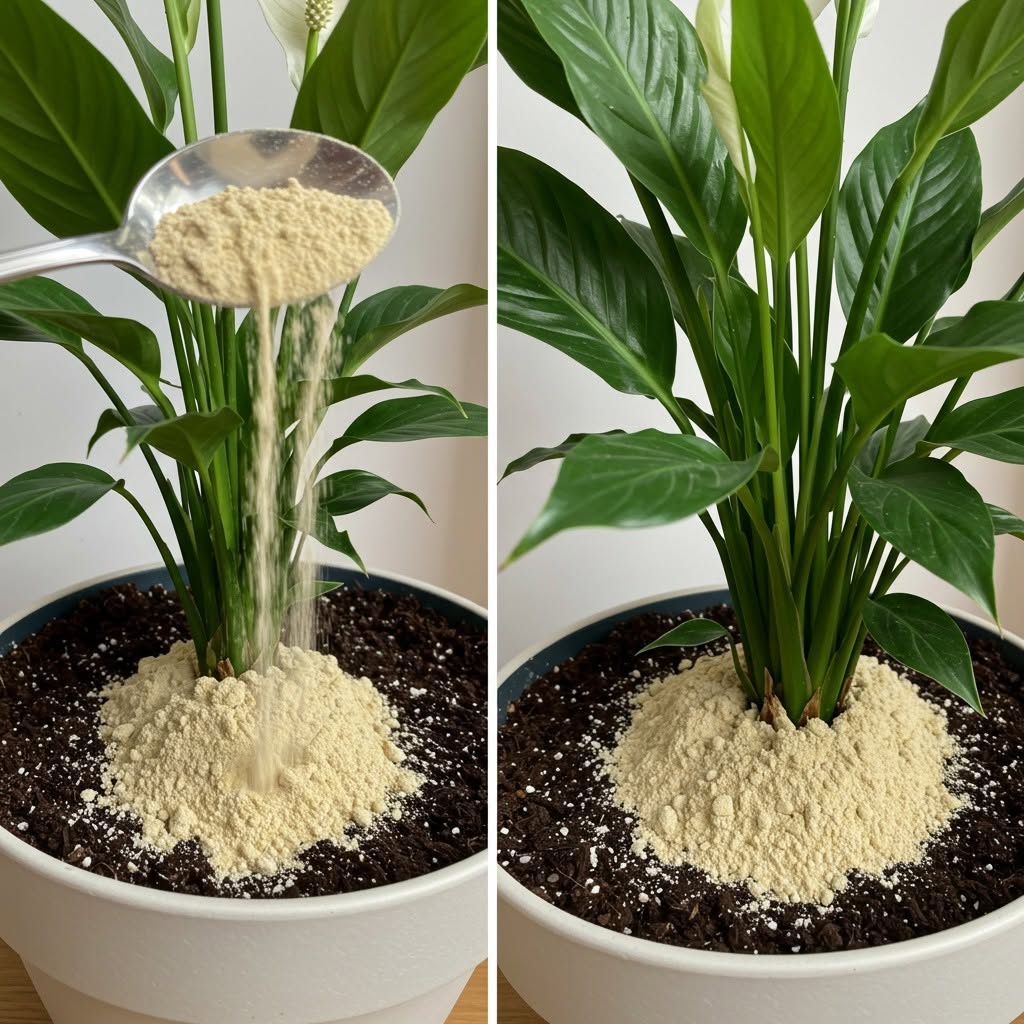
The claim “one ingredient will make a peace lily bloom for up to 10 years in a row” is a common gardening myth. There is no single ingredient that can guarantee continuous flowering for a decade.
A peace lily’s blooms depend on several factors working together.
What actually encourages blooming
- Bright, indirect light: This is the most important factor. Too little light is the most common reason peace lilies stop flowering.
- Consistent watering: Water when the top 1 inch (2–3 cm) of soil feels dry. Don’t let the pot sit in standing water.
- Regular feeding: During spring and summer, use a balanced houseplant fertilizer at half strength about every 6–8 weeks.
- Proper potting mix and drainage: Well-draining soil and a pot with drainage holes help keep roots healthy.
- Humidity: Peace lilies prefer moderate to high humidity.
- Remove old blooms: Cut off spent flowers to encourage the plant to produce new ones.
Be skeptical of “secret ingredients”
Viral posts often recommend items such as:
- Coffee grounds
- Banana peels
- Rice water
- Milk
- Sugar
- Baking soda
These are not proven to increase flowering and, if overused, may lead to mold, odors, pests, or nutrient imbalances.
With good care, a peace lily can remain healthy and bloom repeatedly for many years, but there is no evidence that a single household ingredient can make it bloom continuously for 10 years. If your peace lily isn’t flowering, increasing the amount of bright, indirect light is often the most effective first step.
