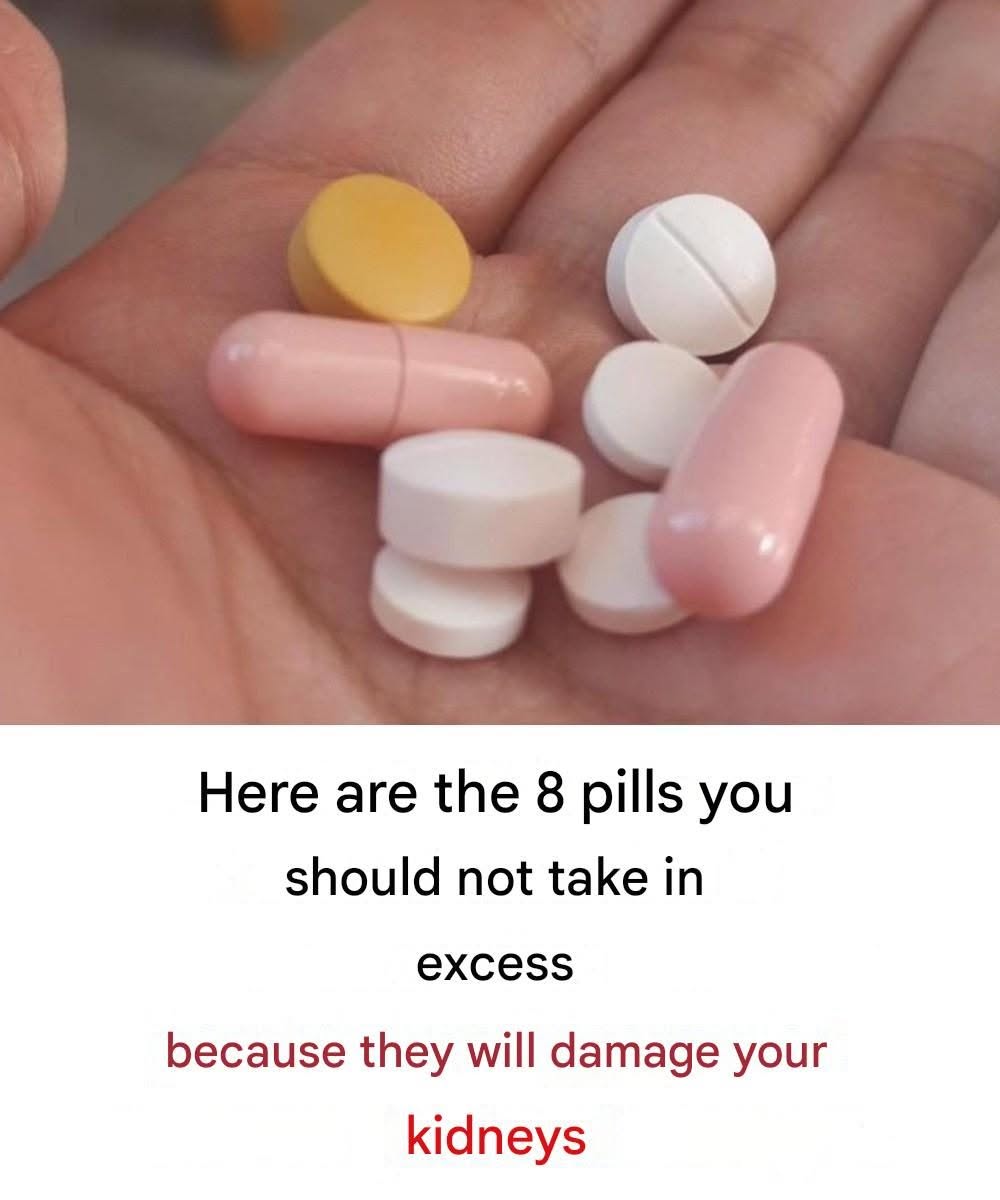
That headline is another fear-based oversimplification. There are no “eight pills you should never take” across the board. Most medications are safe when used correctly—but some can harm the kidneys in certain people, doses, or conditions, especially in older adults or those with dehydration or existing kidney disease.
The real concern is drugs that may stress kidney function in susceptible people, including conditions like Chronic Kidney Disease.
Here are common medication groups often linked to kidney risk (when misused or in high-risk patients):
1. NSAID painkillers
(e.g., ibuprofen, diclofenac, naproxen)
- Reduce blood flow to kidneys
- Risk increases with long-term use or dehydration
- Especially risky in older adults or kidney disease
2. Certain antibiotics
(e.g., aminoglycosides like gentamicin)
- Can be toxic to kidney cells at high doses
- Usually safe when properly monitored in hospitals
3. Diuretics (“water pills”)
(e.g., furosemide, hydrochlorothiazide)
- Can dehydrate the body if not balanced properly
- Overuse may strain kidney function indirectly
4. ACE inhibitors / ARBs (blood pressure drugs)
(e.g., lisinopril, losartan)
- Usually kidney-protective long-term
- But may temporarily change kidney function in some cases
👉 Important: these are NOT “bad drugs”—they are widely beneficial under supervision.
5. Some acid reflux medications
(long-term high-dose use of proton pump inhibitors like omeprazole)
- Linked in some studies to kidney inflammation in rare cases
- Risk is low but increases with prolonged use
6. Lithium (psychiatric medication)
- Long-term use can affect kidney concentrating ability
- Requires regular monitoring
7. Contrast dye (used in scans, not a pill but important)
- Can temporarily stress kidneys in vulnerable patients
- Risk higher in dehydration or pre-existing kidney disease
8. Certain antivirals or chemotherapy drugs
- Can affect kidney cells depending on dose and duration
- Always used under strict monitoring
🧠 Key reality check
- These drugs are not automatically harmful
- Risk depends on: dose, duration, hydration, and existing health conditions
- Many are life-saving when used correctly
⚠️ Biggest kidney risk factors are actually:
- Dehydration
- Diabetes
- High blood pressure
- Long-term uncontrolled medication use
- Existing kidney disease
❤️ Bottom line
There is no universal “do not take these pills” list. The real message is:
👉 Some medications require caution, not avoidance
If you want, I can give you a simple “kidney-safe medication guide” (what to avoid vs what is generally safe for pain, fever, and blood pressure) so it’s easy to understand in daily life.
