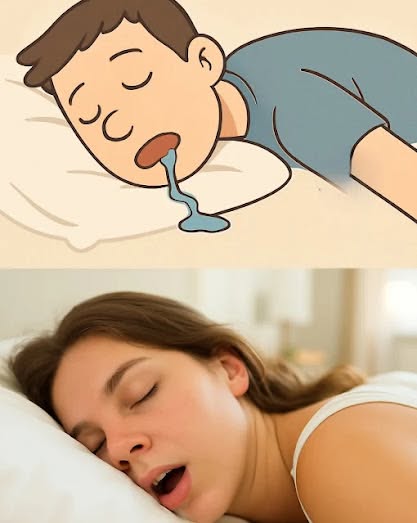
Drooling during sleep is usually harmless—but in some cases it can signal an underlying issue. The difference comes down to how often it happens, how much, and whether other symptoms are present.
Here’s a clear breakdown:
😴 When drooling while sleeping is NORMAL
Occasional drooling is very common and usually not a problem. It often happens because:
- You sleep on your side or stomach
- Your mouth opens slightly during deep sleep
- You produce more saliva during certain sleep stages
- You’re very tired or in deep sleep
👉 This is especially common in:
- Children
- Young adults
- People who change sleeping positions often
✔ If it’s occasional and you feel fine during the day, it’s usually normal.
⚠️ When drooling may need attention
Frequent or new-onset drooling can sometimes be linked to other issues:
🫁 1. Nasal blockage or mouth breathing
- Allergies
- Sinus congestion
- Deviated septum
👉 You breathe through your mouth at night, increasing drooling.
🧠 2. Neurological conditions (less common)
Problems affecting muscle control can increase drooling, such as:
- Stroke history
- Parkinson’s disease
- Other neurological disorders
(Usually comes with other symptoms too, like speech or movement changes.)
😴 3. Sleep disorders
Conditions like sleep apnea can cause:
- Mouth breathing
- Restless sleep
- Excess saliva leakage
💊 4. Medication side effects
Some drugs can increase saliva production or relax throat muscles.
🦷 5. Dental or jaw issues
- Poor bite alignment
- Mouth not fully closing during sleep
🚩 See a doctor if you notice:
- Sudden, new, or severe drooling
- Drooling with choking or swallowing problems
- Speech changes or facial weakness
- Daytime drooling as well
- Loud snoring or breathing pauses at night
🧠 Key takeaway
- Occasional drooling at night = normal
- Persistent or sudden drooling = check for airway, sleep, or neurological causes
If you want, I can also explain how to stop nighttime drooling naturally (sleep position, nasal breathing tricks, and simple fixes that actually work).
