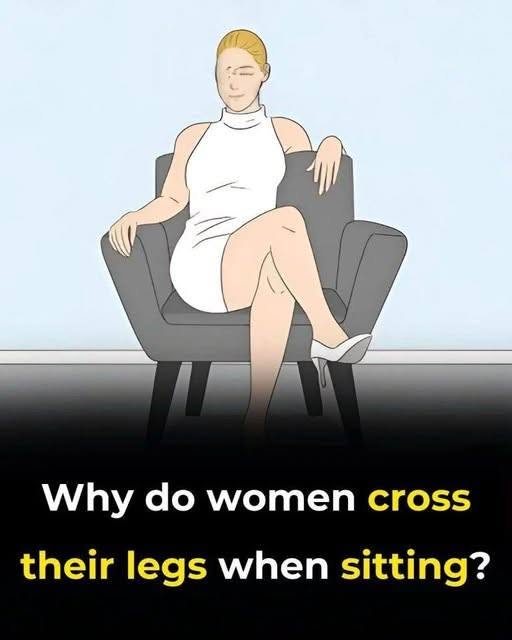
Women (and men) cross their legs when sitting for a mix of comfort, habit, posture, and social conditioning—there isn’t one single reason.
Here are the main factors:
1. Comfort and body position
Crossing the legs can feel physically comfortable in a seated position. It can:
- Reduce pressure on the lower back for some people
- Help shift weight and avoid stiffness
- Make sitting feel more stable or relaxed
2. Habit and learned behavior
Many people adopt sitting styles based on:
- Childhood habits
- Cultural norms
- What they see from others
In many societies, women are more often encouraged to sit with “closed” or “neat” leg positions.
3. Social and cultural expectations
In some cultures, sitting with legs crossed or together is seen as:
- More “polite” or “feminine”
- More modest in certain settings or clothing
This is social conditioning rather than biology.
4. Clothing and practicality
Clothing can influence posture:
- Skirts or dresses may make crossing legs feel more natural or secure
- Tight clothing may limit certain sitting positions
- Footwear like heels can also affect how people position their legs
5. Personal preference and anatomy
Comfort varies by person:
- Hip flexibility differs
- Some find crossing ankles or knees more comfortable than keeping legs flat
- There’s no “correct” way to sit physiologically
Important point
It’s not exclusive to women. Men also cross their legs, just sometimes in different styles (knee-over-knee, ankle-over-knee, or ankle crossing).
Bottom line
People cross their legs mainly because it’s comfortable and socially influenced, not because of gender-specific biology.
If you want, I can also explain whether leg-crossing affects circulation or posture (there are some myths around that).
