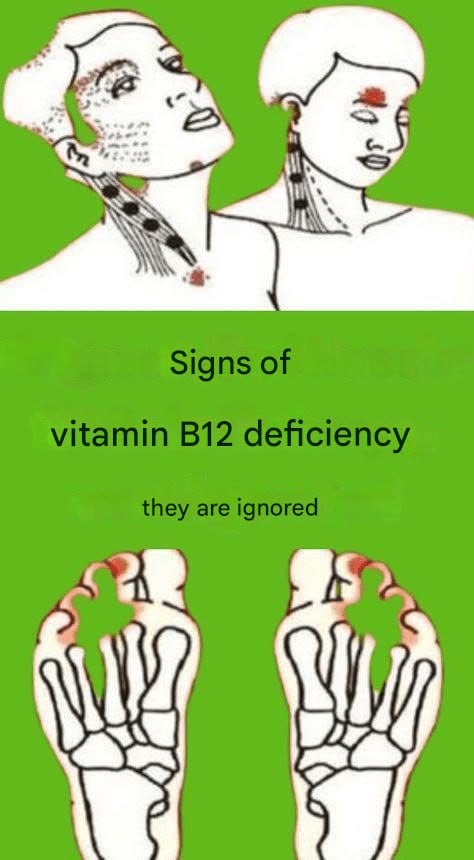
Vitamin B12 deficiency is often missed because its early signs are subtle and can look like stress, aging, or fatigue. Over time, though, it can affect the blood, nerves, and brain.
Here are the most commonly ignored or misattributed signs:
Early signs (often dismissed)
- Persistent tiredness or low energy (people think it’s “just stress” or poor sleep)
- Brain fog or difficulty concentrating
- Mild memory lapses (forgetting words, appointments)
- Low mood, irritability, or anxiety without clear cause
- Headaches or feeling “off” mentally
Physical signs that are often overlooked
- Pale or slightly yellowish skin tone
- Shortness of breath during light activity
- Heart palpitations
- Sore tongue or smooth, red tongue (glossitis)
- Mouth ulcers
Nerve-related signs (more serious, often ignored early)
- Tingling or “pins and needles” in hands or feet
- Numbness in extremities
- Balance problems or feeling unsteady while walking
- Burning sensation in feet
These neurological symptoms are especially important because they can become partly irreversible if deficiency continues.
Why it gets ignored
- Symptoms develop slowly over months or years
- It mimics stress, aging, anxiety, or poor sleep
- Blood levels can appear “low-normal” while tissue deficiency still exists
- People may not realize diet or absorption issues are involved
Common causes
- Low intake (especially in strict vegetarian or vegan diets)
- Reduced absorption with age
- Stomach issues (like gastritis) or medications that reduce acid production
- Conditions affecting intrinsic factor (needed for absorption)
If there’s suspicion of deficiency, a simple blood test for vitamin B12 (and sometimes MMA or homocysteine) can help confirm it.
If you want, I can also explain how long it takes to recover B12 levels and which foods or supplements actually work best.
