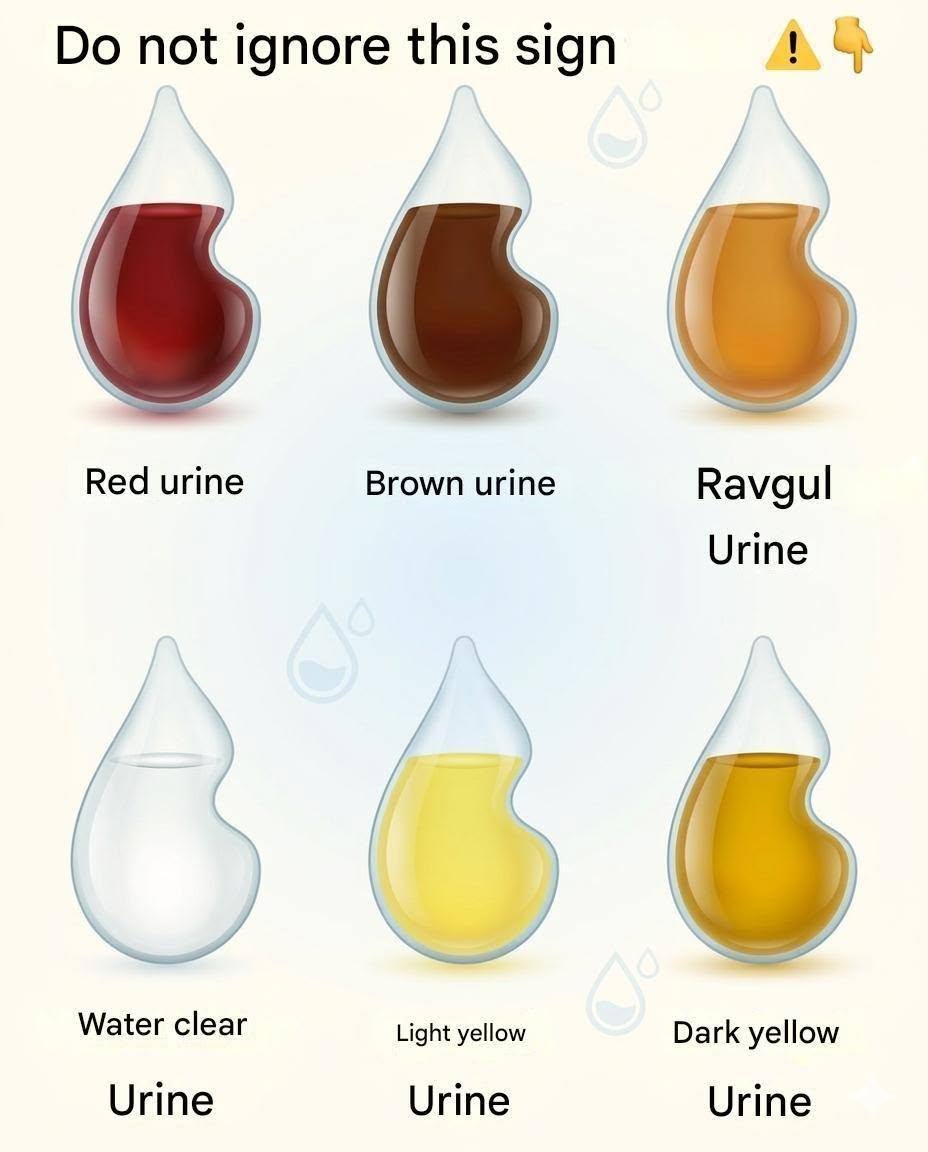
What Does the Color of Your Urine Say About Your Health?
The color of urine can give helpful clues about your hydration level and overall health. While occasional changes are normal and often harmless, persistent changes in urine color may sometimes indicate an underlying issue that needs attention.
Urine color mainly comes from a pigment called urochrome, which becomes more diluted or concentrated depending on how much water you drink and how your body is functioning.
🚰 Light Yellow to Pale Straw: Normal and Healthy
This is considered the ideal urine color.
It usually means:
- You are well hydrated
- Your kidneys are functioning normally
- Your body has a healthy fluid balance
This is the target range for most people.
💧 Clear Urine: Overhydration or High Fluid Intake
Completely clear urine often means you are drinking a lot of water.
It may indicate:
- High fluid intake
- Use of diuretics
- Occasionally overhydration
While generally not dangerous, consistently clear urine may mean you are drinking more water than your body needs.
🌞 Dark Yellow: Mild Dehydration
Dark yellow urine is one of the most common signs of dehydration.
It may mean:
- You need more fluids
- You’ve been sweating a lot
- You haven’t drunk enough water
This is usually easy to correct by increasing water intake.
🍊 Amber or Honey-Colored Urine: Dehydration Warning
Darker amber urine suggests more significant dehydration.
Possible signs include:
- Fatigue
- Dry mouth
- Dizziness
Increasing fluid intake is important if this persists.
🟤 Brown Urine: Possible Medical Concern
Brown urine should not be ignored.
It may be linked to:
- Severe dehydration
- Liver conditions (such as jaundice)
- Muscle breakdown (rare but serious)
- Certain medications
Seek medical advice if it continues or is accompanied by other symptoms like yellowing of the skin or eyes.
🌸 Pink or Red Urine: Blood or Food Pigments
Red or pink urine can be caused by:
- Blood in the urine (hematuria)
- Foods like beetroot or berries
- Certain medications
If food is not the cause, it should be checked by a healthcare professional.
🟠 Orange Urine: Dehydration or Medication
Orange urine may result from:
- Dehydration
- Liver or bile duct issues
- Certain medications (including some antibiotics or supplements)
If it persists, medical evaluation is recommended.
💚 Blue or Green Urine (Rare)
This is uncommon and usually caused by:
- Certain medications
- Food dyes
- Rare bacterial infections
It is often temporary but should be checked if unexplained.
⚠️ When to See a Doctor
Consult a healthcare professional if you notice:
- Blood in urine (red/pink not related to food)
- Brown or cola-colored urine
- Persistent unusual color changes
- Pain or burning during urination
- Fever or back pain
💡 Simple Ways to Keep Urine Color Healthy
- Drink enough water throughout the day
- Eat a balanced diet
- Avoid excessive caffeine or alcohol
- Monitor changes over time, not just once
🧠 Final Thoughts
Urine color is a simple but useful indicator of hydration and sometimes overall health. Most changes are harmless and linked to fluid intake or diet, but persistent or unusual colors should not be ignored.
Paying attention to your body’s signals can help you catch dehydration early and identify when something may need medical attention.
Source: Original educational article based on urology and nephrology guidance from general clinical health references and hydration physiology research.
