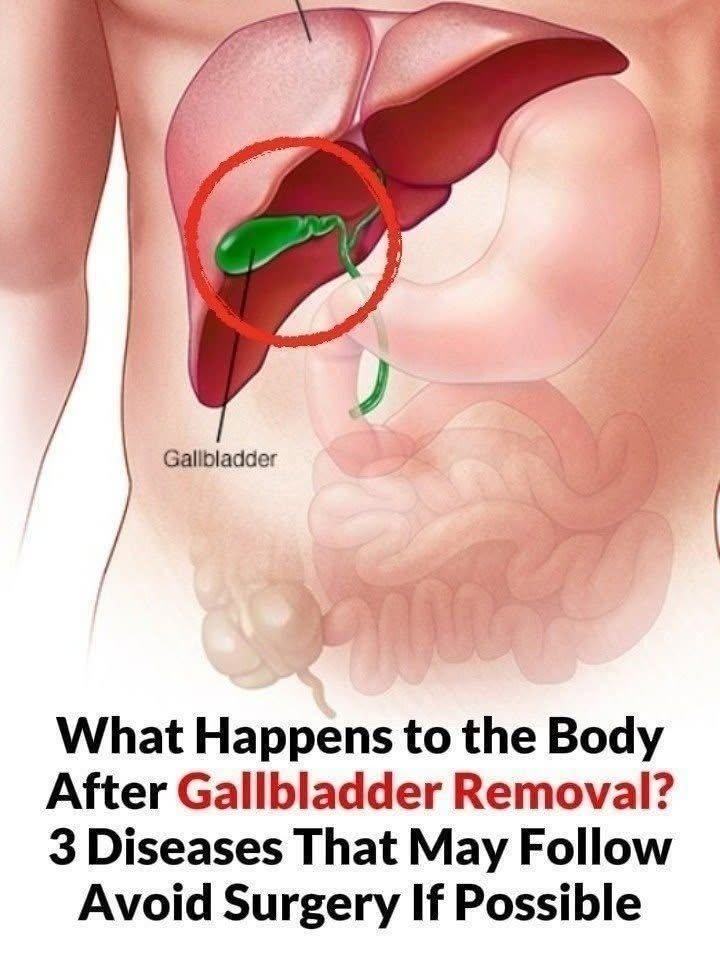
Headlines like “After Gallbladder Removal: 3 Conditions You Could Develop — Why You Should Avoid the Surgery When Possible” are often misleading. While Cholecystectomy has potential risks, it is a common and generally safe operation that can be the best treatment for certain gallbladder problems.
It’s also important to know that when surgery is clearly indicated—for example, for repeated painful gallstones or serious complications—avoiding it can sometimes be more dangerous than having it.
Three conditions or issues that can occur after gallbladder removal
- Diarrhea
- Some people have loose stools after surgery because bile flows continuously into the intestine instead of being stored in the gallbladder.
- This is often temporary, though a small percentage of people have longer-lasting symptoms.
- Post-cholecystectomy syndrome
- This term describes persistent or recurring symptoms such as abdominal pain, bloating, nausea, or indigestion after surgery.
- Symptoms may be due to changes in digestion or to another underlying condition rather than the surgery itself.
- Bile acid diarrhea
- In some people, excess bile acids reaching the colon cause chronic diarrhea.
- This can often be treated with medications that bind bile acids if it persists.
What changes after surgery?
The liver still produces bile. Without a gallbladder, bile flows directly into the small intestine instead of being stored and released in larger amounts during meals. Most people adapt to this change over time.
Should you avoid gallbladder removal?
Not necessarily. It depends on why it’s being recommended.
For example, surgery is commonly recommended for:
- Symptomatic Gallstones causing repeated attacks
- Acute cholecystitis
- Gallstone-related pancreatitis
- Other complications involving the gallbladder
If gallstones aren’t causing symptoms, surgery is often not recommended, although there are exceptions.
Bottom line
Gallbladder removal can lead to digestive changes in some people, but most recover well and live normal lives without major dietary restrictions. Whether to have surgery should be based on your symptoms, the severity of your gallbladder disease, and a discussion of the risks and benefits with your healthcare team—not on a sensational headline.
If you want, I can also explain:
- Which foods are easiest to digest after gallbladder removal, or
- When gallstones can be managed without surgery.
