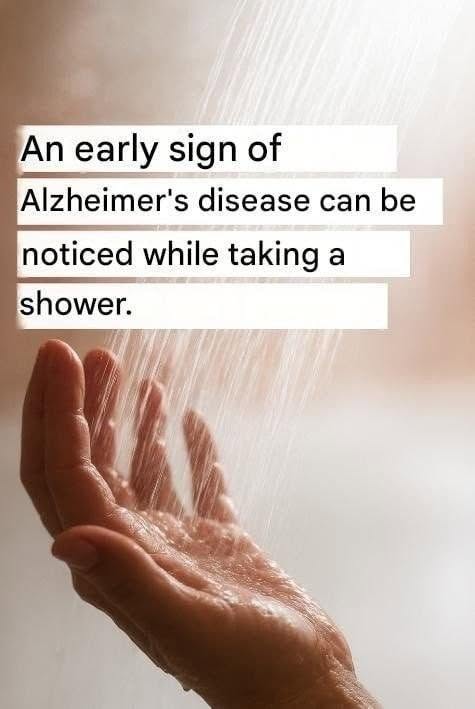
The statement “An early sign of Alzheimer’s disease can be noticed while taking a shower.” is misleading if presented on its own. There isn’t a single shower-related behavior that reliably indicates early Alzheimer’s disease.
What can happen is that changes during everyday activities like bathing may sometimes reflect early problems with memory or thinking. Examples include:
- Forgetting the sequence of steps (e.g., shampooing multiple times or forgetting to rinse).
- Difficulty operating familiar shower controls or adjusting water temperature.
- Becoming confused about how to complete the task.
- Needing increasing help with a routine that was previously easy.
These kinds of changes are not specific to Alzheimer’s disease. They can also result from:
- Normal aging.
- Stress, anxiety, or depression.
- Medication side effects.
- Vision or hearing problems.
- Other neurological or medical conditions.
Early Alzheimer’s disease more commonly shows up as:
- Repeatedly forgetting recently learned information.
- Asking the same questions over and over.
- Difficulty planning or solving familiar problems.
- Getting lost in familiar places.
- Trouble finding words or following conversations.
- Misplacing items and being unable to retrace steps.
If someone develops persistent changes in memory or thinking that interfere with daily life, it’s a good idea to schedule an evaluation with a healthcare professional. Early assessment can help determine whether the cause is Alzheimer’s disease, another form of dementia, or a different—and sometimes treatable—condition.
