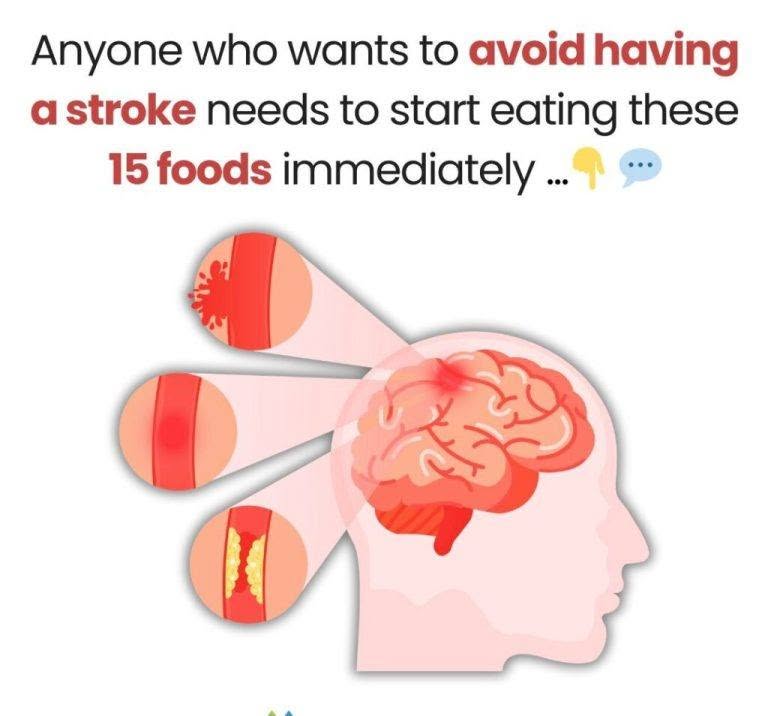
The claim “Anyone Who Wants to Avoid Having a Stroke Needs to Start Eating these 15 Foods Immediately” is a common health headline style, but there is no single list of foods that can guarantee stroke prevention. However, research does show that certain eating patterns can lower stroke risk by improving blood pressure, cholesterol, blood sugar, and overall heart health.
Foods commonly recommended as part of a stroke-preventive diet include:
- Leafy green vegetables (spinach, kale, lettuce)
- Rich in potassium, folate, and antioxidants.
- Berries (blueberries, strawberries, raspberries)
- Provide fiber and plant compounds linked with cardiovascular health.
- Fatty fish (salmon, sardines, trout)
- High in omega-3 fats that support heart health.
- Nuts (walnuts, almonds, pistachios)
- Provide healthy fats, minerals, and fiber.
- Beans and lentils
- High in plant protein and soluble fiber, which can help manage cholesterol.
- Whole grains (oats, brown rice, whole-grain bread)
- Associated with better blood pressure and metabolic health.
- Olive oil
- A key part of Mediterranean-style eating patterns.
- Avocados
- Provide unsaturated fats, potassium, and fiber.
- Tomatoes
- Contain potassium and antioxidants such as lycopene.
- Garlic and onions
- Add flavor while supporting a heart-healthy diet.
- Low-fat dairy or fortified alternatives
- Can provide calcium and protein with less saturated fat.
- Colorful vegetables (peppers, carrots, broccoli)
- Provide vitamins, minerals, and protective plant compounds.
- Fruit in general (apples, oranges, citrus fruits)
- Helps increase fiber and nutrient intake.
- Seeds (flaxseed, chia seeds)
- Provide fiber and healthy fats.
- Herbs and spices
- Help reduce reliance on excess salt.
Foods to limit for stroke risk reduction
- Processed meats (such as sausages and bacon)
- Excess salt and very salty packaged foods
- Sugary drinks
- Trans fats and many highly processed foods
- Excess alcohol
The bigger picture
The strongest evidence supports overall eating patterns such as the Mediterranean diet and the DASH (Dietary Approaches to Stop Hypertension) diet, rather than any single “miracle” food.
The most important stroke-prevention steps also include:
- Controlling high blood pressure
- Not smoking
- Staying physically active
- Managing diabetes and cholesterol
- Maintaining a healthy weight
- Taking prescribed medications when needed
If you want, I can also provide a simple 7-day stroke-prevention meal plan based on these principles.
