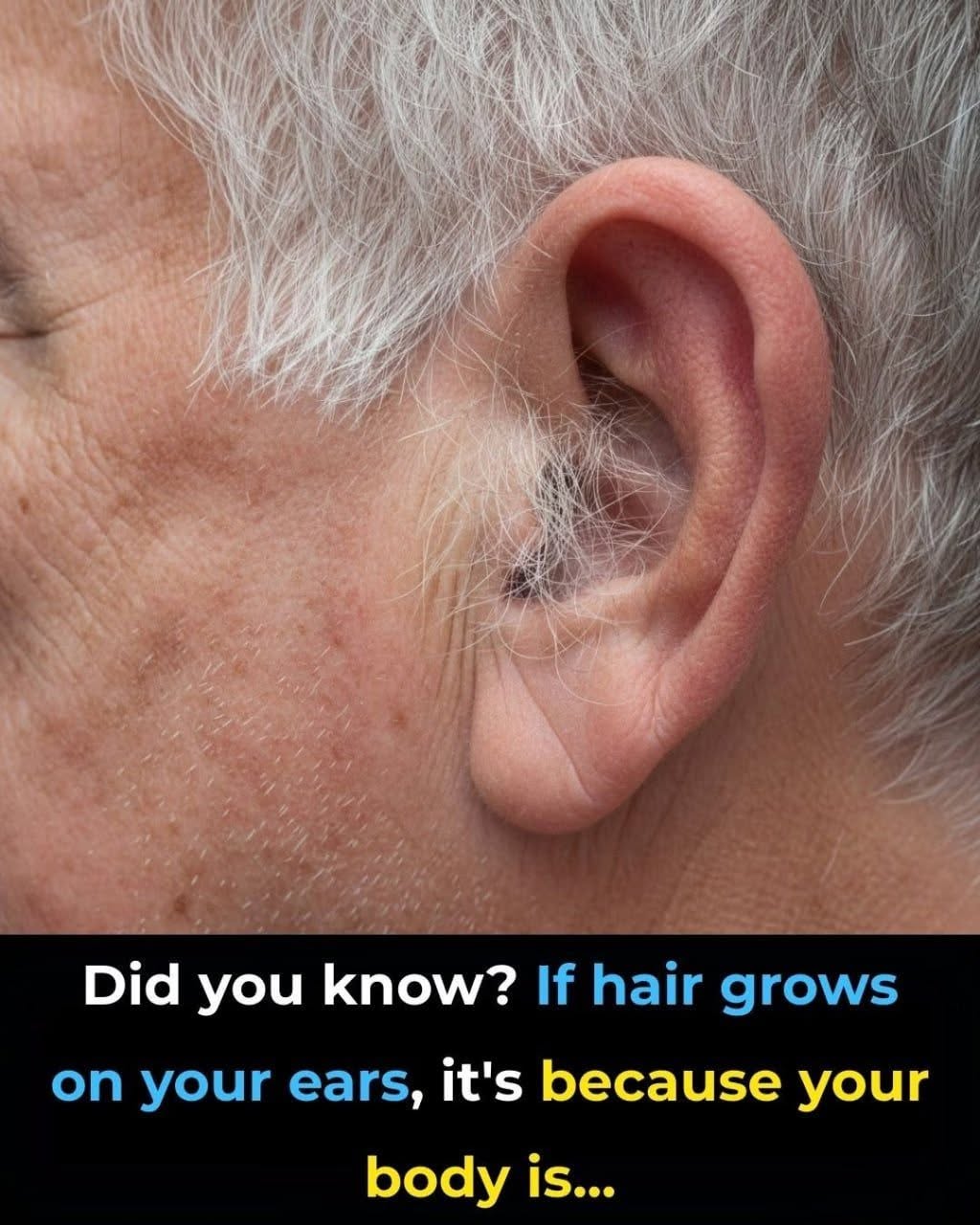
That headline is misleading. Hair growing on the ears is usually a normal part of aging and genetics—not a secret message from your body.
Here’s what actually influences ear hair growth:
- Age: Ear hair often becomes more noticeable as people get older, especially in men.
- Hormones: Androgens (such as testosterone and related hormones) can cause some hair follicles to produce thicker, longer hairs over time.
- Genetics: Some people are simply more likely to develop prominent ear hair than others.
Common myths
You may see claims that ear hair means:
- High testosterone ❌
- Poor health ❌
- Heart disease ❌
- Vitamin deficiency ❌
These claims are not supported by strong scientific evidence. While a few older studies looked for associations between ear hair and certain health conditions, they did not establish that ear hair causes or reliably predicts disease.
When should you be concerned?
Ear hair itself is generally harmless. However, if you notice:
- Sudden, excessive hair growth in many areas of the body
- Other symptoms such as unexplained weight changes, fatigue, or hormonal changes
it’s worth discussing with a healthcare professional, as those broader changes—not ear hair alone—could warrant evaluation.
Bottom line
For most people, hair growing on the ears is a normal variation related to aging, hormones, and genetics. It is not a reliable indicator of your overall health or of a specific medical condition.
