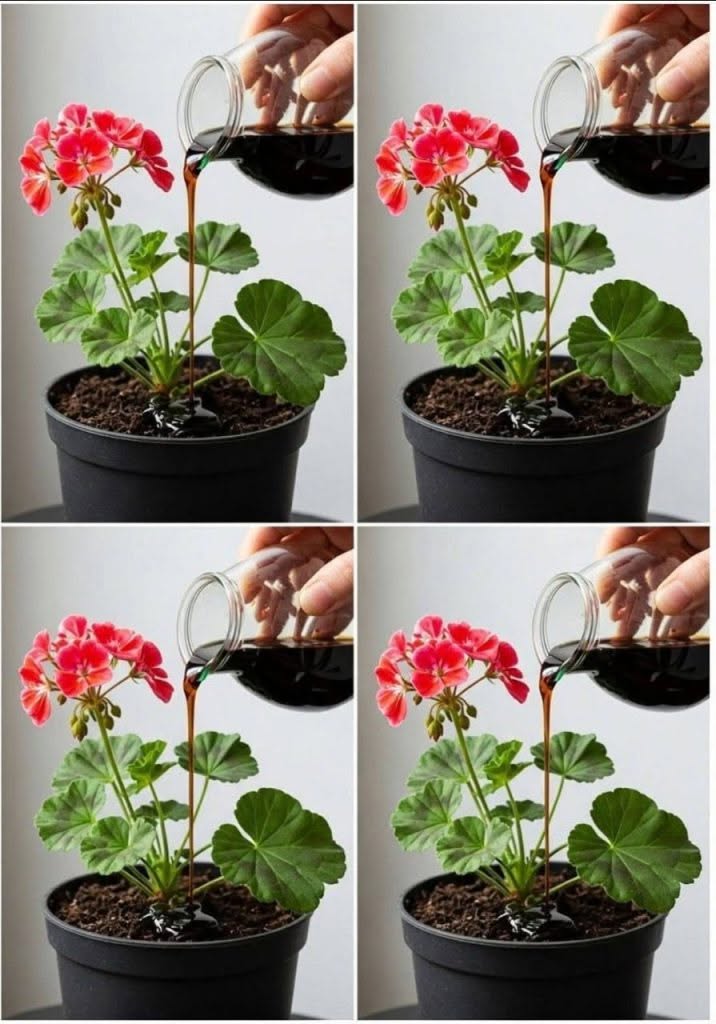
It’s a bit of a marketing-style claim—geraniums (more accurately Pelargoniums, the common “geraniums” in pots) can bloom for a very long time, but “almost continuously for over a year” only happens if their basic needs are kept ideal and spent flowers are removed consistently.
If you want the closest thing to nonstop blooming, here’s what actually makes the difference:
Give them strong light every day. These plants are basically sun engines. They need at least 5–8 hours of direct sunlight; without it, they’ll grow leaves but slow or stop flowering.
Deadhead constantly. As soon as a flower cluster fades, pinch or cut it off. This stops the plant from putting energy into seed production and forces it to keep producing new buds.
Feed lightly but regularly. A fertilizer higher in potassium (the “flowering” nutrient) every 2–3 weeks during active growth keeps blooms coming. Too much nitrogen will give you lots of leaves and fewer flowers.
Don’t overwater. Let the top soil dry out before watering again. Constantly wet soil leads to weak growth and fewer blooms.
Keep them slightly “root-bound.” Geraniums often flower better when they’re a bit tight in their pots rather than in oversized containers.
Prune hard during growth cycles. Cutting back leggy stems encourages branching, and more branches = more flower heads.
Protect them from temperature stress. They perform best in mild warmth; extreme heat or cold will pause flowering.
If you follow all of this closely, you can get very long, nearly continuous blooming periods—especially in mild climates or under strong sunlight—but they still tend to have brief resting phases now and then.
If you want, tell me whether yours are in pots or ground and your climate conditions, and I can tailor it more precisely.
