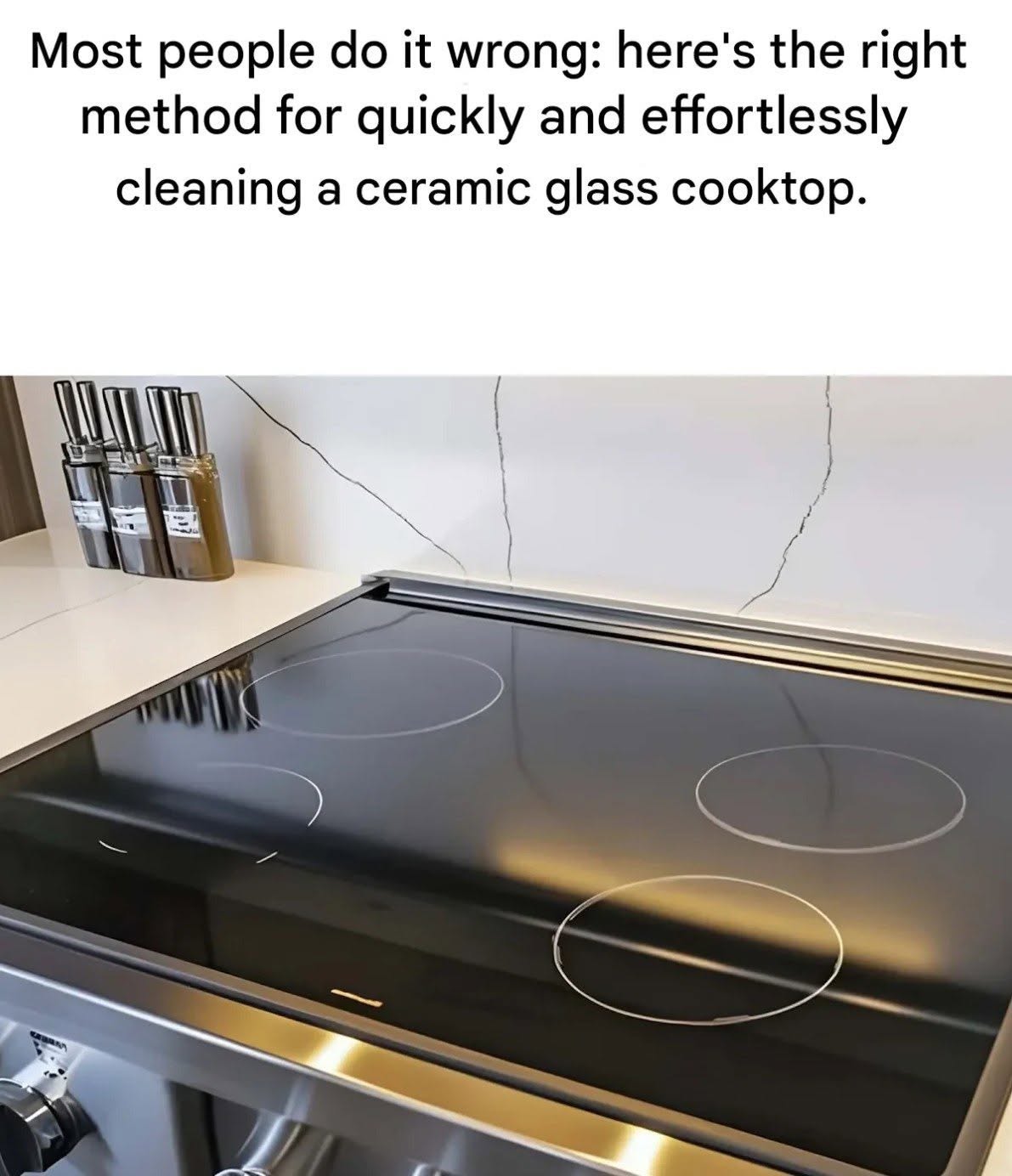
Ceramic glass cooktops look great, but they can scratch if cleaned with the wrong tools. The safest approach is to use gentle cleaners and avoid abrasive materials.
What you’ll need
- Microfiber cloth or soft sponge
- Warm water
- A few drops of dish soap
- A cleaner made specifically for ceramic glass cooktops (optional)
- A cooktop scraper with a razor blade designed for glass cooktops (for burnt-on residue only)
Step-by-step cleaning
- Let the cooktop cool completely. Cleaning a hot surface can cause burns and may damage some cleaning products.
- Wipe away loose crumbs with a dry microfiber cloth.
- Clean with soapy water. Dampen a soft cloth or sponge with warm water and a little dish soap, then wipe the surface.
- Treat stubborn stains. Apply a ceramic cooktop cleaner according to the label, or use a cooktop scraper held at a low angle (about 30–45°) to gently lift burnt-on food. Don’t force the blade or dig into the glass.
- Buff dry. Wipe away any cleaner residue with a damp cloth, then dry and polish with a clean microfiber cloth.
What to avoid
- Steel wool or scouring pads
- Abrasive powders or harsh scrubbers
- Bleach or oven cleaner (unless the manufacturer specifically approves it)
- Sliding heavy pots and pans across the surface
- Cleaning while the cooktop is still hot
Tips to keep it looking new
- Wipe up spills as soon as the surface has cooled.
- Lift cookware instead of dragging it.
- Use flat-bottomed cookware to reduce wear.
- Clean regularly to prevent burnt-on buildup that’s harder to remove.
For heavy, baked-on residue, a scraper designed specifically for ceramic glass cooktops is much safer and more effective than abrasive scrubbing.
