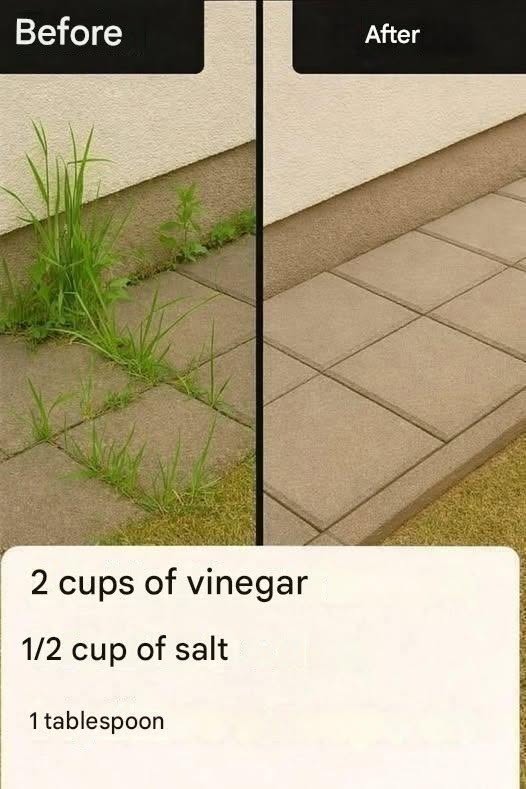
How to Make a Homemade Herbicide (Simple Weed Control Options)
If you want to reduce weeds without commercial herbicides, you can use household ingredients. Keep in mind that homemade mixtures are usually non-selective, meaning they may harm any plant they touch, including grass, flowers, and vegetables.
Option 1: Vinegar-based weed spray
Ingredients
- 1 gallon (about 3.8 liters) white vinegar
- 1 tablespoon dish soap
Instructions
- Pour the vinegar into a spray bottle or garden sprayer.
- Add the dish soap and mix gently.
- Spray directly onto the leaves of unwanted weeds on a dry, sunny day.
- Avoid spraying nearby plants you want to keep.
Why it works
- Vinegar’s acetic acid can dry out plant leaves.
- Dish soap helps the mixture stick to the leaf surface.
Important cautions
- Household vinegar may only work well on small, young weeds. Stronger horticultural vinegar products can be much more hazardous and should be handled carefully.
- Repeated vinegar use can affect soil conditions and may harm beneficial plants.
- Avoid spraying near waterways or areas where you want soil organisms protected.
Other natural weed-control methods
- Hand-pulling: Best when soil is damp and weeds are small.
- Mulch: Blocks sunlight and helps prevent new weeds.
- Boiling water: Can kill weeds growing in cracks or driveways.
- Landscape fabric or ground cover plants: Helps reduce future weed growth.
For lawns and gardens, the best method depends on the type of weed and where it is growing. A weed killer that removes weeds without damaging nearby plants usually requires a product designed specifically for that situation.
