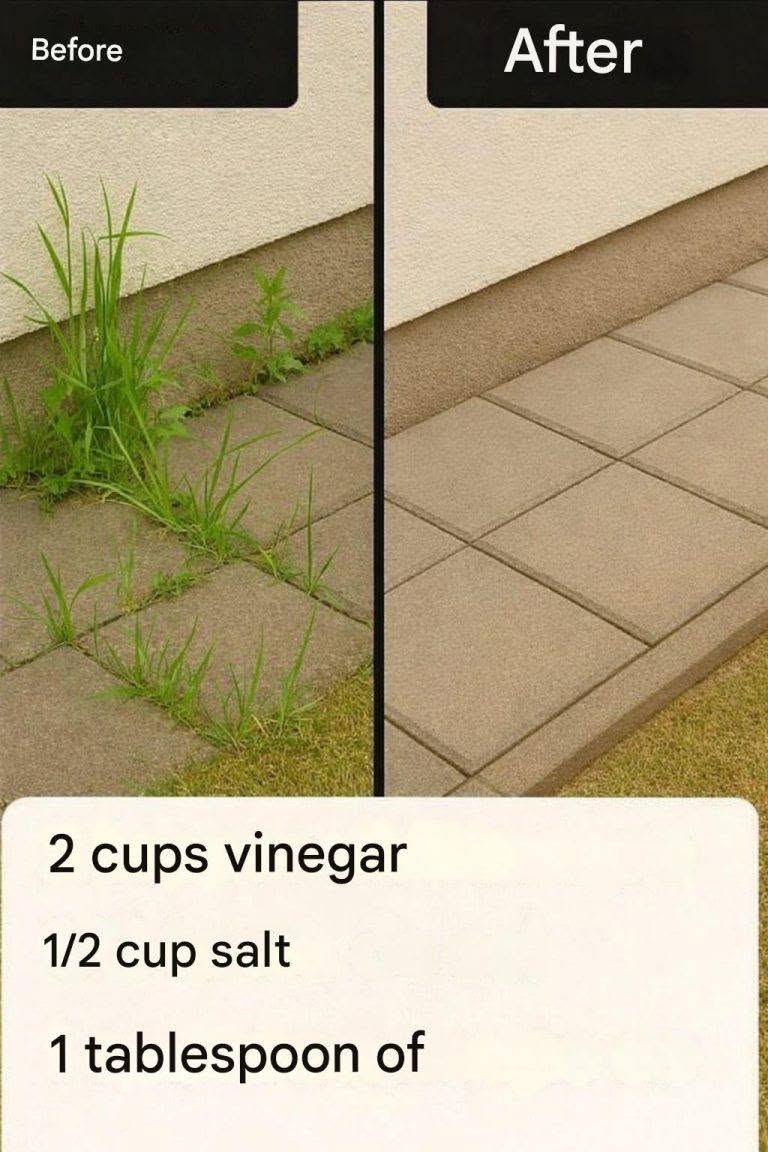
If you want a homemade herbicide, the most effective options depend on where the weeds are growing and whether you want anything else to grow there later.
Option 1: Vinegar-based weed spray (best for cracks and paths)
Ingredients
- 1 gallon (about 3.8 L) white vinegar (5% acetic acid)
- 1–2 tablespoons dish soap (helps it stick to leaves)
How to use
- Mix in a spray bottle or garden sprayer.
- Spray directly onto weed leaves on a dry, sunny day.
- Avoid spraying grass, flowers, vegetables, or other plants you want to keep.
What to expect
- Leaves may wilt or look scorched within hours to a day.
- Many perennial weeds can regrow because the roots survive.
Option 2: Boiling water (simple and non-chemical)
- Pour boiling water directly onto weeds growing in driveways, sidewalks, and gravel areas.
- It works best on small weeds and seedlings.
For longer-term control
- Pull weeds when the soil is moist and remove the roots.
- Apply mulch in garden beds to block sunlight.
- Improve ground cover so weeds have less space to establish.
Avoid adding large amounts of salt to homemade weed killers. Salt can harm soil for a long time and may damage nearby plants.
If you tell me where the weeds are (lawn, patio cracks, gravel, flower beds, or vegetable garden), I can suggest the most effective approach for that area.
