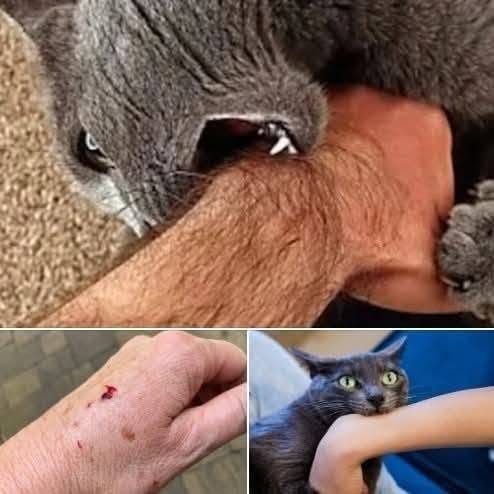
If a cat bites you, the meaning depends on the situation, the cat’s body language, and the type of bite. It doesn’t always mean the cat is “angry” or “doesn’t like you.”
Common reasons a cat may bite:
- Play behavior: Kittens and young cats often bite during play because they practice hunting skills. A moving hand or fingers can become a “toy” in their mind.
- Overstimulation: Many cats enjoy petting but have a limit. A bite after prolonged petting can mean “I’ve had enough.” Signs often include tail twitching, skin rippling, ears turning sideways/back, or a tense body.
- Fear or stress: A frightened cat may bite as a defensive response if it feels trapped or threatened.
- Communication: Some cats use a gentle “love bite” or nip as a way of interacting, though not all cats do this.
- Pain or illness: A normally calm cat that suddenly starts biting may be reacting to discomfort and may need a veterinary check.
If a cat bites you:
- Wash the wound well with soap and running water.
- Avoid punishing the cat, as it can increase fear and future biting.
- If the bite breaks the skin—especially a deep puncture—monitor it closely. Cat bites can become infected easily, so seek medical advice if you notice increasing redness, swelling, warmth, pain, pus, fever, or worsening symptoms.
- Consider medical advice for bites from unknown cats, stray cats, or cats with uncertain vaccination status (especially regarding rabies risk).
A cat bite is usually a message about the cat’s current feelings or boundaries, not a simple sign of dislike.
