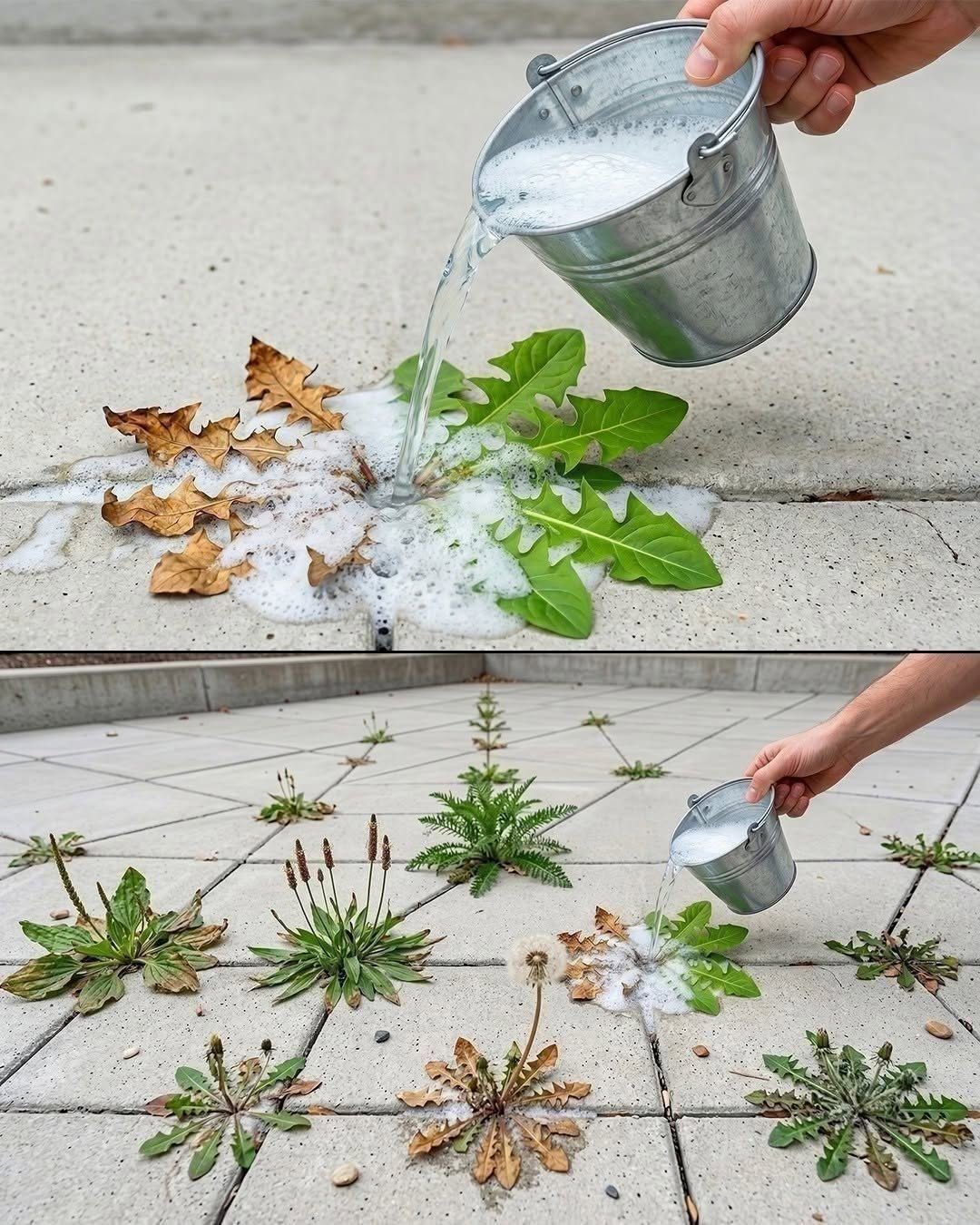
If you’re looking for a natural homemade weed control, there are a few options that can help, though they are usually best for small areas, cracks, paths, and spot treatment rather than large lawns or gardens.
1. Vinegar-based weed spray
Ingredients:
- 1 gallon (about 4 liters) white vinegar (higher-strength horticultural vinegar works better than kitchen vinegar)
- 1–2 tablespoons dish soap
How it works:
- Vinegar’s acetic acid dries out the leaves.
- Dish soap helps the mixture stick to the plant.
Use:
- Spray directly on weed leaves on a dry, sunny day.
- Avoid spraying desirable plants — vinegar can damage grass, flowers, and vegetables too.
2. Boiling water
- Pour boiling water directly onto weeds growing in cracks, driveways, or paving stones.
- It works quickly by damaging the plant tissue.
3. Mulch to prevent weeds
- Apply a 5–8 cm (2–3 inch) layer of mulch, compost, or wood chips around plants.
- This blocks light and reduces new weed growth.
4. Hand removal + root removal
- Pull weeds after rain or watering when the soil is softer.
- Removing the root (especially with perennial weeds) gives better long-term results.
Note: Homemade salt-based weed killers are sometimes recommended online, but salt can damage soil for a long time and prevent other plants from growing, so it’s best avoided in garden beds.
For a healthy garden, the most effective long-term strategy is usually mulch + targeted removal + preventing weeds from setting seed.
