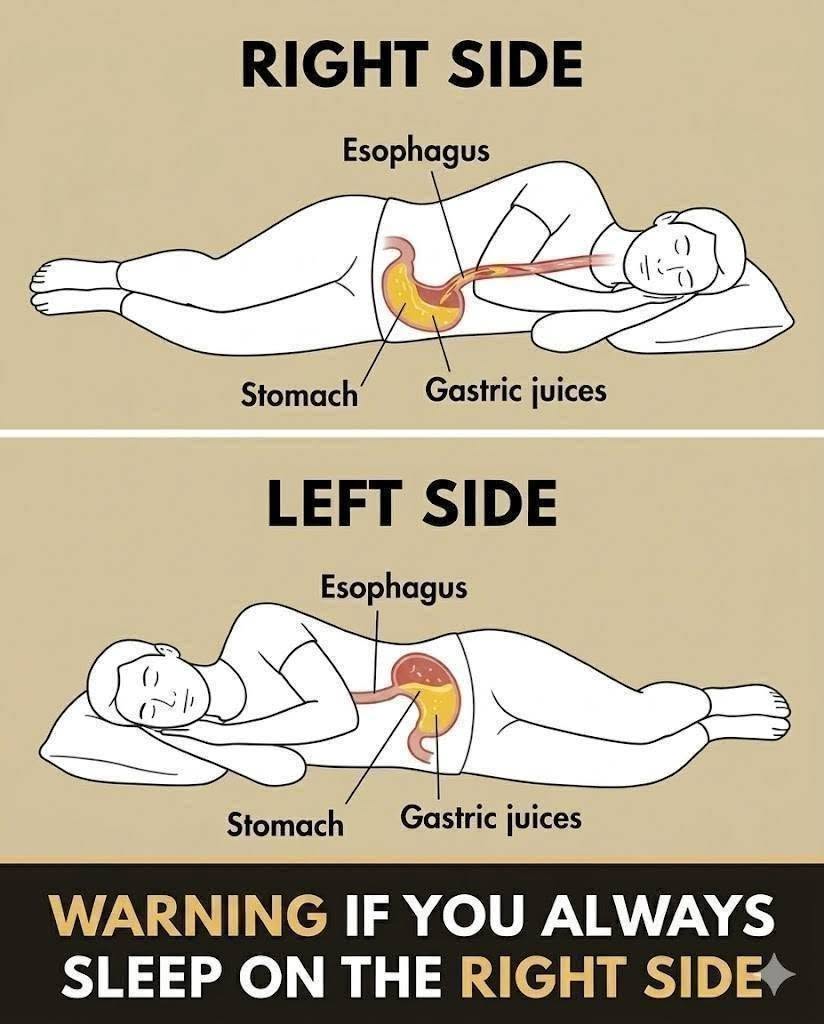
Note That If You Always Sleep on Your Right Side, You Should Know This
Sleep position is a common topic online, often linked to health claims about digestion, heart health, and organ function. One popular claim suggests that sleeping on your right side may have specific effects on the body. But what does science actually say?
The truth is more balanced: sleeping position can influence comfort and certain symptoms, but it is not harmful for most people to sleep on their right side.
🛌 Is Sleeping on Your Right Side Bad for You?
For most healthy people, sleeping on the right side is not dangerous. The body naturally shifts positions during sleep, and there is no medical rule that says one side is strictly “wrong.”
However, in certain situations, sleeping position can affect comfort or symptoms.
❤️ Right Side vs Left Side: What’s the Difference?
Sleeping on the Left Side May Help With:
- Acid reflux relief
- Better digestion in some people
- Improved blood flow in pregnancy (recommended in later stages)
Sleeping on the Right Side May:
- Feel more comfortable for some individuals
- Be preferred in certain heart or lung conditions
- Reduce pressure on specific body areas depending on posture
There is no universal “best” side for everyone.
⚠️ When Sleeping Position May Matter
Sleeping position becomes more important if you have:
- Acid reflux or GERD
- Heart conditions
- Breathing issues like sleep apnea
- Pregnancy (especially after the first trimester)
In these cases, doctors may recommend specific positions to improve comfort and circulation.
💤 Common Myths About Sleeping on the Right Side
Myth 1: It damages your heart
There is no scientific evidence that sleeping on your right side harms heart health.
Myth 2: It affects lifespan or “body toxins”
The body naturally removes waste through the liver, kidneys, and lymphatic system regardless of sleep side.
Myth 3: One sleeping side is universally healthiest
Comfort and medical conditions matter more than a fixed rule.
🛏️ Best Sleep Practices for Better Health
Instead of focusing only on side, experts recommend:
- Keeping a consistent sleep schedule
- Using a supportive mattress and pillow
- Avoiding heavy meals before bed
- Reducing screen time at night
- Sleeping 7–9 hours per night
🧠 When to Adjust Sleeping Position
You may consider changing your sleep side if you experience:
- Heartburn at night
- Shoulder or hip pain
- Snoring or breathing difficulty
- Poor sleep quality
Small adjustments can improve comfort significantly.
💤 Final Thoughts
Sleeping on your right side is generally safe and does not pose health risks for most people. While certain conditions may benefit from sleeping on the left side, the best sleeping position is ultimately the one that allows you to rest comfortably and consistently.
If you have ongoing sleep issues or medical conditions, it’s best to consult a healthcare professional for personalized advice.
Source: Original educational article based on general sleep medicine guidance and clinical recommendations from sleep health organizations.
