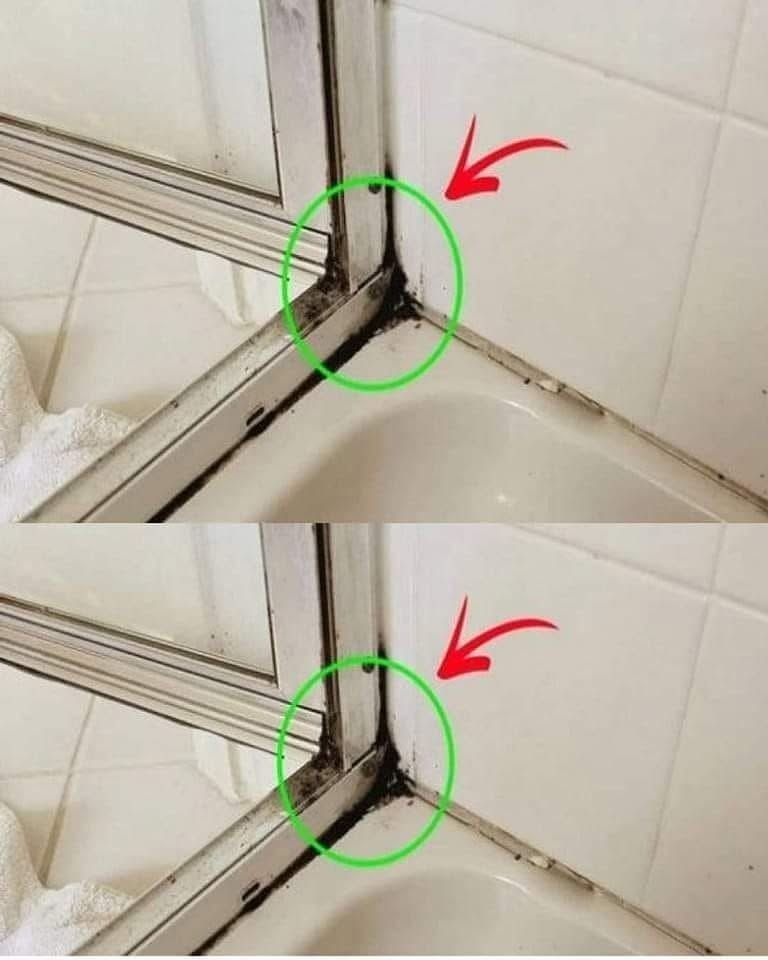
Mildew on shower silicone is usually caused by mold growing on or into the sealant. If it’s only on the surface, you can often remove it. If it has penetrated the silicone, the only lasting solution may be to replace the sealant.
Fast method for surface mildew
You’ll need:
- Household bleach
- Cotton balls, paper towels, or cotton rope
- Gloves
- Good ventilation
Steps:
- Open a window or run the bathroom exhaust fan.
- Soak paper towels or cotton in bleach.
- Press them firmly against the moldy silicone.
- Leave them in place for 30 minutes to several hours, depending on how severe the staining is.
- Remove the towels, rinse the area thoroughly with water, and dry it.
If you prefer to avoid bleach
Hydrogen peroxide (3%) or a mold-removing bathroom cleaner can also work, though they may take longer or require repeated applications.
When cleaning doesn’t work
If the black staining remains after cleaning, the mold has likely grown inside the silicone, not just on the surface. In that case:
- Cut out the old silicone with a utility knife or sealant removal tool.
- Clean and let the area dry completely.
- Apply a new mildew-resistant bathroom silicone.
Prevent mildew from returning
- Wipe down the shower after use.
- Improve ventilation with an exhaust fan or open window.
- Repair leaks promptly.
- Keep the silicone as dry as practical between showers.
Safety note: Never mix bleach with ammonia, vinegar, or other household cleaners, as this can produce dangerous gases.
If you can upload a photo of the silicone, I can help determine whether it can likely be cleaned or needs to be replaced.
